
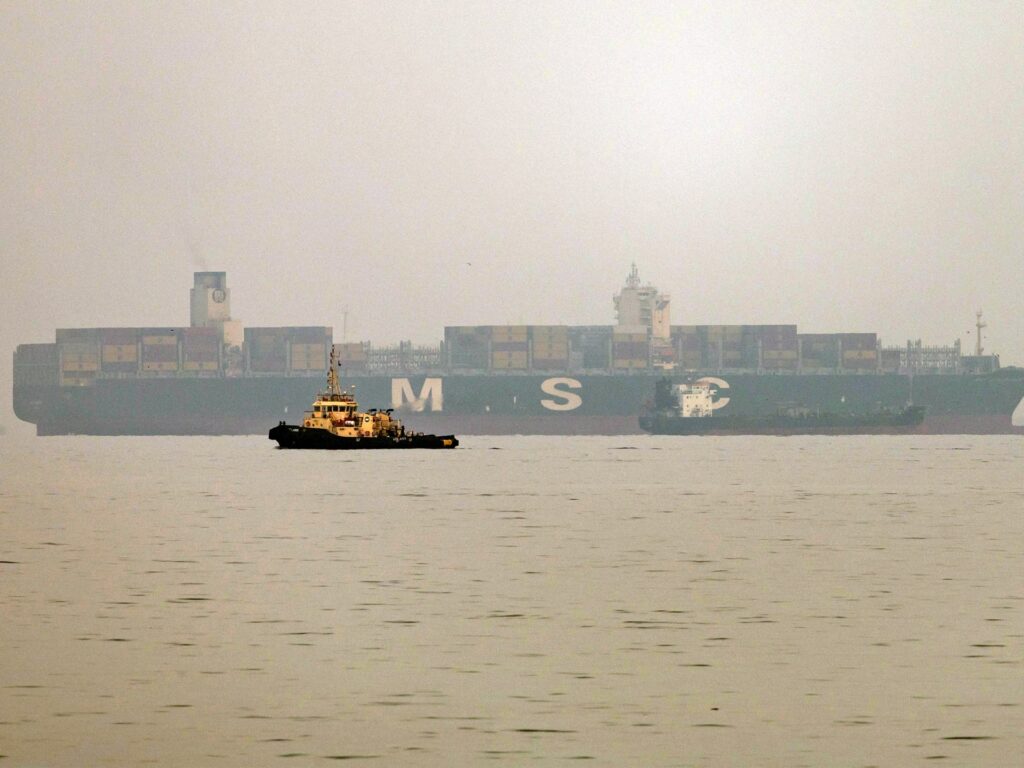
US and Iran each claim to dominate the Strait of Hormuz as vessel attacks rise
Dozens of ships were targeted in or near the Strait of Hormuz during October, as Tehran and Washington vie for control of the vital waterway. The United Kingdom Maritime Trade Operations (UKMTO) said at least twelve vessels were attacked in the week ending 16 October, although the organization warned that many incidents go unreported because affected ships do not file notices with UKMTO. It added that it receives information about additional attacks from other sources but cannot verify them.
The twelve confirmed attacks represent the highest weekly tally since the U.S.–Israel conflict with Iran began on 28 February. Half of the struck vessels managed to reach their destinations or ports, one sank, two were rendered inoperable, and three sustained damage or have an uncertain status. UKMTO also recorded a new form of assault on Saturday, when the master of a tanker reported that a rocket‑propelled grenade fired from a small boat struck the vessel 78 nautical miles northeast of Jubail in Saudi Arabia’s Eastern Province, damaging the aft port quarter.
In recent months the United States has boosted oil transits through the strait and adjacent routes by operating a shuttle system with Arab partners, but weekly volumes fluctuate as Iranian attacks increase. Kpler data show that oil flows through the Hormuz corridor averaged 11.6 million barrels per day over the seven days to 13 October, roughly 68 percent of the pre‑war level of 17.1 million barrels per day. Brent crude rose to $110 a barrel on Friday, its highest price since May, amid the ongoing violence. The situation is further complicated by Houthi attacks on Saudi energy facilities and their seizure of the Bab al‑Mandeb strait, while market expectations of an escalating U.S.–Iran confrontation have added upward pressure on prices.
U.S. Central Command commander Brad Cooper posted a video message on Friday asserting that, despite Iranian attacks, about 400 ships and 100 million barrels of oil moved through the strait in the past week. “Let me be clear: the Strait of Hormuz is controlled by the United States and our regional partners, not Iran,” he said, attributing the surge in attacks to desperation by the Islamic Revolutionary Guard Corps. The U.S. military also claims to maintain an “ironclad” naval blockade that prevents Iranian imports and exports through southern ports, a strategy it says has cost Iran $25 billion in lost oil revenue and has recently led to the seizure of $350 million in Iranian cryptocurrency financing.
UKMTO reported 125 outbound and 129 inbound transits in the same seven‑day period, with dry bulk cargoes making up the bulk of movements, followed by tanker products and general cargo. Tehran has not released precise figures on either the number of vessels attacked or those passing through Hormuz, accusing Washington of inflating the data to showcase the success of its naval campaign.
This week, two ships were reportedly struck by naval mines in the strait, prompting conflicting statements from the United States and Iran. The IRGC has increasingly warned that vessels are encountering mines and that the waterway is unsafe for ships that do not coordinate with Iran’s Persian Gulf Strait Authority, an agency created during the war to oversee passage. On Saturday the IRGC claimed a supertanker carrying more than two million barrels of crude caught fire after hitting a mine while traveling an “unauthorised” route. Iran’s state‑run Press TV released footage it said showed the burning tanker. The U.S. military, however, maintains that the strait has been cleared of mines and that recent damages are the result of projectile attacks.
The U.S. also “fact‑checked” an Iranian claim that a civilian container ship, the M/V GFS Pride, had been hit by a mine. According to CENTCOM, the vessel was struck by an IRGC projectile and sank while being towed to shore. Washington has not publicly responded to the latest series of attacks, but analysts warn that the situation could intensify after the U.S. midterm elections on 3 November.
Diplomatic efforts continue, with regional mediators such as Pakistan and Qatar relaying messages between the two sides, though no breakthrough appears imminent. President Donald Trump has reportedly ordered the U.S. military to stay prepared for a larger operation if the conflict widens.