
Israel’s 2026 election explained with maps and charts
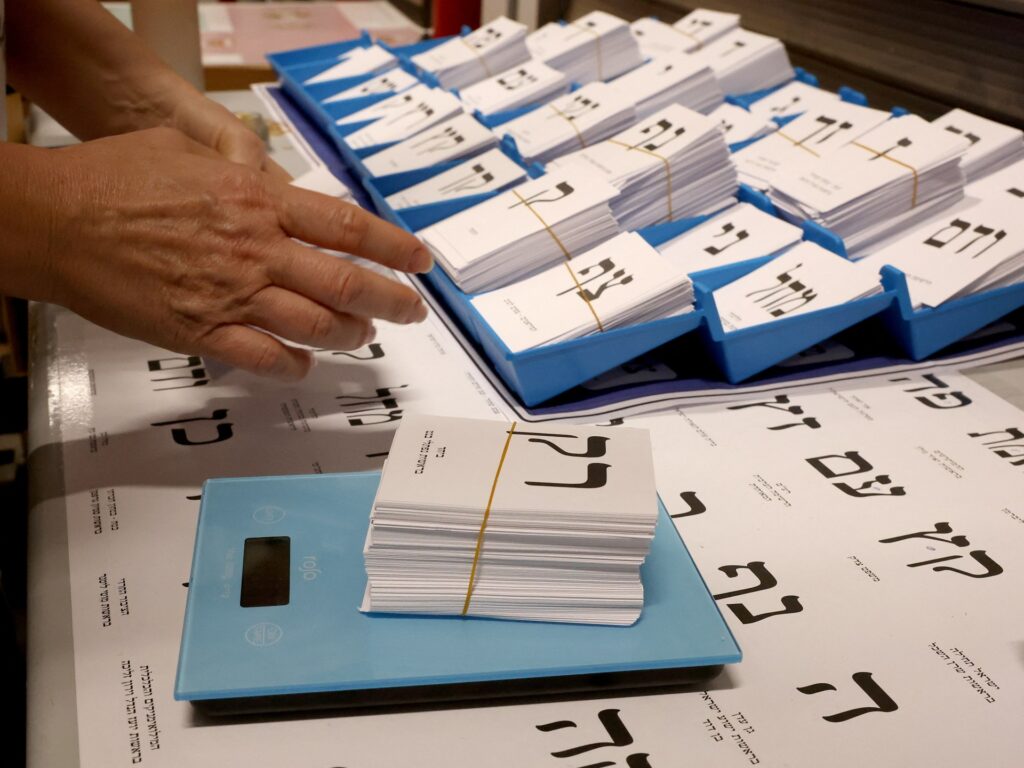
Israel will head to the polls on October 27 to choose the 26th Knesset, marking the first general election since the conflict in Gaza and the wars involving Lebanon and Iran. Benjamin Netanyahu, the country’s longest‑serving prime minister with 19 years in office, is running for another term while facing a corruption trial. His Likud party heads a right‑leaning coalition that is locked in a tight contest with a Jewish‑led opposition bloc, and neither side appears close to securing an outright majority in the 120‑seat parliament.
Around 7.3 million citizens aged 18 and over are eligible to vote, according to the Central Elections Committee. Most polling stations operate from 7 a.m. to 10 p.m., and anyone still in line when the doors close is allowed to cast a ballot. Election day is a national holiday.
A party must receive at least 3.25 percent of the national vote to enter the Knesset, which serves a four‑year term. There are no limits on how many terms a prime minister may serve.
How the vote works
Voters choose a party rather than an individual candidate. A majority requires 61 of the 120 seats, a threshold no party has ever reached on its own. Winning the most seats does not guarantee the right to form a government. After the vote, parties have 28 days – with a possible 14‑day extension – to build a coalition that commands at least 61 seats. If no coalition is formed, a new election is called.
Seats are allocated proportionally to each party’s share of the vote, so a party that receives 30 percent of the vote will obtain roughly 30 percent of the seats. Votes for parties that fall below the 3.25 percent threshold are discarded, which is why small parties often merge before each election.
Who can and cannot vote
Although about 7.3 million Israelis can vote, roughly three million adult Palestinians living in Gaza, the West Bank and East Jerusalem have no say in the government that controls their borders, movement and legal status. Jewish Israelis and Palestinian citizens of Israel, numbering about 1.2 million, are eligible to vote, as are the more than 750 000 Israeli settlers residing in the occupied West Bank and East Jerusalem. Most Palestinians in East Jerusalem hold Israeli residency rather than citizenship; they can vote for the city council but not for the Knesset. This creates a stark contrast in the West Bank, where a settler’s vote counts while a nearby Palestinian family’s does not.
Most Israeli citizens abroad cannot vote because the country does not provide a general absentee ballot and requires voters to be physically present on election day. Diplomats and other state officials are the exception, casting their votes at Israeli missions on October 20.
Key issues on the ballot
Voters are confronting a range of domestic and international challenges. The October 7, 2023 attack by Hamas, which killed about 1,200 people and left roughly 250 hostages, still looms large; a state commission of inquiry has not yet been formed. The ensuing war in Gaza, described by many as genocidal, has resulted in at least 74 000 Palestinian deaths and widespread devastation.
Other contentious topics include the exemption of ultra‑Orthodox men from military service, which supporters argue protects full‑time Torah study while critics say it unfairly burdens the rest of the population. Judicial reform, championed by Netanyahu to limit the Supreme Court’s authority, sparked massive protests before the Gaza war and remains a deep division, with opponents viewing it as a threat to democracy and supporters claiming the court has overreached.
Security concerns dominate the debate, as the public seeks stability but remains cautious about any concessions in Gaza, the West Bank or Lebanon. Netanyahu has pledged “total victory,” yet both Hamas and Hezbollah continue to operate. Economic pressures are also high, with rising living costs, modest wages and a defence budget that has doubled since 2023, straining public finances.
The outgoing government
When parliament was dissolved in July, Netanyahu’s coalition held 60 of the 120 seats. It comprised Likud (32 seats), Shas (11), Religious Zionism (7), Otzma Yehudit led by Itamar Ben‑Gvir (6) and New Hope (4). Shas left the government in July 2025 but stayed in the coalition, and New Hope is set to merge with Likud for this election.
The opposition held 59 seats: Yesh Atid (24), Blue and White (8), United Torah Judaism (7), Yisrael Beiteinu (6), the joint Hadash‑Ta’al list (5), Raam (5) and Labor (4). The single seat held by Noam was unaffiliated.
Main contenders
Netanyahu is seeking re‑election while denying the corruption charges against him. His far‑right coalition faces a bloc of four major Jewish‑led opposition parties that have pledged not to attack each other before the vote and to cooperate in forming a government afterward. Former army chief Gadi Eisenkot is seen as the opposition’s most likely candidate for prime minister; his new Yashar party is neck‑and‑neck with Likud in the polls. The opposition alliance also includes the Together list, headed by former prime ministers Naftali Bennett and Yair Lapid, Avigdor Liberman’s Yisrael Beiteinu and Yair Golan’s Democrats. Other key players include fa