
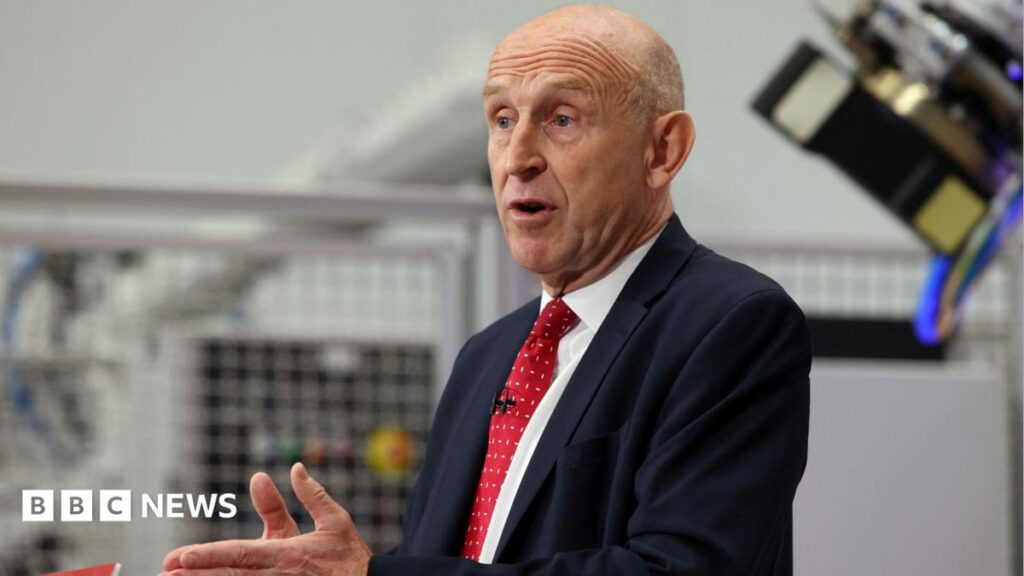
Chancellor rules out raising Capital Gains Tax in upcoming Budget
Chancellor John Healey has turned down calls from several Labour MPs to increase Capital Gains Tax (CGT) as the government prepares its Budget next week. The suggestion to raise CGT had been voiced earlier by cabinet ministers Wes Streeting and Louise Haigh before Andy Burnham became prime minister in July.
Healey, as first reported by the Times, says he does not intend to change the current CGT rates, which apply to profits made when assets such as shares or non‑primary‑residence properties are sold. The tax is set at 18 percent for those who pay income tax at the basic rate and at 24 percent for higher‑rate and additional‑rate taxpayers. Officials warned that a hike could backfire, prompting wealthy individuals to move abroad or delay asset sales, potentially reducing government revenue.
HMRC estimates that a one‑percentage‑point rise in the lower CGT rate could generate about £5 million by 2028‑29, whereas a ten‑percentage‑point increase in the higher rate would cut Treasury receipts by roughly £3.6 billion in the same period. Behavioural responses could further erode any gains.
Healey hinted at his stance last month in a speech about the importance of profit for businesses and the self‑employed, saying, “I want to see this country as a country of wealth creation. I want our government decisions and policies to raise the levels of confidence, and investment, and profit in British business.”
Prime Minister Burnham has also faced criticism over any move to raise CGG. Former adviser and Goldman Sachs chief economist Lord Jim O’Neill warned that it would send “the wrong message to business”. Within Labour, some figures have pushed for aligning CGT with income tax, which currently carries a lower rate. Louise Haigh, a close ally of the prime minister and later Burnham’s first secretary of state, argued in the Renewal journal that raising CGT would “shift the taxation burden away from punishing work, and towards unproductive capital accumulation which does little to grow the everyday economy”, while calling for safeguards to protect genuine investment returns. Defence Secretary Wes Streeting, speaking in May after resigning from Sir Keir Starmer’s cabinet, called for a “wealth tax that works” and said equalising CGT with income tax would correct an unfair system that “penalises work”. A Financial Times report last week confirmed that Healey has already ruled out matching the two rates.
When BBC Breakfast asked Communities Secretary Angela Rayner about the government’s CGT plans, she declined to speculate on the Budget. Pressed on whether rejecting a rise was a win for the rich, she pointed to measures already taken to give people “breathing space” and to ease the cost‑of‑living pressures.
The comments came after senior banking executives told the BBC they expect Healey to raise taxes on the sector, noting that UK banks have posted strong profits and unions are urging higher levies.
Healey will unveil his tax and spending blueprint on 28 October, a date that coincides with heightened global tensions following the US‑Iran conflict and rising domestic prices. He faces pressure to find ways to soften living‑cost pressures and to fund a defence boost in next year’s spending review. His options are constrained by Labour’s 2024 manifesto, which pledges not to increase income tax, National Insurance or VAT, the three main revenue streams, and by self‑imposed limits on borrowing.
Other recent coverage includes a piece on what the Budget might contain, a story on Conservative leader Kemi Badenoch urging cuts and reduced borrowing while accusing Labour of lacking the courage to cut spending, and Liberal Democrat proposals for a £14 billion windfall tax on bank profits to fund cuts to fuel duty, rail and bus fares, and a VAT reduction for hospitality businesses.