
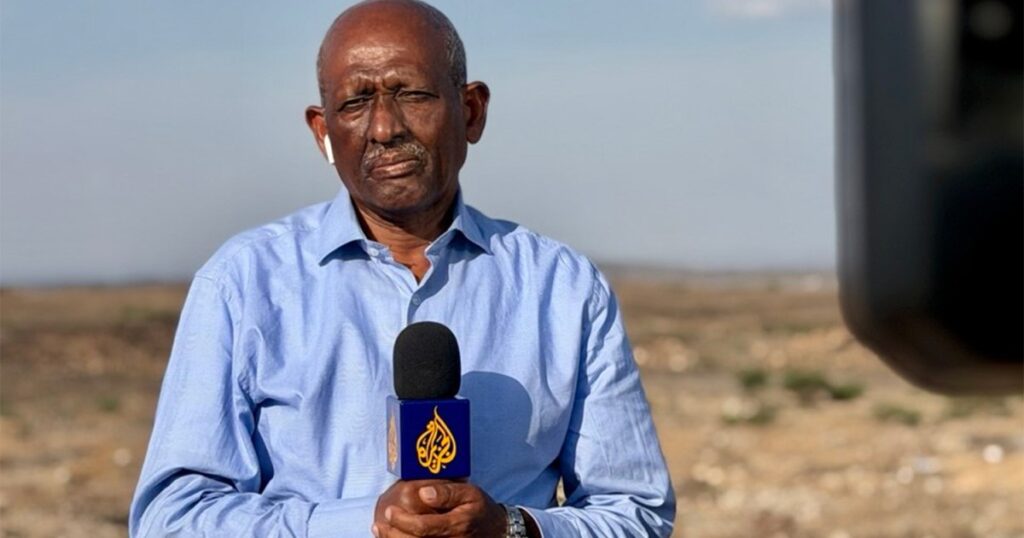
‘Weight of responsibility’: Promise and perils of covering Ethiopia’s war
Addis Ababa, Ethiopia – On September 23, fighting broke out in the northern Tigray region, ending the peace accord that the Ethiopian government and the Tigray People’s Liberation Front (TPLF) had signed almost four years earlier. The renewed clash pits the federal‑backed Tigray Peace Force (TPF) against the TPLF and began in the Erbeti area of the Afar region after the 2022 settlement fell apart over disarmament and border disputes.
For me, the new conflict is more than a story on a screen. It revives the painful memories of my reporting in November 2021, when a previous round of fighting claimed more than half a million lives and forced about two million people to flee before a cease‑fire was reached in 2022. When I was assigned to cover the latest hostilities, I faced the classic dilemma of any war reporter: how to stay in the midst of active combat while bearing witness to the truth.
Our team left Addis Ababa and headed first to the Afar region, then on to Mekelle, the capital of Tigray, traveling by road. Arriving in Erbeti, roughly 900 km (560 miles) northeast of the capital, I expected a brief pause to regroup. Instead, residents began streaming out of the town, loading small trucks and cars with whatever they could carry as families tried to escape the approaching fighting.
Before we could decide our next move, the sound of artillery erupted around us. We left Erbeti only a few hours after arriving, realizing that staying would endanger the crew. War, it turned out, does not wait for a correspondent’s schedule.
We retreated eastward toward Afdera, about 100 km (60 miles) away, traveling on unpaved tracks. Afdera, a modest town that serves as the district’s administrative centre and is known for its salt mines, became our overnight shelter. We slept in our vehicle amid desert heat that hovered above 35 °C (95 °F).
The following morning we spent hours reviewing information, making calls, preparing footage, and coordinating with the newsroom in Doha, Qatar, while the temperature climbed to 50 °C (122 °F). After a brief rest, we set out for Afdera again, finding only sparse breakfast options. The town’s rhythm was different: many locals ate after dawn prayers before heading to work. Adjusting to local routines is part of a journalist’s daily reality when arriving in an unfamiliar place.
We then turned north toward Erbeti, only to hear the fighting intensify in the mountains where government‑backed forces and the TPLF were locked in combat. Though we could not see the clashes directly, the roar of artillery grew louder as we approached, and at one point we were barely three kilometres (just under two miles) from the front line. Wearing body armour and helmets, we approached the government troops, managed to capture some footage, and recorded brief statements from soldiers. The assignment ended abruptly when the troops ordered us to evacuate immediately. There was no time for further filming; we gathered our gear and left while shelling continued to echo through the hills.
In the days that followed we navigated treacherous mountain routes across Afar, Amhara and Tigray. Roads that were passable in the morning could become impassable by evening, and reports received before noon often required verification again at sunset. In villages near the front, fear was evident on the faces of mothers packing small bags and children watching the road with anxious eyes. I made a point of listening with sensitivity, respecting their suffering without exploiting their emotions for the camera.
Our journey eventually led us to Mekelle, the capital of Tigray, arriving the day after Ethiopian federal forces and allied troops entered the city and the TPLF withdrew. Mekelle was not the bustling hub I had imagined; it appeared exhausted, with a reduced police and security presence as the city tried to absorb the recent events. Daily life continued cautiously: cars moved slowly, some shops reopened, and soldiers were greeted in certain streets while other areas remained silent, reflecting the residents’ uncertainty about what might come next.
Many people declined to speak on camera, unsure how the situation would develop. There was no overt disorder, but a palpable apprehension lingered. We had no certainty about what lay ahead, and the possibility that our exit routes might close weighed on every decision. Still, we had to keep working.