LPG Prices Nearly Halve in Pakistan as UAE Cargo Eases the Shortage
Cooking gas is finally getting cheaper in parts of Pakistan. A Karachi dealer quoted Rs420 per kilogram for LPG on Thursday, down Rs30 from Rs450 a day earlier and nearly 48 percent below last month’s Rs800 peak in parts of the country. The fall follows a bulk shipment from the United Arab Emirates that eased a shortage caused by the closure of the Iranian border crossings. For households that cook on cylinders, it is the first real relief in weeks, even though the price is still far above the official ceiling.
How the shortage started
The trouble began on 17 October, when Pakistan and Iran closed the Gabd-Rimdan and Taftan crossings. Overland LPG from Iran stopped, and Pakistan imports more than half of the LPG it consumes, so the gap hit the market fast. The strain grew worse because the United States and Iran confrontation disrupted shipping through the Strait of Hormuz and pushed up regional energy costs. With winter approaching and demand for cooking and heating gas rising, dealers in some areas charged Rs700 to Rs800 per kilogram, against the regulator’s November ceiling of about Rs294 per kilogram. Households without piped gas, who depend entirely on cylinders, paid the highest prices.
The cargoes that broke the spike
The turning point came by sea. The tanker Pacific Star 1 arrived at the Engro Vopak terminal near Karachi on 17 November carrying 20,115 tons of LPG loaded in the UAE. Of that cargo, 15,000 tons belonged to state-owned SSGC LPG Ltd and the remaining 5,115 tons to a private importer. It was the first major purchase under new rules directing four state companies to buy LPG in bulk and recover their import costs, a policy the cabinet approved on 3 November. Six ships unloaded 55,417 metric tons of LPG at Port Qasim between 14 and 19 November. Dealers say prices have fallen about Rs100 per kilogram in the last three to four days alone. Pakistan State Oil has also signed a purchase agreement with Oman based OQ Trading, and the Petroleum Division expects LPG supplies from that route to exceed 120,000 tons by year end.
Why Rs420 is still not a fair price
The relief is real, but it is incomplete. At Rs420 per kilogram, LPG is still about 43 percent above the regulator’s November consumer price ceiling of Rs294.08 per kilogram. That gap is the story now. It shows that even after supply improves, dealers and middlemen keep a wide margin, and enforcement of the official price remains weak. The burden falls hardest on the poorest buyers, who purchase small quantities at retail and cannot negotiate bulk rates. The government says it is working with the Benazir Income Support Programme to provide LPG to low income households, but no details of that support have been published yet.
What to watch next
Three things will decide whether prices keep falling or stall at this level. First, whether the Oman supply line delivers on schedule, because the border crossings with Iran remain shut and sea imports must now carry the whole load. Second, whether the four state companies keep buying in bulk and competing with private importers, which is what broke the spike in the first place. Third, whether the regulator enforces its own ceiling, since a Rs126 gap between the official price and the market price is an invitation to profiteering. Winter demand is the real test. If the cargoes keep coming and the ceiling is enforced, the Rs420 rate could fall further. If either fails, households will be paying winter prices again within weeks.
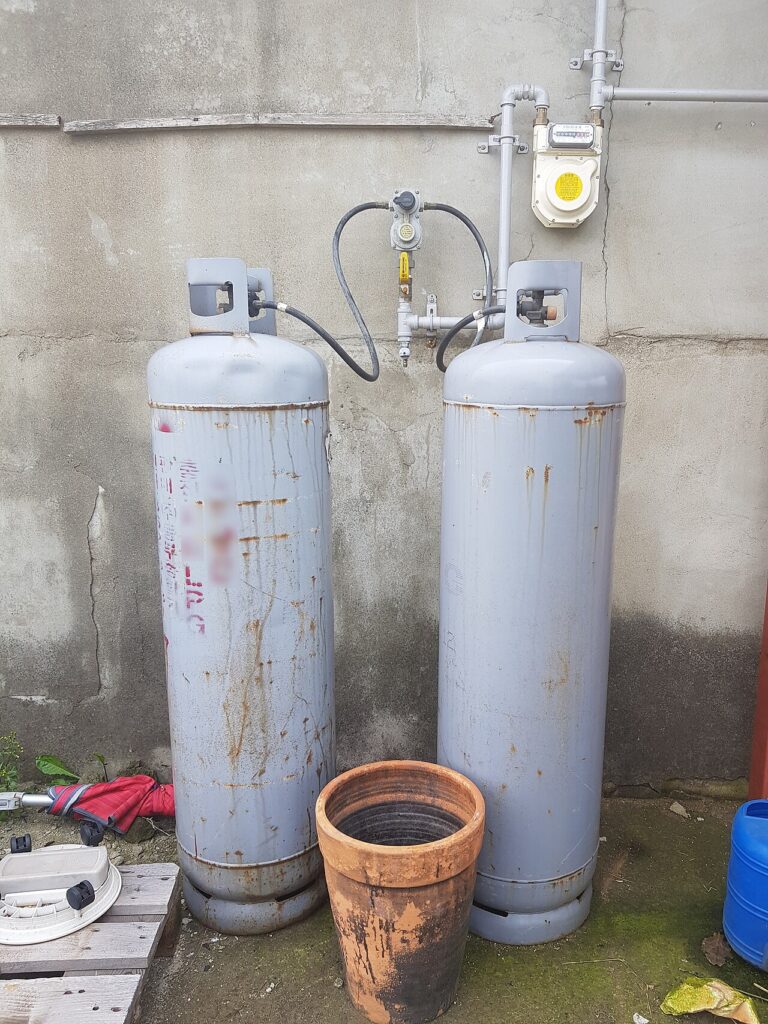
Photo: Liquefied petroleum gas cylinders. Credit: Mykim5902, via Wikimedia Commons (CC BY-SA 4.0).