Government Caps the Fuel Cost Rise at 83 Paise a Unit: What It Means for Your December Bill
The government stepped into the middle of a NEPRA hearing on Thursday and promised electricity consumers something they have rarely had: a ceiling. The increase in fuel cost adjustments for the October to December quarter will be capped at 83 paise a unit, the Power Division said, instead of the Rs2.88 a unit the Central Power Purchasing Agency had sought for December bills. The cap is a proposal, not a notified tariff, and NEPRA still has to approve it. But if it holds, December bills will carry a far smaller fuel charge than the one that was on the table.
What the government actually announced
The announcement came while NEPRA was hearing a petition from the CPPA-G for an additional fuel charges adjustment of Rs2.88 a unit, to be recovered through December bills, for all distribution companies including K-Electric. In a statement, the Power Division said it had proposed a Forward-looking Fuel Cost Adjustment, or FFCA, limiting the increase to about Rs0.83 a unit, inclusive of taxes, for October to December 2026, over the September fuel adjustment. The policy guidelines under Section 31(4) of the Nepra law will reach the regulator by Friday morning, Additional Secretary Mehfooz Bhatti told the hearing, adding that the government had cleared the directive covering the quarter. NEPRA member tariff Amina Ahmed welcomed the move and promised due diligence as soon as possible.
What it means for your December bill
November bills already carry the September fuel adjustment of Rs2.3673 a unit, notified on 6 November. That does not change. December is where the cap bites. If NEPRA approves the 83-paise band, the extra fuel charge on a 300-unit bill would be about Rs249, against about Rs864 under the petitioned Rs2.88, so the cap is worth roughly Rs615 a month to that household. For a 150-unit household the saving is about half that. Two cautions matter. First, the 83 paise is inclusive of taxes and sits on top of the September adjustment, so it is an addition, not a discount. Second, nothing is notified yet: until NEPRA issues a determination, the Rs2.88 petition is still the figure formally before the regulator.
Why winter pushes fuel charges up
The timing is seasonal as much as political. Hydropower generation falls in winter, and the Power Division says thermal fuels account for over 80 per cent of the generation mix during certain winter months, which pushes fuel costs up in winter. The Iran-US war added to the pressure by lifting prices of regasified LNG and coal. The government says it has held additional fuel shocks within Rs2 to Rs2.50 a unit by supplying expensive imported LNG at local gas rates, and that consumers were shielded from a potential extra Rs6 to Rs7 a unit between April and September, with combined fuel and quarterly adjustments held to an average of Rs2.38 a unit including taxes.
What happens next
Three steps decide whether the cap becomes real. The Power Division must place its guidelines before NEPRA on Friday morning. NEPRA must then complete due diligence, and Bhatti has asked it to convene an early hearing if needed, including to accommodate the October fuel adjustment. Only then does a notified figure reach December bills. The government frames it as predictability, not just relief: the national average tariff including taxes was Rs53.04 a unit when it took office in March 2024, and it says it brought that down to Rs44.28 by March 2026, with the industrial tariff falling from Rs62.99 to Rs44.50. The test now is whether the cap survives NEPRA scrutiny intact, or comes back changed.
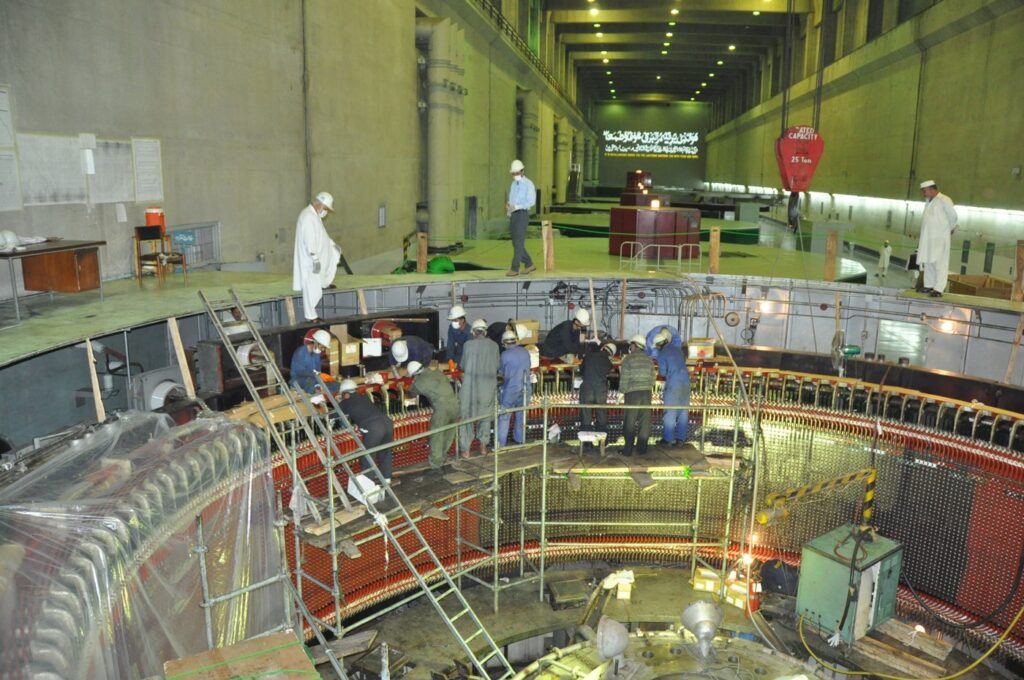
Photo: Generators at Tarbela Dam. Credit: USAID, via Wikimedia Commons (public domain).
Sources: Dawn, Dawn, eCheckBills FCA explainer.