Trump Pushes Ukraine Peace Deal by January as Putin’s Missiles Keep Falling
Donald Trump returned from Asia on Friday talking about peace in Ukraine. At a White House news conference, he said he and Russian President Vladimir Putin held “very good talks” during their meeting in China, and added: “I think there’s a real good chance that we can get it done.” Within hours, Russia launched one of the largest missile and drone attacks of the war, hitting electricity facilities across Ukraine and killing eight people. Warm words at the summit table, a war that does not pause for them.
A deadline set by American politics
The push for a deal now has a date. The Financial Times reported on Friday, citing four people briefed on the talks, that the Trump administration has told European and Ukrainian officials it wants Kyiv to reach a peace agreement with Russia by early January. The date matters because on January 3 a new Congress takes its seats. Democrats won both chambers in the November 3 midterm elections, taking 228 House seats and 54 Senate seats, and they are expected to back Ukraine more strongly and press Moscow harder. The White House wants the deal signed while it still has a free hand.
Trump’s envoys have been moving fast. Special envoy Steve Witkoff and Jared Kushner, the president’s son-in-law, restarted negotiations with Ukraine and Russia in Abu Dhabi this month after an eight-month pause, and have since met Russian, Ukrainian and European officials in Moscow, Dublin and Berlin. The message in each stop has been the same: hurry.
Why Kyiv is worried
In Kyiv, the deadline has raised a fear: that speed will be paid for with Ukrainian concessions. A senior Ukrainian official told the Financial Times that the timeline has heightened worries that President Volodymyr Zelenskyy could be pushed into a deal on Moscow’s terms before the new Congress is seated. “Trump likes Putin and wants to finish this all by January,” the official said, adding that Russia “could have better terms” if an agreement were reached before then.
Europe shares the concern. One European official said “the Americans are pushing hard and there’s some concern that it would need a great deal of Ukrainian concessions to get anywhere near a deal.” Another added: “The Americans are in a hurry, Putin is in no hurry.” Trump himself declined to discuss security guarantees for Ukraine, saying he did not want to talk about them without a deal in place. For Kyiv, that is the problem: guarantees are what would make a ceasefire stick, and they are being held back until after the signing.

The war does not wait for diplomacy
Friday’s attack was a reminder of who holds the leverage on the ground. Hours after the three leaders issued a peace declaration in China, Russian missiles and drones struck Ukrainian power facilities in one of the largest attacks of the war. Eight people were killed. Russia’s full-scale invasion began in February 2022 and has become Europe’s bloodiest conflict since World War Two. Trump said Putin “clearly expressed his desire to see the war between Russia and Ukraine end by diplomatic means.” He also noted the obstacle: “The problem is President Zelenskyy and President Putin have tremendous hatred, and that’s never easy.”
What to watch next
Three markers will tell whether the January push is real or only a timetable. First, whether Witkoff and Kushner return from their shuttle diplomacy with a written draft, not just a promise to keep talking. Second, whether Russia eases its strikes on Ukrainian energy infrastructure, which would signal that Moscow is negotiating in good faith. Third, whether Kyiv gets anything concrete on security guarantees before it is asked to sign.
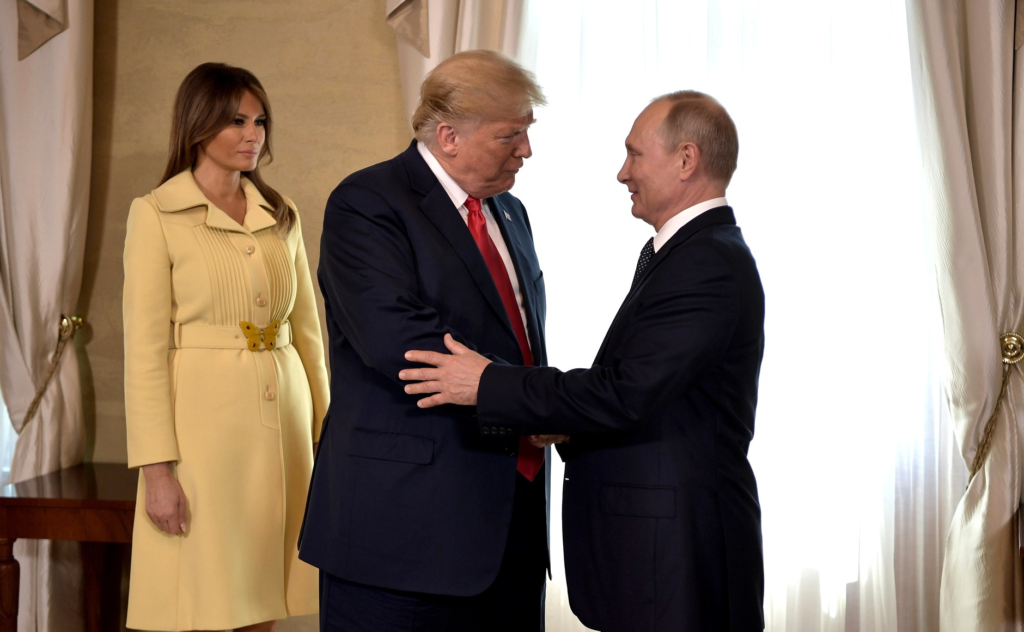
Featured image: Presidents Donald Trump and Vladimir Putin meet in Helsinki, July 2018. Photo: Russian Presidential Executive Office, via Wikimedia Commons (CC BY 4.0).
Sources: Reuters (https://www.reuters.com/world/china/trump-says-he-putin-had-very-good-talks-ukraine-2026-11-20/); Financial Times, as reported by The Jerusalem Post (https://www.jpost.com/international/internationalrussia-ukraine-war/article-915625)