
Israel’s ties with Europe are fraying. Can its election change that?
Ursula von der Leyen expressed solidarity with Israel while marking its 75th anniversary, saying on 23 April 2023 that Europe and Israel are “bound to be friends and allies”. The relationship once extended beyond diplomacy: Israel took part in European football competitions, performed in Eurovision, and shared intelligence with European governments. Its defence industry was also integrated into European production lines.
Those connections have become points of contention since Israel’s systematic destruction of Gaza, which has killed at least 74,000 Palestinians. European nations have withdrawn from Eurovision over Israel’s participation, and several footballers have refused to play against Israeli teams. Statements of friendship have been recast as condemnation.
Ireland and Spain have long led criticism of Israel’s treatment of Palestinians. At the recent UN General Assembly, Irish Prime Minister Micheál Martin warned that Israel’s actions in Gaza “will shame the world”, while Spanish Prime Minister Pedro Sánchez spoke of “condemning unequivocally the genocide that Netanyahu continues to perpetrate in Gaza”. In a striking shift from three years ago, Britain, whose 1917 Balfour Declaration helped create Israel, imposed a ban on goods from illegal settlements, and its foreign secretary accused Israeli settlers of ethnic cleansing.
On Saturday, a group of settlers attacked European diplomats and officials from Belgium, France and Poland who were visiting Palestinian olive harvesters near the village of Taybeh in the occupied West Bank. The assault followed a day‑long attack on a United States journalist north of Ramallah and drew widespread international condemnation.
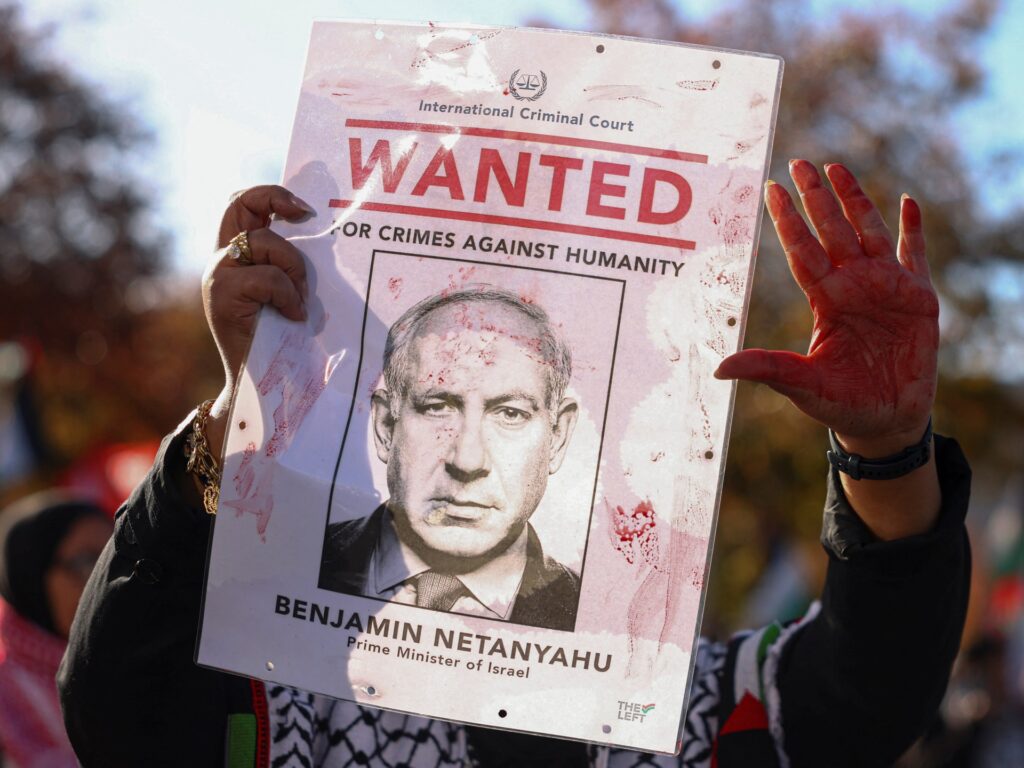
Experts say scarred relations between Europe and Israel may never fully heal as the country heads to an election on 27 October that remains too close to call. Yossi Mekelberg, a Middle East analyst at Chatham House, warned that a return of Prime Minister Benjamin Netanyahu with the far right could make “certain things irreversible” and deepen the damage caused by his government. Nicola Perugini, a senior lecturer in international relations at the University of Edinburgh, cautioned that re‑electing a leader wanted by the International Criminal Court would keep Gaza’s population in “unliveable” conditions.
A coalition that includes more liberal parties might slow settlement expansion, but having a prime minister wanted by the ICC would likely continue the deterioration of Israel‑Europe ties. Replacing Netanyahu would not automatically end the policies that drive European criticism. Gadi Eisenkot, former military chief and leader of the centrist Yashar party and a leading challenger to Netanyahu, opposes Palestinian statehood.
A public opinion survey by Israel’s Mitvim Institute last year showed that 67 percent of Israelis viewed the EU more as an adversary, compared with 14 percent who saw it as a friend. Mekelberg sees the possibility of a different relationship under a more liberal government, saying the conversation with Europe would become “more reasonable and rational”, though change would not happen overnight. Analysts suggest that more humanitarian aid could reach Palestinians and the pace of settlement expansion could slow, perhaps abandoning the controversial E1 plan.
Julie M. Norman, an associate fellow at Chatham House, argued that such steps might not be enough for European governments to restore trust. She said Europe would look for concrete moves toward Palestinian statehood and an end to the occupation, noting that “we’re not seeing that under the current government and probably not under the next”.
At the start of Israel’s war on Gaza, many Western leaders backed the campaign. Continued pressure from civil‑rights groups, international courts, trade unions, professional bodies and millions of protesters worldwide forced governments to act, according to analysts. “Now the ruling elite in several countries is trying to align itself with the public,” said Neve Gordon, a professor of human rights law at Queen Mary University in London, adding that the pro‑Palestine movement had shifted the “common sense” stance of governments.
Pew Research Center polling in the United Kingdom showed that the share of people viewing Israel unfavorably rose from 61 percent to 69 percent between spring 2025 and spring 2026; in Italy the figure moved from 66 percent to 75 percent, and in Germany from 64 percent to 73 percent, despite Germany being one of Israel’s strongest allies.