
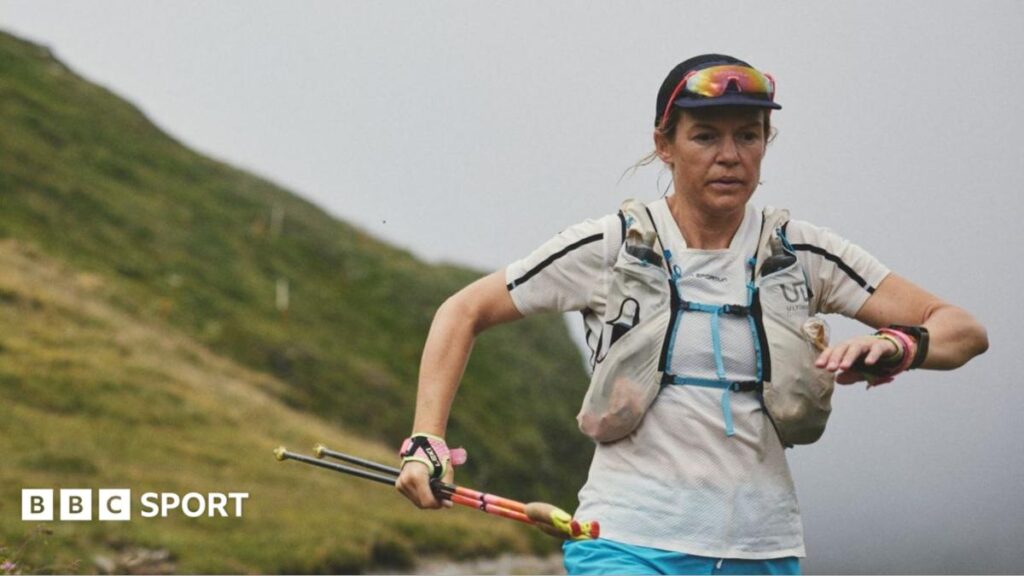
Do women outperform men in endurance running?
By Sarah Dawkins BBC Sport Senior Journalist
“The race is too hard for women. They are simply not tough enough to do it.”
Those are the words of Lazarus Lake race director of the Barkley Marathons one of the world’s hardest ultramarathons which to date of the approximate 1 000 people who have started only 20 have ever completed.
Speaking in 2015 and daring for someone to prove him wrong it took nine years until a British ultra‑runner did just that.
Completing the extreme 100‑mile course with just one minute 39 seconds to spare of the 60‑hour cut‑off Jasmin Paris from Midlothian made history and cemented her name in the ultra‑running history books.
But now increasingly she is not alone.
Last summer there was a female one‑two for the first time in the gruelling Montane Summer Spine Race from Derbyshire to Scotland. Rachel Entrekin set a new course record and became the first woman to win the Cocodona 250 in Arizona in May while last month Sophie Woods smashed the overall record by six days to complete the Via Alpina.
It appears female runners are no longer just taking part in ultra‑endurance events they are competing with their male counterparts breaking records and in some cases winning races outright. All of this has prompted suggestions that they are perhaps better suited to these kinds of challenges.
But is there any scientific proof? Do women really have any physiological or psychological advantages in endurance exercise anything that takes more than six hours? And if so could we see more of these records fall in the future?
Figure caption Are women better suited to endurance exercise than men?
In running distances up to the marathon there is on average a 10‑12 % performance gap between males and females. Men are generally stronger and built with a bigger aerobic engine.
But as the distance increases those physical advantages appear to become less relevant and the gap starts to narrow.
The “gender pace gap” diminishes to 0.25 % in 100‑