
Why France’s school protests have turned into a broader political crisis
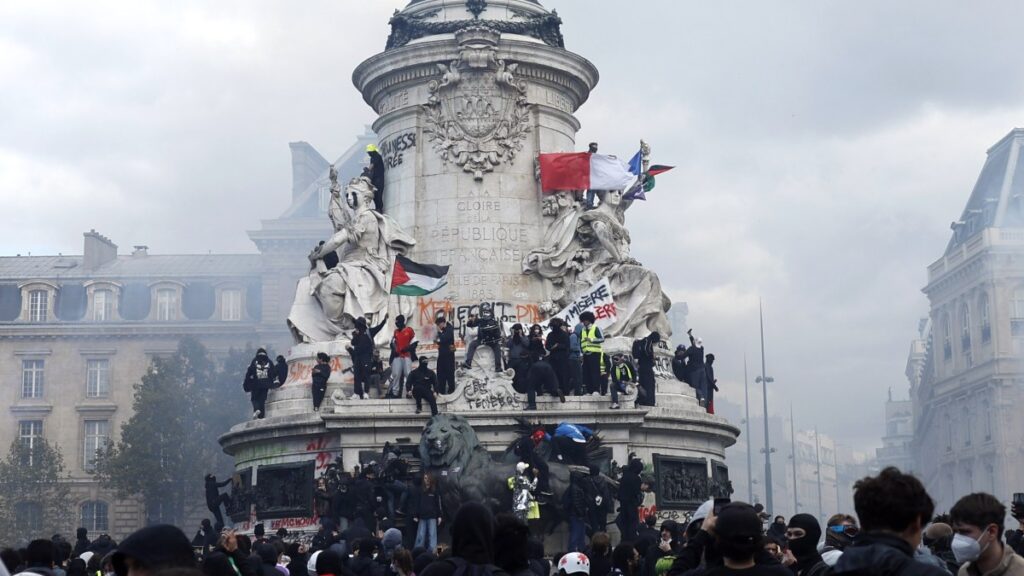
Protests have swept across France as discontent over school conditions merges with frustration about rising living costs and a government seen as indifferent to everyday hardships. The Interior Ministry reported that about 550,000 people took to the streets on Saturday. Most demonstrations remained peaceful, but a small fringe attacked buildings, looted shops and clashed with police, who responded with tear gas and charges.
Prime Minister Sébastien Lecornu said 1,200 arrests were made and 150 police officers were injured. Behind the unrest lies a deeper political crisis fueled by deteriorating public services, squeezed household budgets and a perception that France’s political institutions offer little hope for change. Below is an overview of how school blockades evolved into a nationwide movement and what it means for President Emmanuel Macron.
How the protests spread and what demonstrators want
The movement began last month in high schools in the working‑class northern suburbs of Paris, where students protested teacher shortages and inadequate facilities. Blockades and rallies soon spread to Bordeaux, Rennes, Nantes, Lyon, Lille and Marseille. On Saturday, students and trade unions marched alongside supporters of the “yellow vest” movement that first emerged in 2018 to contest rising costs and economic inequality.
Emile Chabal, a contemporary history professor at the University of Edinburgh, told Al Jazeera that the demonstrations are “the logical outcome of a series of protests” that trace back to the yellow vests. He said the earlier movement was driven by financial pressure and resentment toward the French presidential system, which often produces centrist leaders such as Macron. By combining longstanding grievances with students’ anger over failing state schools, the protests represent “the worst possible outcome for the French government,” Chabal added.
Students are demanding improvements in France’s lycées, the public high schools that serve 15‑ to 18‑year‑olds. Their list includes smaller class sizes, more teachers, better‑maintained buildings and less exhausting timetables. The complaints also reflect broader doubts about the state’s ability to provide education and future opportunities. For many workers, including school staff, the dispute also touches on wages and the resources needed to deliver public services.
The school protests coincided with a nationwide public‑sector strike against the government’s budget plans. The proposed 2027 budget contains a €54 billion package of spending cuts and tax measures that the government says are necessary to reduce the deficit. Among the proposals is a freeze on the pay scale that determines civil servants’ basic salaries, which unions warn would be the fourth consecutive annual freeze.
Donatella della Porta, a sociologist and political scientist, said students are inspiring broader mobilisation around inequality, cuts to public investment and democratic rights, with calls for social‑welfare spending rather than militarisation. “They do not want to fight wars; they want a different future,” she told Al Jazeera. She also linked the movement to youth activism over Gaza, noting Palestinian flags at demonstrations across several European countries.
Government response
The government’s immediate focus has been on public order. President Macron said anyone responsible for violence would be “prosecuted and punished.” His remarks came as a fire largely destroyed the historic town hall in Limoges and as public buildings and shops were attacked elsewhere. However, those engaging in violence represent only a small minority of the larger mobilisation.
Jean‑Luc Mélenchon, leader of the left‑wing France Unbowed party, accused the government of repressing school students and allowing the confrontation to intensify. His criticism reflects a broader political debate over whether the state is treating the protests primarily as a security issue rather than addressing the underlying grievances that have united diverse groups.
Analysts say France’s troubles go beyond disagreement over specific budget measures and point to deeper discontent. Chabal noted that political paralysis since the 2024 parliamentary elections, which left no bloc with an outright majority, has created “an environment in which no political party or movement is able to channel social discontent.” This fragmentation makes it hard to forge lasting agreements on spending, taxation or public services and leaves protesters questioning whether changing governments will bring real policy changes.
The unrest is also a significant setback for Macron, whose reform agenda has been challenged by the scale of the protests and the breadth of demands now being voiced across the country.