
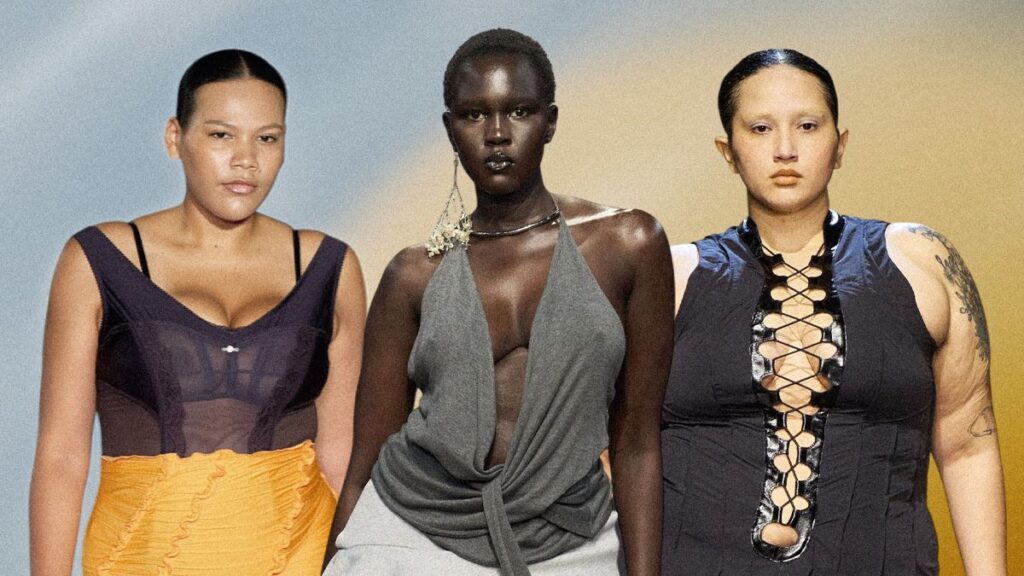
“We Are Facing a Pandemic of People Shrinking”: 3 Designers on Size Inclusivity
As fashion continues to narrow its focus, a handful of designers remain committed to expanding size representation. According to four years of Vogue Business Size Inclusivity reports, the absence of designers Ester Manas, Sinéad O’Dwyer, and Karoline Vitto from major shows in Paris or London leads to a sharp drop in mid‑size and plus‑size visibility.
This season, O’Dwyer staged an early runway at the Victoria & Albert Museum in July, while Vitto presented her collection at Rio Fashion Week in April. In London, only 0.5 % of the looks were plus‑size, down from 0.8 % the previous season; mid‑size looks fell to 3.6 % from 6.5 %, and straight‑size pieces rose to 95.9 % from 92.7 %. By contrast, Ester Manas, founded by the designer and her husband Balthazar Delepierre, returned to the Paris runway after a two‑year hiatus, contributing to a modest rise in body diversity. Their show featured 42.4 % mid‑size looks and 36.4 % plus‑size looks. Overall in Paris, plus‑size representation increased to 0.5 % from 0.1 %, mid‑size to 2 % from 0.4 %, while straight‑size fell to 97.5 % from 99.5 %.
Established houses often sprinkle a single curve model or a plus‑size celebrity into their lineups, but Manas, O’Dwyer, and Vitto consistently design, produce, and sell clothing for mid‑size and plus‑size consumers. Their niche audiences are highly engaged and appreciative of luxury garments that fit well and celebrate creativity.
Because these designers frequently top Vogue Business’s size‑inclusivity rankings, the publication invited them to a Zoom discussion ahead of the Spring/Summer 2027 season. The conversation explored their achievements, industry frustrations, and future directions.
Vogue asked what size inclusivity means for each brand. Ester Manas explained that her motivation began with a personal need: “I’m a EU 44, 46 or 48 depending on the brand, and I was designing every day for a EU 38, 36 or 34. I wanted to create for myself.” Balthazar Delepierre added, “When we launched, the reaction was huge. It’s great that we can talk about it together now. Each of us has a distinct view of inclusivity in design.”
Sinéad O’Dwyer reflected on her own struggles: “I grew up in an industry that excluded people like me. I had an eating disorder as a teen, and seeing only one body type affected my mental health. Now, from a place of privilege, I understand how commercial decisions are made, but I still feel deep empathy for my younger self. That’s why representation matters, even when it feels frustrating.”
Karoline Vitto likened her start to Ester’s: “It began as a personal experiment, trying my own pieces. Soon I found other women who related to my vision. I hope we reach a point where sizing isn’t even a topic, where we’re not seen as the exception but as the norm.”
When asked about industry support over the course of their careers, Balthazar noted a shift: “We moved from a novelty phase to a point where the mask has fallen. We can reach new customers and be visible through size inclusivity without relying on social‑media hype or multi‑brand retailers.” Ester observed that progress now feels slower and more discreet, but emphasized that dressing women is the ultimate goal. Sinéad agreed, echoing the sentiment that genuine change matters more than flashiness.
The discussion underscored the persistent challenges faced by size‑inclusive designers, even as overall representation declines in recent reports. Their commitment suggests a future where diverse bodies are no longer a rarity on the runway, but a standard part of fashion’s landscape.