
Sudan’s chronically ill forced to choose between food and medicine as war devastates health care
Hasanat al‑Rashid, 48, has lived with diabetes for fifteen years, but the war that erupted in April 2023 between the Sudanese army and the Rapid Support Forces has turned her routine treatment into a daily battle. Forced to abandon her home in Haj Yousif, Khartoum North, she fled southward to Umm Daw Ban in Khartoum State. During the displacement she went days without insulin and survived on asida, a traditional Sudanese porridge that is unsuitable for her condition. Complications in her foot required two surgeries, and she moved between hospitals in Gezira State—Rufaa, Wad Madani and Al‑Hasahisa—until fighting reached those towns in December 2023. She then escaped to Port Sudan on the Red Sea, a city less touched by the conflict.
Now dependent on daily insulin injections, Hasanat faces a stark trade‑off between medicine and basic necessities. “The doses vary depending on whether my blood sugar is high or low,” she told Al Jazeera. Her doctor prescribed an insulin pen, which costs about 70,000 Sudanese pounds (roughly eight dollars) per device, a price she cannot afford up front. She therefore buys insulin in vials, priced at 17,000 pounds (about one point eight dollars), but must also purchase ice each day to keep the insulin cool. The ice alone costs around 180,000 pounds a month (twenty dollars). “It may last a month or less, but the challenge is that I don’t have a refrigerator, so I struggle to store the insulin properly,” she said. In addition to insulin, she requires regular painkillers and vitamins to manage the disease’s complications.
The war has driven Sudan’s average income back to levels last seen in the 1990s, according to the United Nations Development Programme, leaving many diabetics unable to meet the cost of essential drugs. Fatima Adam, 75, is another patient in Port Sudan Hospital who cannot afford the medicines needed for hypertension and a thyroid condition. Before the conflict she received most of her medication through the National Health Insurance Fund, paying only a quarter of the price. The collapse of the economy and the suspension of the scheme have forced her family to shoulder the full cost. Her daughter Aisha explained, “My mother takes six different medicines because hypertension has affected her heart in addition to her thyroid medication. The war has made things harder because the prices of these medicines have gone up.” Fatima’s son, a casual labourer with no steady income, searches daily for work. “Sometimes, when my brother finds work, we buy enough medicine to last a month. Other times, we have to buy smaller quantities and take the medicines intermittently,” Aisha added. A month’s supply of her mother’s drugs cost 160,000 pounds (about seventeen point eight dollars), a heavy burden for a family that lives on day‑labour wages.
The pharmaceutical sector has been crippled by the fighting. The National Medical Supplies Fund estimates that the conflict has caused roughly five hundred million dollars in losses to medicine stocks, infrastructure and transport fleets. The National Medicines and Poisons Board reports that only eight of the thirty drug factories in Khartoum that shut down during the war have resumed operations, even as security in the capital improves. With domestic production stalled, Sudan now relies heavily on imports, but the sharp depreciation of the Sudanese pound has driven up the price of every imported pharmaceutical product.
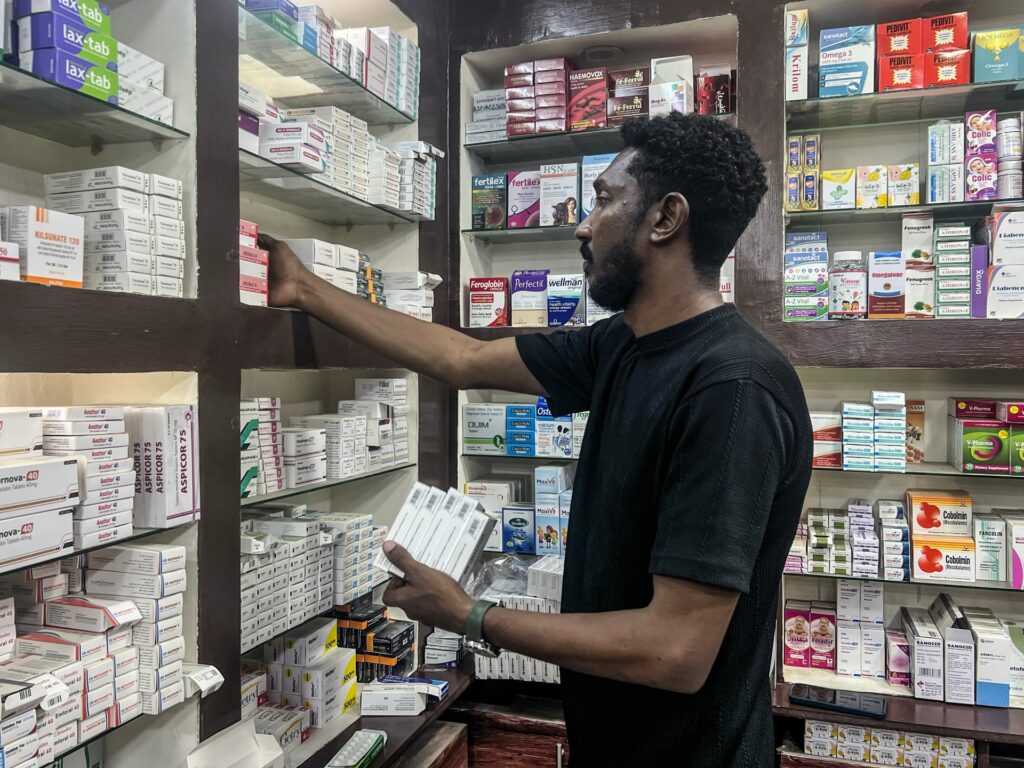
Pharmacist Hossam al‑Naeem, who runs a pharmacy in Port Sudan, sees the impact every day. “I feel deeply saddened when I see the expressions on some patients’ faces as they ask about the prices of medicines and discover how much they have increased because of the depreciation of the Sudanese pound,” he told Al Jazeera. Patients with diabetes and hypertension regularly need painkillers and vitamins, yet the rising cost forces many to ration or abandon treatment altogether.
For Sudan’s chronically ill, the war has turned a health condition into a daily gamble between buying food and buying the drugs that keep them alive.