Pakistan First Astronaut Nears Launch as Ahsan Iqbal Reaches Beijing for Departure Ceremony
Planning Minister Ahsan Iqbal arrived in Beijing on Sunday, 22 November 2026, to attend the departure ceremony of Pakistan’s first astronaut, as the country counts down to a flight expected on 25 November that will put a Pakistani in orbit for the first time.
Iqbal was received at Beijing airport by Yang Yunli, vice president of China Great Wall Industry Corporation, and officials of the Pakistan embassy. On Monday he will travel to the space mission centre to meet the two Pakistani astronauts who have finished their training, and one of them will be picked for the flight before launch. “The flight of Pakistan’s first astronaut will be a historic moment for the entire nation and a new symbol of the ironclad brotherhood between Pakistan and China,” Iqbal said.
Who will fly
The two finalists are Muhammad Zeeshan Ali, a Pakistan Air Force pilot, and Khurram Daud, a Pakistan Navy pilot. Both began training in Beijing in April 2026 at the Astronaut Centre of China, after being picked from about 20 finalists through three rounds of selection in Pakistan. Both also studied Chinese at the Confucius Institute in Islamabad, which matters on board, where the crew works in Chinese. The final choice between the two has not been announced. China usually names a crew at a press conference a day before launch, and the second candidate will serve as backup.
What the mission will do
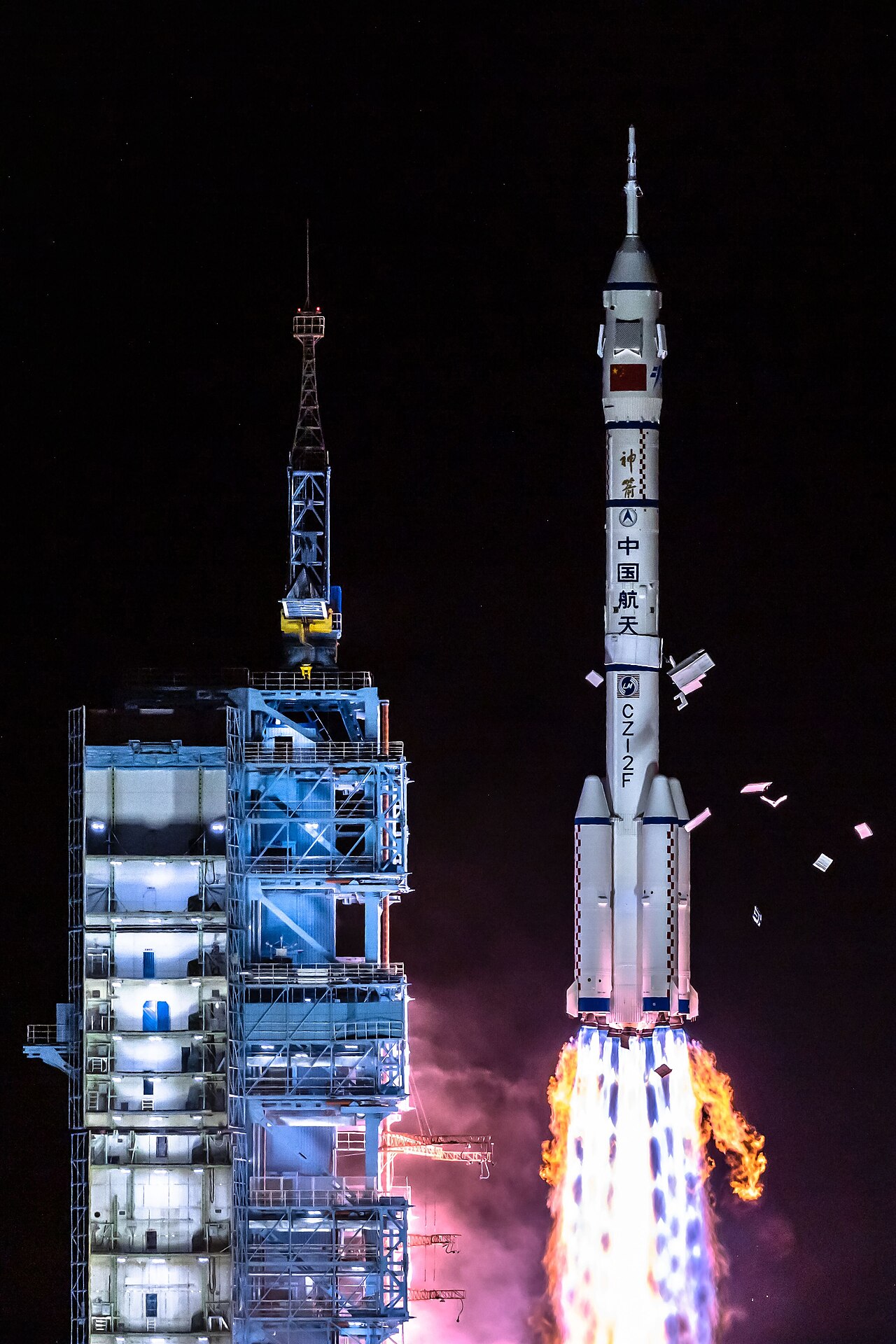
China’s Manned Space Agency announced on 7 November that a Pakistani astronaut will fly aboard Shenzhou-24 as a payload specialist, the first foreign national ever to visit the Tiangong space station. A Long March 2F rocket will lift it from the Jiuquan Satellite Launch Centre in the Gobi Desert, carrying two Chinese taikonauts who begin a six-month stay. The Pakistani astronaut’s stay will be short, about a week, spent running scientific experiments as a payload specialist. The return is unusual: the Pakistani astronaut will ride home aboard the departing Shenzhou-23, not the Shenzhou-24 that carried him up. SUPARCO confirmed the plan on 18 November, calling it the first time a Pakistani national would travel to space under the country’s space programme.
Why this flight is bigger than one seat
For Pakistan, the flight is the visible payoff of an astronaut cooperation agreement signed in Islamabad on 28 February 2025 between SUPARCO and the China Manned Space Agency. For China, it is the first time Tiangong has hosted a foreign visitor, and the opening move in a wider plan to fly partner-country astronauts. The symbolism is clear, but the practical value is real too: a payload specialist slot means Pakistani science gets bench time in orbit, and the training pipeline from selection in Pakistan to months in Beijing now exists and can be repeated.
What is still not confirmed
The launch date is the one fact still soft. Ahsan Iqbal named 25 November on 18 October, but China’s space agency has not confirmed a specific date, and the name of the astronaut who will fly has not been announced either. Neither gap is unusual this close to a launch, and both should be settled by the pre-launch press conference. Until then, the departure ceremony in Beijing is the clearest signal that the countdown is real.
What to watch this week
Watch for the crew announcement, expected a day before launch, and for the list of experiments the Pakistani payload specialist will run. Then watch the launch itself: if it goes on 25 November as planned, Pakistan joins the small group of nations whose citizens have flown in space, and Tiangong gains its first foreign guest.
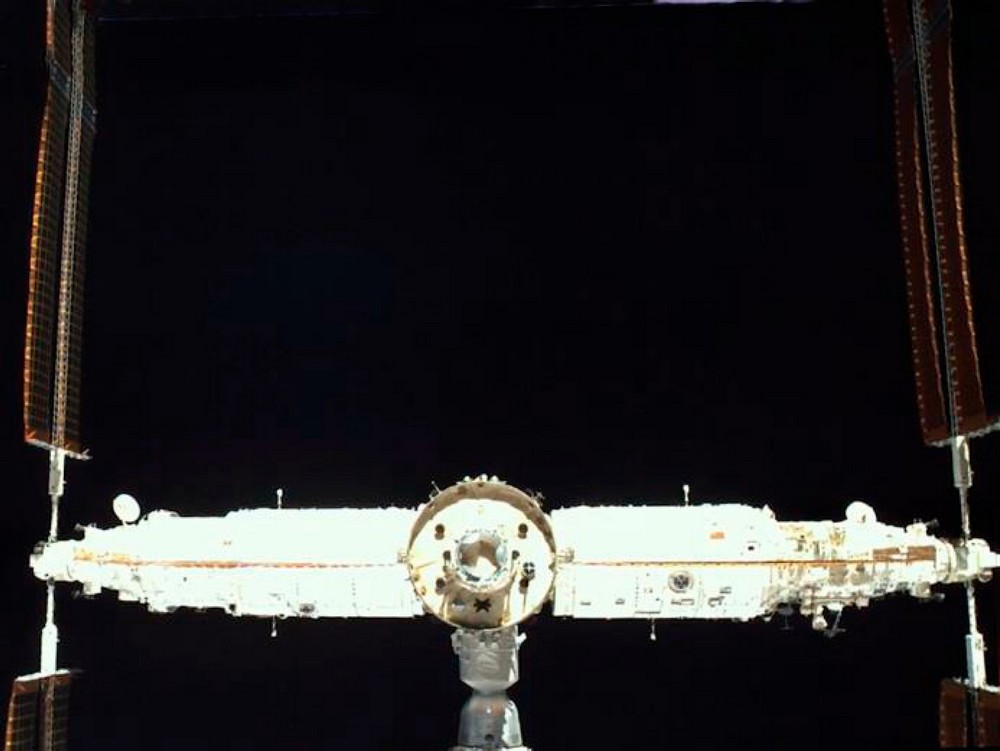
Photo: The Tiangong space station, with its three modules and a docked Shenzhou spacecraft. Credit: China Manned Space Engineering Office, via Wikimedia Commons (CC BY 4.0).
Sources: ProPakistani, The Express Tribune, Pakistan Post, Tech Times, Asia Daily.