Pakistan Crowned Blind T20 Asia Cup Champions as Rain Washes Out Final Against India
DHAKA: Pakistan were crowned champions of the Men’s Blind T20 Asia Cup on Friday after rain washed out the final against India at the Anvir Cricket Stadium in Dhaka without a ball being bowled. Match referee Tamim of Bangladesh declared Pakistan the winners under the tournament’s playing conditions, a decision India immediately disputed and then protested by boycotting the closing ceremony.
The title was decided by the league table, not by a coin toss or a shared trophy. Pakistan finished the four-team league stage unbeaten, with six points from three wins, ahead of India on four. The playing conditions circulated to all teams before the tournament said that if the final could not be played, the side with the superior net run rate would take the title. Pakistan also held the head-to-head edge, having beaten India in the league stage.
An unbeaten run to the title
Pakistan built their campaign match by match. They opened with a 126-run win over Bangladesh, then beat Sri Lanka by 10 wickets, and finished the league stage with a last-over win over India that turned out to be the most important result of the tournament. With seven runs needed off the last two balls, all-rounder Niamatullah hit a six and then a four to seal the win.
That victory did two things: it kept Pakistan unbeaten, and it gave them the net run rate cushion that would later decide the title. When the Dhaka rain arrived, first on the eve of the final and then through the scheduled 11:30 a.m. start on Friday, there was no reserve day to fall back on. Officials waited until 4:15 p.m. before abandoning the match. No toss had taken place.
What the rules say, and why India objected
The dispute turns on one clause. Article 27 of the playing conditions, as described in tournament briefings, provides for the team with the superior net run rate to be declared the winner if the final cannot be played. India’s cricket body for the blind, CABI, argues the clause was written for a tied final, where a Super Over also ends level, and not for a final that never starts. On that reading, the two finalists should have been declared joint champions.
A member of the World Blind Cricket Council’s technical committee said the committee had initially supported the joint-winners option, but the match referee’s ruling stood. CABI has formally challenged the decision, and also alleged that the council’s chief, Sultan Shah, pressed the referee to rule in Pakistan’s favour, an allegation the council has not accepted. The Pakistan Blind Cricket Council says the playing conditions were circulated to every board on 7 November, two weeks before the final, and that the ruling followed the written rules.

A walkout, and what comes next
India’s players left the stadium without collecting the runners-up trophy and stayed away from the closing ceremony, where Bangladesh Cricket Board director Abdullah Alfawad presented the awards. The walkout turned a sporting occasion into a diplomatic one, and it will now be for the World Blind Cricket Council to answer CABI’s challenge and to say whether the rules need rewriting so that an abandoned final has one clear outcome.
Whatever that answer is, the record will show Pakistan won every match they played in Dhaka, including the one against India. For a team that plays the game without sight, relying on sound, memory and trust in each other, that unbeaten run is the part of this tournament that no argument can wash away.
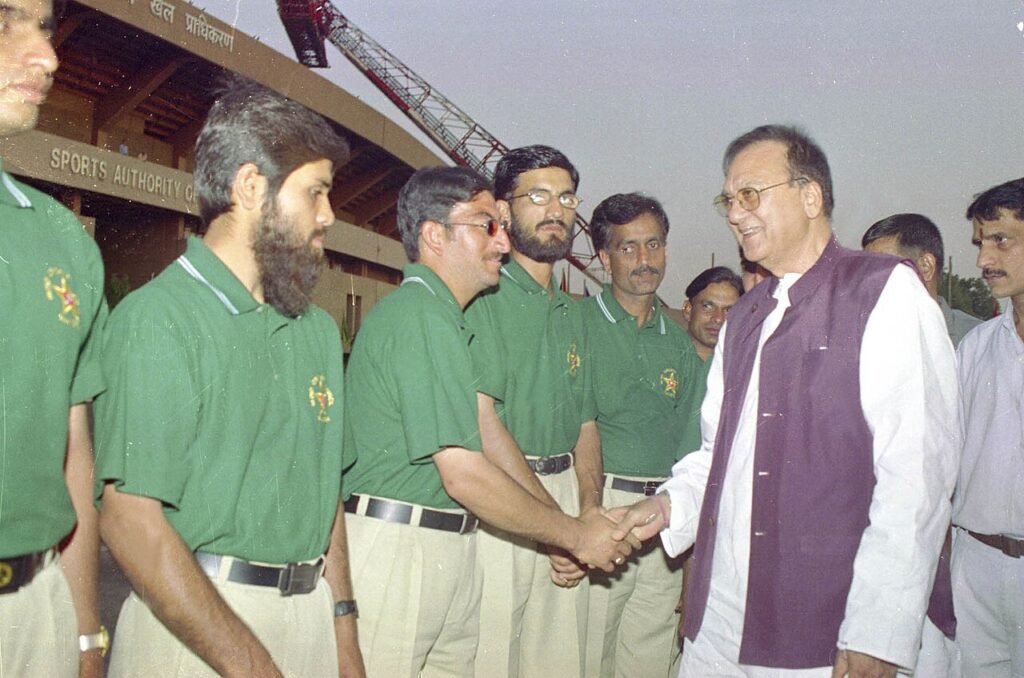
Featured image: Pakistan’s visually impaired cricketers in New Delhi in 2005. Photo: Government of India (GODL-India), Wikimedia Commons.
Sources: Dawn, 21 November 2026; The Express Tribune, 21 November 2026; Geo Super, 20 November 2026; The Daily Star, 21 November 2026.