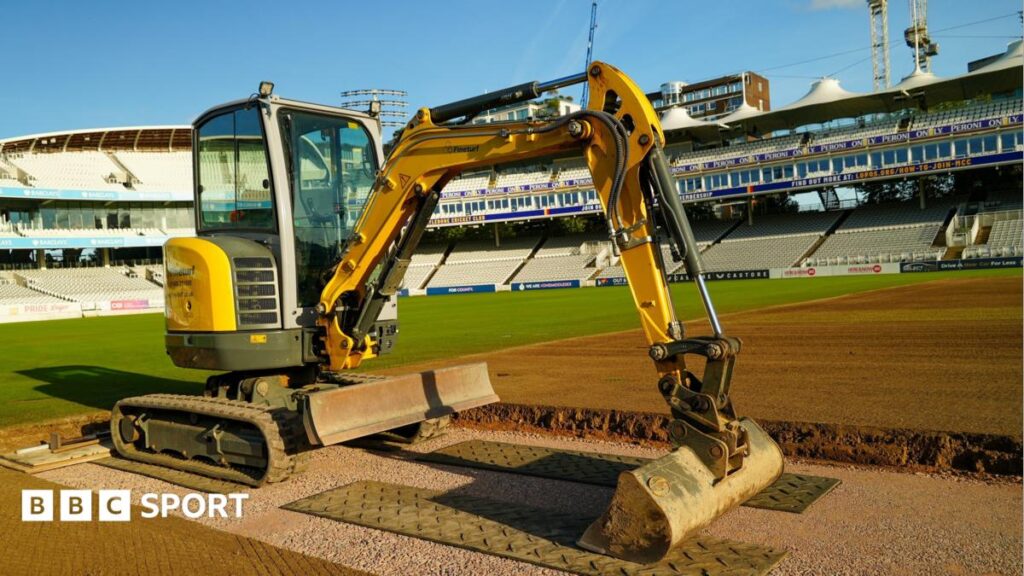
Lord’s Cricket Ground digs up Pitch Nine as it plots a new future for its playing surface
The iconic square at Lord’s has been turned inside out for the first time in a generation. Workers have excavated a large section of the pitch, an effort prompted by a series of complaints about the quality of the turf at cricket’s most hallowed venue.
Pitch Nine, one of the twenty strips that make up the square, is one of five central wickets used for the marquee fixtures. It was the controversial surface on which England faced New Zealand in June, a match that saw the batters struggle enormously. Jacob Bethell was bowled by a ball that stayed low, and the Test was on track to finish within two days before rain intervened. England captain Ben Stokes later said the surface did not help Test cricket, and the International Cricket Council rated it “unsatisfactory,” adding a demerit point to Lord’s record.
The New Zealand Test was not an isolated incident. The pitches used for England’s Tests against Ireland in 2019, New Zealand in 2021 and Australia in 2023, as well as a women’s ODI against India in 2022, were all deemed “average” under the ICC’s earlier rating system. Critics have long described Lord’s as slow and low, producing cricket that is less entertaining.
In February, the Marylebone Cricket Club (MCC) declared that the square must become a top priority and later unveiled a seven‑point “pitch action plan,” which brought in external specialists. This month the plan moved a step further: over five days, Pitch Nine was dug up, the 22‑yard hole filled with a gravel base, compacted by the ground staff and then covered with fresh soil. The repaired area now blends with the surrounding square.
MCC chair Mark Nicholas warned members in a recent letter that the work will create scheduling challenges. Pitch Nine is expected to remain out of use until at least 2029, removing one of Lord’s primary television‑friendly wickets. The ground will still host a packed calendar next year, including the second men’s Ashes Test in late June, a women’s Ashes one‑day international in July, a men’s Test against Bangladesh in May and a men’s ODI in September.
To offset the loss of Pitch Nine, Lord’s is accelerating its hybrid‑pitch programme. Two hybrid wickets – where synthetic fibres are mixed with natural grass – already exist, and a third will be installed in the spring. While hybrids are not permitted in Test matches, they are allowed in limited‑overs internationals and domestic games and can be refurbished more quickly than traditional surfaces.
The MCC is also pushing ahead with drop‑in pitches, which are grown off‑site and then installed in the square. Such systems are common in Australia and New Zealand but have not been used in the UK. Nicholas has suggested that drop‑ins could be operational as early as 2028, and the first trays are set to arrive at the Nursery Ground in the coming weeks.
“The work now underway represents the most comprehensive review of the square and pitch preparation at Lord’s in a generation,” Nicholas told members. “While these changes will take time to deliver their full benefit, they will help to ensure that the club prepares pitches worthy of the ground’s reputation.” Only time will tell whether the overhaul restores the quality fans expect from the home of cricket.