
Israeli investors buying up Exarchia property spark resentment in Athens’ pro‑Palestine quarter
Tonia Katerini, a 69‑year‑old architect, spends hours at her computer tracking property contracts that she says are reshaping her neighbourhood. In Exarchia, the Athens district known for its radical left‑wing politics, flats are increasingly purchased and turned into short‑term rentals, forcing out long‑time residents. For months Katerini and a group of neighbours have been mapping foreign purchases using public records, marking each with a red dot. When she zooms out, the map looks like a sea of red.
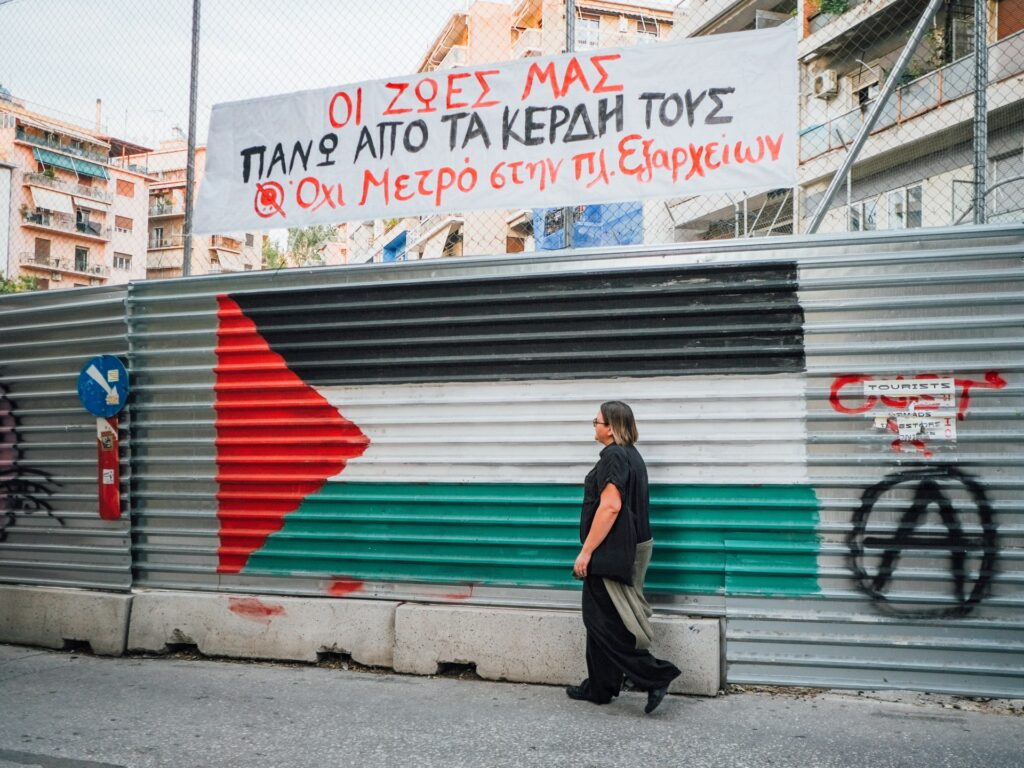
Katerini has lived in her flat since 1986. The balcony doors are open, and the noise from nearby cafés drifts past the plants and piles of architectural plans. Her group estimates that more than half of the new company‑run hotels and rentals in the area are funded by Israeli investors. In a neighbourhood where Palestinian flags hang from balconies and solidarity slogans cover walls, that fact has fueled tension.
On Katerini’s own cobbled street, Israeli investors have bought two buildings, she says. The flat directly below hers now belongs to one of those companies. A few streets away, a residential building is painted with black slogans: “Airbnbs leave us homeless” and “Zionists not welcome.” Such buildings are easy to identify; the buzzer panels show only numbers and a keypad releases keys for short‑term guests. Activists have sprayed red paint on keypads and facades across the area, accusing short‑term rentals of driving aggressive gentrification that pushes locals out and erases the neighbourhood’s identity.
Foreign money has flowed into Greek property in recent years. The Bank of Greece reported a record €2.75 billion ($3.2 billion) in non‑resident investment in 2024, before the figure eased last year. No official data break down foreign buyers in Athens by nationality, but a RE/MAX Hellas survey of completed sales found Israelis to be the largest group of foreign purchasers in Attica, ahead of buyers from Turkey and Lebanon, according to the Greek weekly To Vima.
Exarchia’s activist roots run deep. In 1973 students at the nearby Athens Polytechnic rose up against the US‑backed military regime, which fell the following year. In 2008 police shot 15‑year‑old Alexandros Grigoropoulos in Exarchia, sparking nationwide protests that Katerini described as “fire on dry land.” The street unrest helped the left‑wing Syriza party win power in 2015.
Chrysoulla Papageorgiou, a 46‑year‑old schoolteacher who has lived in Exarchia for 24 years, recalls the area as “a neighbourhood of solidarity.” She says the change was gradual at first, with owners renting spare rooms, but accelerated after the COVID‑19 pandemic when companies began buying whole blocks. “Overnight, tenants were displaced and apartment blocks emptied,” she said. Bars opened onto the pavements, rents rose, and migrants and low‑income families—many living in basements or lower floors—were the first to leave. Schools lost pupils, and traditional bookshops, cafés and grocers closed.
For years residents sheltered refugees in occupied buildings. Those prime‑location properties were among the first the police emptied and then sold, Papageorgiou noted. “Half were squats,” she said. “Now we have only one.” That remaining building is draped in painted sheets declaring solidarity with the families inside, and neighbours help ensure the children can attend school.
Since 2022 Exarchia Square, the historic protest hub, has been fenced off for a new metro station that many locals opposed. Riot police now patrol the area daily, a presence Papageorgiou believes aims to turn central Athens into a “purely touristic” zone. She says most foreign buyers in recent years have been Israeli.
Katerini adds that Israeli investors view Greece as a safer haven for their money than Israel itself, and that the Greek government is “very friendly with Israel.” In August Athens signed a missile deal with Israel worth $3.5 billion.
Vagelis Lazaridis, a stocky real‑estate agent who heads a branch of the Athens‑Attica Real Estate Agents’ Association, says the investments are driven by practical considerations. “Exarchia was a run‑down area, which made it a very good opportunity,” he explained. “It is close to the centre, near the metro and universities full of foreign students. Unlike Plaka beneath the Acropolis, it has few building restrictions.”