ICJ Says Pakistan’s Courts Have Been Captured After 26th and 27th Amendments: What the Report Means
The International Commission of Jurists has delivered one of the sharpest verdicts yet on Pakistan’s recent constitutional changes, concluding in a report released on Wednesday that the 26th and 27th Amendments have led to what it calls “systemic judicial capture”. The finding gives a long-running political argument a new, international frame.
The report, titled “Judicial Capture: Independence of the Judiciary in Pakistan after the 26th and 27th Constitutional Amendments”, examines the structure of the courts rather than individual cases. It concludes that the higher judiciary no longer enjoys the institutional guarantees of independence required under international law, which raises a practical question for ordinary Pakistanis: when a citizen takes on the state in court, can the court still decide freely?
What the report actually says
The Geneva based Commission says the two amendments together have stripped the highest courts of the safeguards required by Article 14 of the International Covenant on Civil and Political Rights and the UN Basic Principles on the Independence of the Judiciary. Its language is unusually blunt: “Instead, the 26th and 27th Amendments have led to systemic judicial capture by other branches of the state and the dismantling of the rule of law in the country.”
Its Secretary General, Santiago Canton, said: “The 26th and 27th amendments have done exactly what we feared: they have placed Pakistan’s highest courts under the control of the executive. When the courts are captured, no one is left to hold the government to account, and victims of human rights violations have nowhere to turn.” The report calls for a comprehensive review of the amendments in light of international law and standards.

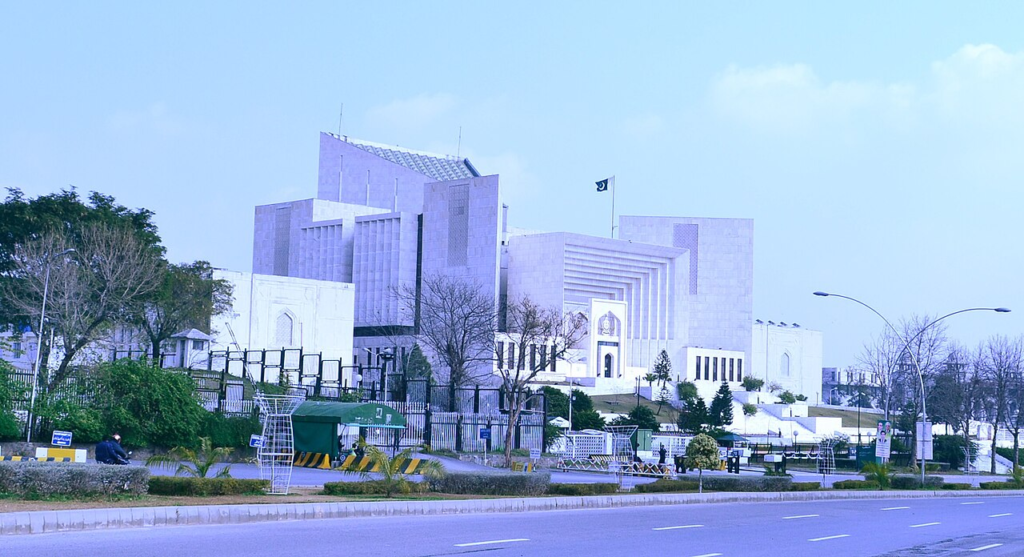
The Supreme Court of Pakistan in Islamabad. Photo: Usman Ghani, Wikimedia Commons (CC BY-SA 3.0).
How the two amendments changed the courts
The 26th Amendment, passed in October 2024, created constitutional benches in the Supreme Court, with members chosen by a reconstituted Judicial Commission of Pakistan in which judges no longer held a majority. It also removed the court’s suo motu powers, fixed the chief justice’s term at three years, and let the prime minister pick the chief justice from the three most senior judges.
Barely a year later, the 27th Amendment replaced those benches with a separate Federal Constitutional Court, overhauled the judicial system, changed the military’s chain of command and granted immunity to top government officials. Two Supreme Court justices, Syed Mansoor Ali Shah and Athar Minallah, resigned in protest after the president signed it in November 2025. The Commission says that shift in control is the core of its “capture” finding.
Why this matters beyond the courtroom
Constitutional courts decide election disputes, the limits of executive power, the rights of detained citizens and the validity of laws passed by parliament. If the body making those decisions is seen as answerable to the government of the day, every ruling carries a question mark. It also matters abroad: Pakistan’s courts are the first place citizens are expected to seek a remedy when rights are violated. The Human Rights Commission of Pakistan has separately called for both amendments to be reviewed, so the pressure is domestic as well as international.
What happens next
The government has not yet responded in detail, and the review the Commission wants would need political agreement that does not exist. The opposition has long opposed both amendments, while the ruling coalition defends them as necessary reforms, so a quick reversal is unlikely. What the report does change is the terms of the debate: critics can now point to a detailed, independent assessment rather than political rhetoric, and the government will be pressed to answer specific findings. Whether that leads to reform or a longer argument, the question of who controls Pakistan’s courts is now on the international record.
Sources: Dawn, The Express Tribune, Geo News, International Commission of Jurists