Gaza’s Breast Cancer Patients Face Worsening Plight as Delays Mount
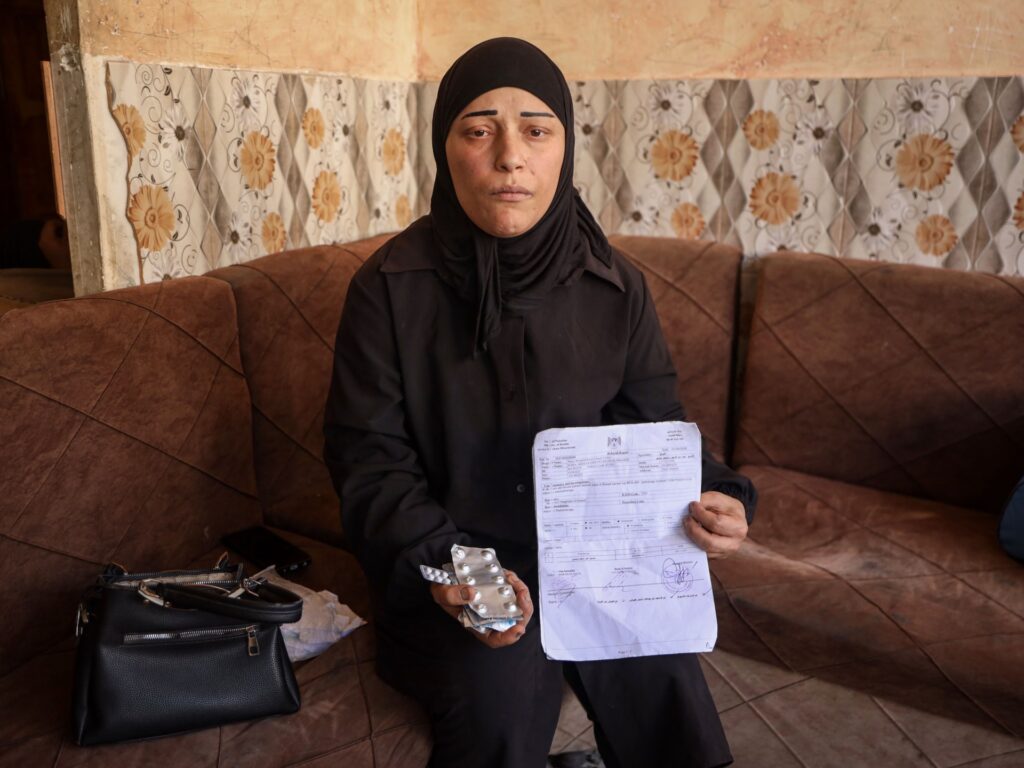
Deir el‑Balah, Gaza Strip – Hiba Musbah, a 36‑year‑old mother of three, has already endured seven cycles of chemotherapy for the breast cancer that has plagued her since early 2024. She is due for an eighth round next week, but the disease has continued to progress while she waits for permission to leave Gaza for further care.
“My son is the one who helps me now,” Musbah told Al Jazeera, adding that she can no longer care for her children as she once did. Her husband, Motaz, who suffers from a heart condition, has taken on most of the household responsibilities for their children Mohammed, 13, Jaber, 10, and Ahmad, eight.
Musbah first felt lumps in her right breast in January 2024, a few months after the conflict in Gaza intensified. Displaced and preoccupied with the war, she initially ignored the symptoms until her mother urged her to seek medical help. Doctors confirmed cancer, but an operation that should have been immediate was postponed for two months because Israeli military attacks around Nasser Hospital in Khan Younis made the area unsafe.
“The bombardment and the tanks made it impossible,” she recalled. “I delayed the operation because of the war. The last time I almost died from tank fire, so I postponed the surgery.”
Chemotherapy was also delayed, lasting seven months before the necessary medicines arrived at Nasser Hospital. Musbah’s story reflects the broader crisis facing hundreds of Gaza women with breast cancer, as the war and blockade have crippled the health system’s capacity to diagnose and treat the disease. Shortages of medicines and equipment, broken diagnostic machines, the absence of radiotherapy, and the difficulty of exiting the Strip for specialized care have turned cancer treatment into a daily struggle amid a deepening humanitarian emergency.
Musbah now needs a new computerized tomography (CT) scan to determine whether the cancer has spread, but the equipment is unavailable in public hospitals. A private facility does have a scanner, yet the cost of about 150 shekels (roughly $48) is beyond her means, and appointments can be delayed for more than three months.
“I am suffering from back and leg pain, and I have not had a scan for three months because the equipment is unavailable,” she said. “My doctor told me he is worried the disease may have spread, but I still do not know.”
She struggles to walk, can barely move one arm, and endures pain in her shoulder, legs, and eyes, along with damage to her hair and nails from treatment. “If I had received treatment early, things would not have reached this point,” Musbah added. “Cancer patients also need good food, fruit, meat, fresh produce, but we cannot afford everything we need.”
Musbah has been waiting roughly two years for a medical referral that would allow her to travel outside Gaza, but Israel, which controls all entry and exit points, has not granted the required security clearance. “I want to travel, receive treatment and get better,” she said. “I want to regain my health and return to the way I was before.”
The Gaza Ministry of Health reported that the Strip recorded about 360 new breast‑cancer cases each year before the war, compared with 250 in 2024 and around 260 in 2025. Officials warned that these figures likely underestimate the true number of cases because screening and early‑diagnosis services have largely collapsed, leaving many patients undiagnosed. In a statement on October 1, the ministry said repeated breakdowns of mammography machines and shortages of laboratory supplies have severely limited early detection. Chemotherapy, hormonal and targeted therapies are either unavailable or critically scarce, and radiotherapy is completely absent. Surgery for advanced tumours has also been halted due to a lack of specialized capabilities.
Dr Iman al‑Haj Ahmad, an obstetrician‑gynecologist at Hikmat al‑Jamei Health Centre in Deir el‑Balah, knows these obstacles both as a physician assisting women in need of screening and as a breast‑cancer patient herself, having been diagnosed in May 2025. “I had to search until I found a place where I could get a mammogram,” she explained. “I keep thinking about ordinary women who do not have the medical knowledge or resources to navigate this system.”