
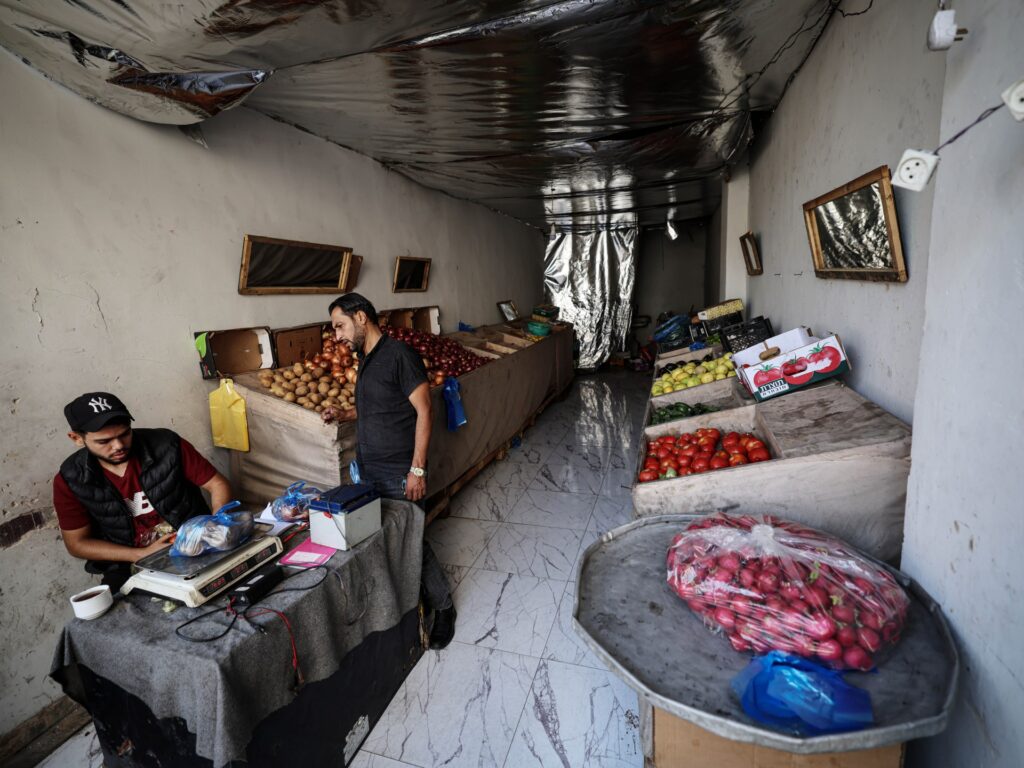
Gaza families worry about food shortages as Israel stops commercial shipments
Prices for basic items in Gaza have surged as Israel entered its fifth day of halting commercial goods from entering the enclave. Residents already living under a long‑standing siege are beginning to stock up on whatever they can find, fearing further shortages and rising costs.
The cost of flour, eggs, onions and other staples jumped sharply after Israel announced on Wednesday that commercial shipments would no longer be allowed. The move follows a dispute over fees involving Palestinian merchants and Hamas, which still holds some authority in the territory.
Since the war began in October 2023, hundreds of thousands of Palestinians in Gaza have slipped into poverty. The war and the tightened blockade have driven up prices while incomes have fallen. Those who cannot afford to buy in bulk will have to purchase food piecemeal, and they will feel the impact of daily price hikes if the border stays closed.
In the markets, activity has risen slightly as people scramble for supplies. Ismail al‑Barawi, 52, from Jabalia in northern Gaza, said he saw prices climb dramatically within two or three days of the crossing’s closure. He described a familiar pattern of uncertainty about the crossings that is usually followed by higher prices.
Al‑Barawi noted that a carton of eggs that cost 35 shekels ($11.34) was now selling for between 60 and 70 shekels ($18 to $21). A kilogram of onions rose from five or six shekels ($1.50–$1.80) to eight or ten shekels ($2.40–$3), and a kilogram of avocados jumped from seven or eight shekels ($2.10–$2.40) to around 15 shekels ($4.50). “These increases happened in just two or three days,” he said, expressing concern about what prices could look like if the crossings stay shut for another 10 to 15 days.
Because of the price surge, al‑Barawi now buys smaller quantities. Instead of a full carton of 30 eggs, he may purchase only four or five. “Today, everyone is trading at the expense of the people. There is no mercy,” he said, blaming traders for raising prices as soon as they hear the crossings may remain closed, which adds to the problem of real shortages.
He warned that a 50‑kilogram sack of flour could soon cost 200 or even 300 shekels ($60–$90) if the blockade continues. Al‑Barawi is responsible for feeding an extended family of about 11 or 12 people, including his married daughters and grandchildren. When he has money, he prioritises staples such as flour, rice, cooking oil, onions and potatoes.
Many families, however, have no money left to save. “Some people cannot even afford to feed themselves for a day. How much can they store when they have no money?” he asked. Stockpiling is also limited by the short shelf life of fresh vegetables and unreliable electricity, which makes storing meat difficult.
Gaza’s Government Media Office rejected Israel’s justification for the suspension, saying that Gaza authorities did not impose taxes or fees on commercial trucks. The office explained that the 10,000‑shekel ($3,242) amount cited by Israel was linked to a voluntary community fund meant to support vulnerable families and relief projects. It also said a 30 percent rate for cash transactions had been introduced in agreement with the Chamber of Commerce to address a shortage of cash liquidity and worn‑out banknotes.
The office accused Israel of using the fee dispute to tighten restrictions on supplies entering Gaza, which has been under an Israeli blockade since 2007. It called on mediators and international actors to push for the entry of 600 trucks a day, as stipulated in existing agreements with Israel, and warned that continued limits would worsen the humanitarian and economic crisis.
Food remains unaffordable for many households. The United Nations Office for the Coordination of Humanitarian Affairs reported that in September 2026, food prices in Gaza were on average 204 percent above pre‑October 2023 levels, when the war began and Israel tightened restrictions. Its October 2 situation report, issued before the latest border restrictions, documented the broader humanitarian pressures facing residents.
Iman Atallah, a 50‑year‑old displaced woman living in Beit Lahiya in northern Gaza, said the halt to food deliveries has revived memories of the man‑made hardships she endured earlier in the conflict, and that rising flour prices are making it increasingly difficult to afford basic meals for her family.