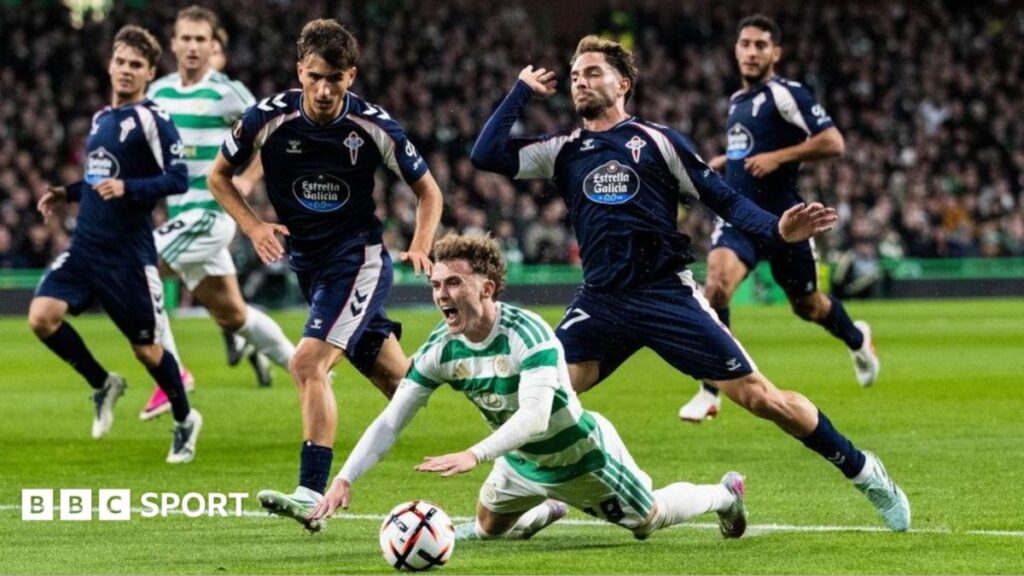
Celtic’s European decline deepens as they stumble again
When Mika Baur found the net early in the second half against Celta Vigo, Celtic seemed to have turned a corner. The visitors from La Liga were under pressure, and Celtic displayed a surge of intensity, momentum and belief that had been missing for weeks. Liam Scales even headed the ball over the crossbar, adding to the optimism. In the first half the Spanish side completed more than 350 passes but managed only a single shot on target, a display that looked more about possession than penetration.
The mood changed dramatically in the final thirty minutes. From the 68th to the 71st minute the game swung from a three‑point lead to a draw, and eventually a defeat that left supporters fuming. Celtic’s third consecutive loss in the Europa League left them second‑last in the competition, with only an Armenian club ahead of them.
Manager Martin O’Neill lamented the “marginal moments” that cost them, but the underlying issue appears to be a lack of quality. Celtic stopped playing after the setback and seemed unable to recover mentally. A missed foul on Camilo Duran just before Celta’s equaliser sparked complaints, yet the bigger problems were the poor handling of a free‑kick, the failure to track the first scorer and the chaotic defence that allowed the second goal. The team appeared spent long before the final whistle, a pattern that has become all too familiar.
Chris Sutton labelled the side “flat‑track bullies”, a description that few Celtic fans would dispute. Their recent domestic form, highlighted by a 7‑1 victory over Hearts, proved a poor indicator of European capability. Some fans, still smarting from defeats to Rangers, LASK, Ferencvaros and Benfica, tried to downplay the criticism by pointing to the domestic thrashing, but the sentiment remained unchanged.
O’Neill’s claim on Thursday that “there are still loads of points to play for” sounded desperate given the team’s precarious position. With three losses, three goals scored and nine conceded, talking about future points feels more like wishful thinking than realistic planning.
Responsibility for the slide rests on many shoulders. While O’Neill and his players bear the brunt, the club’s board has also been criticised for its silence on fan‑club tensions. No chief executive, chairman or major shareholder has addressed the growing disconnect, leaving the manager and his assistants to field questions beyond their control.
After the broadcast ended, a montage of past Celtic Park triumphs reminded fans of the glory days: victories over a Manchester United side featuring Paul Scholes, Ryan Giggs, Cristiano Ronaldo and Wayne Rooney; a win against an AC Milan line‑up that included Alessandro Nesta, Andrea Pirlo, Clarence Seedorf and Kaka; and a famous success over a Barcelona team starring Jordi Alba, Xavi, Andrés Iniesta and Lionel Messi. Those nights shook the stadium to its core. Today, the same venue hosts empty seats and early departures against a mid‑table Spanish side in a second‑tier competition.
Even more recent memories, such as the February tie with Bayern Munich that ended 2‑2 on aggregate after a hard‑fought second leg in Germany, highlight how far the club has fallen from its European pedigree. The contrast between past triumphs and the current apathy underscores the urgent need for a clear vision if Celtic hope to restore their standing on the continental stage.