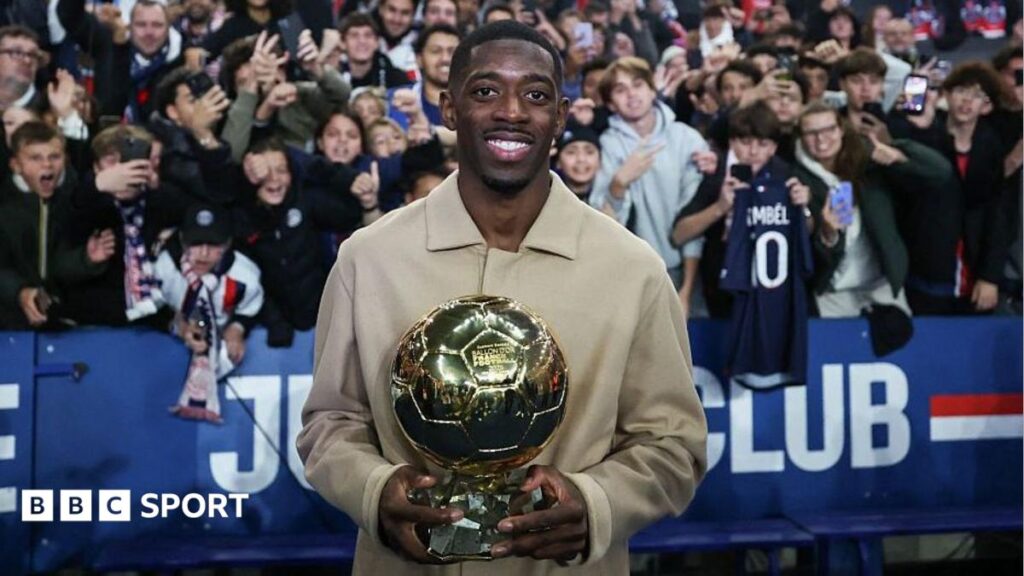
Ballon d’Or race as intense off the field as on it
Ousmane Dembélé still seemed dazed by his triumph at Paris’s historic Théâtre du Châtelet last September, gold‑plated trophy in hand, when the campaign for the 2026 men’s Ballon d’Or kicked into high gear. Clubs rallied their nominees, the media fed the excitement, and the question on everyone’s lips was who truly deserved the prize in a World Cup year, when national glory could tip the scales for football’s top individual honour.
“The Ballon d’Or is mentioned every single day,” said European football analyst Guillem Balague on BBC Sport’s Euro Leagues podcast. “It mirrors society’s focus on the individual; it’s easier to celebrate a single dribbler than to understand a collective effort.” As the red‑carpet ceremony approached, the buzz only grew louder. “You can’t underestimate the PR machinery that clubs and players will unleash,” added French football journalist Julien Laurens.
Coaches and sporting directors praised their own candidates while questioning why some teammates failed to make the 30‑player shortlist. Former Barcelona midfielder Deco called the omission of teammates Raphinha and Pedri a “huge scandal,” yet he tipped Lamine Yamal as the clear favourite, not because he plays for Barcelona but simply “because I love football.” Yamal himself said he would not “beg for anything,” recalling last year’s dream of “winning many” awards, and argued that the honour should not be decided solely on goal tallies.
Paris Saint‑Germain boss Luis Enrique admitted he was “bored of the Ballon d’Or,” perhaps preferring to stay out of the debate despite a record ten PSG players on the shortlist. Dembélé and Georgia’s Khvicha Kvaratskhelia praised each other in a BBC Sport interview. “We could split it in two,” Dembélé joked. “Honestly, he deserves it; his season was phenomenal.” Kvaratskhelia replied, “Of course it’s him!” He added that a “Kvara d’Or” campaign in Georgia celebrated the nation’s beloved winger and noted that for smaller footballing nations the meaning of such a win is harder to grasp.
Real Madrid coach José Mourinho’s comparison of Kylian Mbappé to the original Ronaldo seemed to spur the French striker to be more outspoken. “I always think I’m the best, but everyone has their own view,” Mbappé said, noting his status as the all‑time World Cup top scorer. “This could be the year I finally get the Ballon d’Or – but journalists decide.” Since the 2015 reform that removed national team captains and managers from the vote, the 30‑player list compiled by France Football and L’Équipe is now judged by one journalist from each of the top 100 FIFA‑ranked nations. The voting deadline has passed and the winner has already been selected.
Sports branding expert James Kirkham likened the buildup to an election, saying, “You go out, canvass, secure votes, and make sure you have support in key countries.” Not everyone embraces the lobbying. Bayern Munich sport director Max Eberl, who backed Harry Kane and Michael Olise, remarked that the truly great players “don’t need to run a campaign.” Former Ballon d’Or winner Jean‑Pierre Papin told French television, “I like Kylian a lot, he’s a record‑breaker. But at some point it becomes all about me, me, me.” Mbappé reflected on the Messi‑Ronaldo era, noting that the award has traditionally gone to “different” players rather than ordinary ones.
The last player to win before Messi and Ronaldo’s long dominance was AC Milan’s Kaká in 2007, a year after Facebook and Twitter opened to the public and Nokia ruled the mobile market. By the time Lionel Messi claimed his eighth Ballon d’Or in 2023, the world had changed dramatically. Former AC Milan chief executive Ariedo Braida observed, “Everything moves at the speed of light today. Fans follow the individual stars more than the clubs.” He recalled a time when supporters would go to the stadium just for Milan, whereas now the Champions League delivers the biggest names instantly, creating a nostalgia for the anticipation that once built up around such events.