At This New Mallorca Resort, Local Artisanal Spirit Meets World‑Class Hospitality
Mallorca has been quietly shedding its image as a simple sun‑and‑sea getaway. Its beaches still draw crowds, as do the secluded mountain villages, sparkling coves and relaxed lunch culture. Yet beyond the familiar Balearic postcard, a different side of the island is emerging. Age‑old craft traditions are reaching new audiences, a younger wave of designers is reinterpreting the island’s creative legacy, and Palma has cultivated a confident contemporary shopping and cultural scene. Hotels are also adapting to this shift.
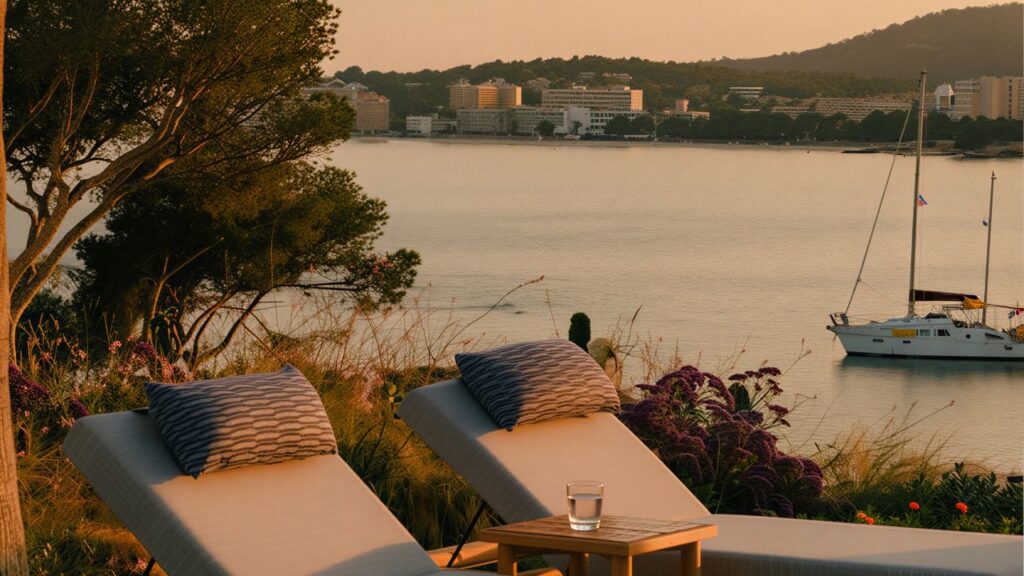
The newest addition is Mandarin Oriental Punta Negra, which opened in June 2026 on the island’s southwest coast near the upscale Puerto Portals marina, a hub for luxury yachts, high‑end shopping and fine dining. Set on a secluded headland where Aleppo pines shade rocky bays and the Mediterranean laps a muted horizon, the resort marks the Mandarin Oriental brand’s first venture into the Balearics. It blends the chain’s renowned global service with a genuine sense of Mallorcan place.
The property replaces the former Hotel Punta Negra and has been transformed into a sprawling yet intimate retreat of 131 rooms and suites spread across four buildings that nestle into the landscape. Each building draws inspiration from a different element—sea, soul, wind and pine—and the interiors were shaped by French designer Laura Gonzalez. Natural materials, coastal hues and locally sourced stone dominate the architecture. Throughout the guest rooms and public areas, artworks by Mallorcan and international creators showcase the island’s vibrant creative culture. Art consultant Paloma Fernandez‑Iriondo commissioned 21 local artisans for the opening, including Vera Edwards, who contributed 44 oil paintings and discovered that her great‑grandmother’s mosaic had once adorned the original 1960s walls, and Spanish‑Mexican painter Rafael Uriegas, whose lively murals greet visitors in the lobby.
My own “casita” suite, charmingly named “almendra” (Spanish for almond), echoed the design of traditional fishermen’s houses and featured a private terrace with sea views. Two hidden Mallorcan coves are reachable from the resort, one just steps from my door, perfect for an early‑morning dip in the still‑pleasant October water. Fig and pomegranate trees line the pathways; although the figs were not yet ripe, I made a daily habit of picking a plump one on the way to breakfast, enjoying it fresh or with a slice of soft cheese.
During my stay, the weather turned gray, with clouds breaking the usual crystal‑blue sky. The overcast conditions offered a chance to explore what makes Punta Negra special beyond sun‑bathing. Art remains a central focus. The hotel has partnered with Villa del Arte, an international contemporary gallery, to run an exhibition program that stretches from indoor galleries to the gardens and terraces. Sculptures, paintings and installations—including large bronze works by Coderch & Malavia and tactile tapestries by Vanessa Barragán that employ ancestral techniques—share space with the hotel’s permanent collection. Guests can arrange private tours and purchase pieces; I left with a locally made plate and a hand‑crafted fan.
Beyond the resort, I ventured inland to Vidrios de Arte Gordiola, a historic glassworks whose centuries‑old practice remains one of Mallorca’s most remarkable artisanal traditions. It is the island’s only furnace that still uses local wood, a method protected by UNESCO. Watching the glassblowers shape molten glass with breath, speed and practiced gestures was mesmerizing. Multi‑generational families operate the ovens using techniques that are disappearing elsewhere, producing topaz and turquoise glass that now decorates the hotel’s restaurants and bars. I was later introduced to Mar Bermejo Aldeguer, who grew up in the family glass factory and now runs the modernist brand La Bermeja in Madrid, creating sleek blown‑glass bridal bouquets.
The visit highlighted a broader revival of Mallorca’s making traditions. The island has long been home to skilled ceramists, textile makers, glassblowers and leatherworkers, and these crafts are increasingly intersecting with contemporary design. In Palma, the crossover is especially vivid. A stroll through the old town revealed an independent shopping scene filled with boutiques and ateliers. At Cortana, the Mallorcan fashion label founded by designer Rosa Esteva, a concept store housed in a restored townhouse feels like an art exhibition, showcasing fluid, sensual silhouettes that echo the island’s evolving creative spirit.