After Bilawal’s Outburst, Zardari and Shehbaz Choose Dialogue Over a Coalition Break
The coalition’s loudest week in months ended, for now, in a quiet room at Aiwan-e-Sadr. On Thursday, President Asif Ali Zardari sat down with Prime Minister Shehbaz Sharif and Interior Minister Mohsin Naqvi, and the three agreed that the ruling alliance’s disputes would be settled through dialogue and consultation, not through television speeches.
The meeting came two days after PPP Chairman Bilawal Bhutto-Zardari used a Meet the Press event at the Karachi Press Club to deliver a sweeping charge sheet against the government his party supports from outside the cabinet. He complained that the PPP was not consulted on key national and federal matters, questioned the treatment of JUI-F chief Maulana Fazlur Rehman, described jailed PTI founder Imran Khan as a political prisoner, and said the 27th Constitutional Amendment had subjugated the judiciary. He also rejected a referendum on new provinces, an idea floated by Information Minister Attaullah Tarar, and said he would rather contest early elections than accept a process misused by unconstitutional forces in the past. His warning that forcing a division of Sindh could bring blood to the streets of Karachi and Hyderabad drew the sharpest response.
A meeting with no aides, and a short statement
According to the brief official readout from the Presidency, the current political situation was reviewed in detail, along with developments in the Middle East, and it was decided that the leadership would sit down together on all matters and resolve them through consultation. The statement added that previous constitutional amendments had been passed through mutual consultation among all allied parties.
In a break from the usual pattern, no delegations or aides accompanied either leader. Bilawal, who was in Islamabad on Thursday, did not take part, while Naqvi, the minister he had singled out for criticism, arrived with the prime minister. Before the meeting, Senator Sherry Rehman clarified that Bilawal had never threatened violence, only warned of the possibility, and that he remained an integral part of the coalition.

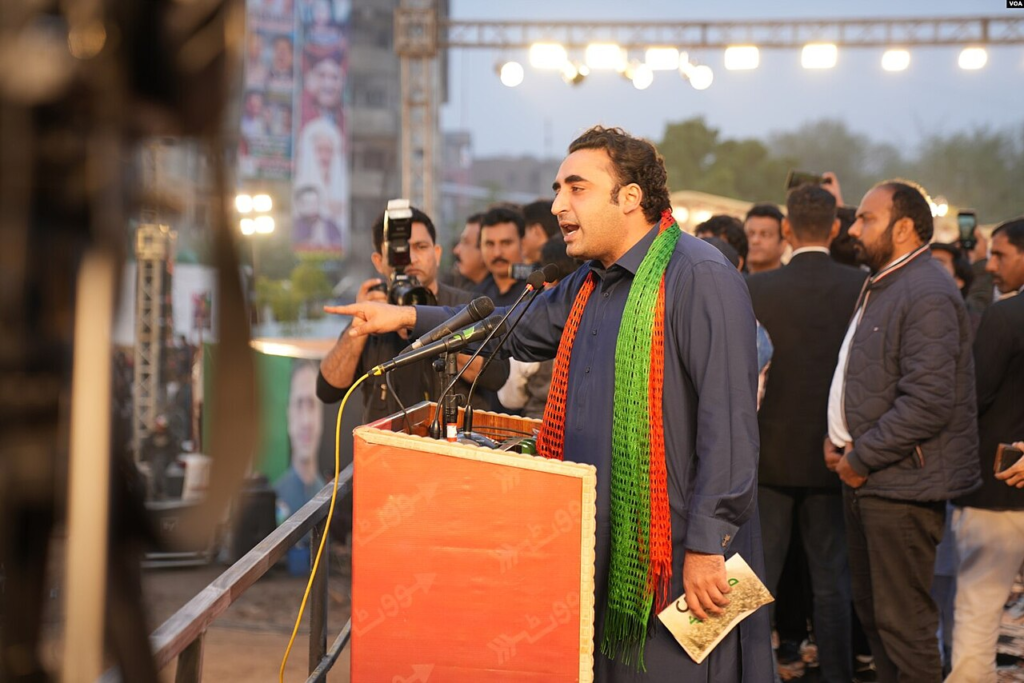
Bilawal Bhutto-Zardari with his father, President Asif Ali Zardari. Photo: Voice of America, public domain, via Wikimedia Commons.
Why the row matters beyond the headlines
The dispute is about more than tone. The new provinces debate, revived in July when Naqvi called for a “system reset”, touches the constitutional question of how Pakistan is run and who gets to decide it. The PPP governs Sindh and points to a unanimous Sindh Assembly resolution, passed on 4 September, opposing any division of the province, while the PML-N and MQM-P argue smaller units would improve governance. Behind the provinces question sits a second, older grievance: the PPP says it is informed after decisions are made, not consulted before them. That complaint predates this week, which is why a single meeting is unlikely to settle it.
The row also showed how quickly the coalition’s arguments spill into the open. Within a day of Bilawal’s speech, Khawaja Asif, Tallal Chaudhry and MQM-P leader Mustafa Kamal had all answered him in public, and the PPP chief spent the next day answering them back on television. The PPP has also been reaching out to opposition parties. None of that amounts to a break, but it is a reminder that the PPP has options if it feels ignored.
What to watch next
The real test of Thursday’s meeting will be the next big decision. If the PPP is brought into the discussion before it is announced, the meeting did its job. If the next announcement lands the same way the last ones did, the same row will return, louder. But the argument that caused the crisis, over new provinces, over consultation, and over who speaks for the alliance, is still open.
Sources: Dawn, Geo News, The Express Tribune