
West Bank health system collapses as Israel halts PA funding
Khaldoun Atwan begins each shift in the oncology ward of Beit Jala Government Hospital without knowing what obstacles lie ahead. The Nabi Yunis checkpoint in Halhul is often closed, forcing the head of the daytime oncology unit to abandon his car and complete the journey from Hebron by taxi. “More than once, by God, I found the mirror broken. I found the wiper broken,” he said, describing the difficulty of navigating a maze of gates and checkpoints that open and close at whim. He cannot be sure he will reach the hospital, that his patients will arrive, or that the medicines they need will be on the shelves.
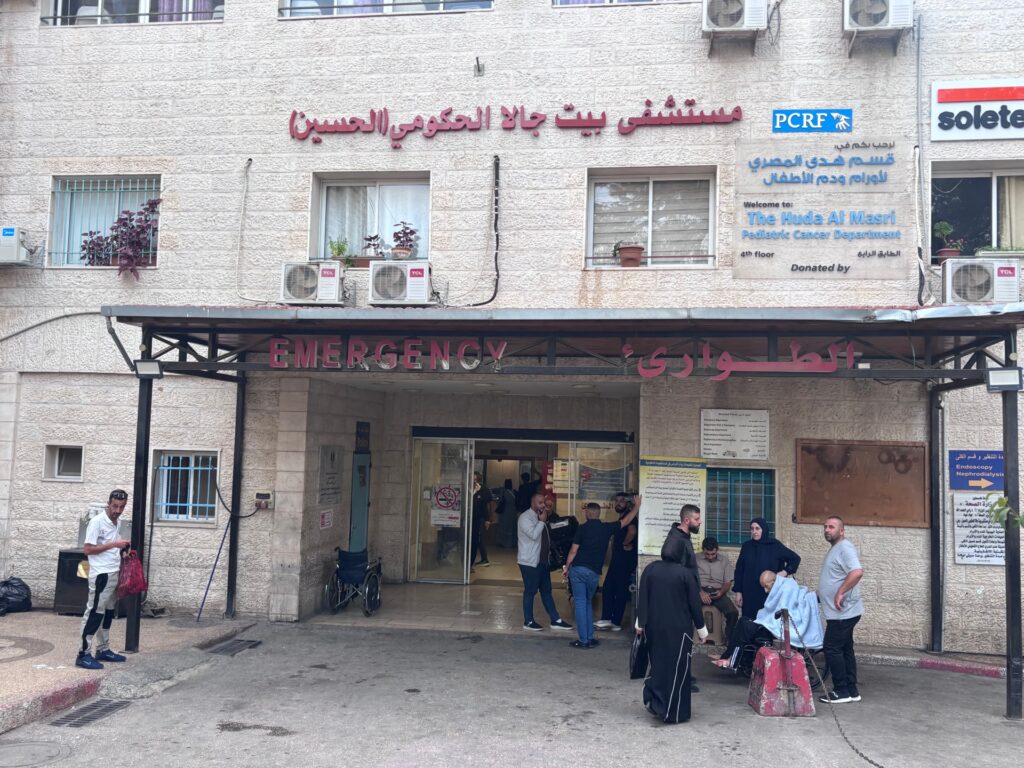
Beit Jala is the sole government hospital serving the Bethlehem governorate, home to roughly 320,000 residents. In his modest office, Atwan struggles to keep cancer patients on their treatment plans after missed appointments and a lack of essential chemotherapy drugs. He recalled that even during the second Intifada drug shortages were rare; today they are unavoidable. “Everything’s short … whatever’s available we give,” he said. “It’s a disaster.”
The Palestinian Authority’s finances have collapsed over the past three years as international aid dwindles and Israel’s transfers of tax receipts are repeatedly disrupted. Since October 2023 Israel has imposed extensive road closures, checkpoints and a series of settler attacks in the occupied West Bank, further hurting the economy. As a result, the health system in the occupied territories is rapidly deteriorating: staff receive only half of their salaries and the PA cannot afford vital medicines.
An older cancer patient from a village in the Bethlehem governorate stood with his son at the hospital entrance, weighing his options. “Every month they do their best, the doctors and the cleaning staff, but they aren’t provided with anything,” he said. Ministry clinics now operate part‑time, with doctors sometimes seeing more than 100 patients a day. A visit to a doctor now costs about 200 shekels (around $65), according to another elderly patient.
“It’s not a story of there being no staff,” said Iyad Dari, the physician in charge of the dialysis unit at Beit Jala. Employees are paid only half salary, so many government workers can only afford to work two or three days a week. Consequently, the hospital can attend to emergency cases only. “At first, patients were angry. But now everyone understands: everyone’s suffering,” Dari added.
The shortage of medical supplies in Beit Jala and across the West Bank stems from Israel’s withholding of tax revenues earmarked for the PA, a policy driven by Finance Minister Bezalel Smotrich. “This crisis is very predictable, and we saw it coming 100 percent,” said Milena Ansari of Physicians for Human Rights Israel. Even before the war in Gaza began in October 2023, Israel periodically withheld tax revenues, jeopardizing the Ministry of Health’s budget, she noted.
Yosef Ojra, an internal‑medicine specialist at Beit Jala, explained that the withheld funds have emptied the Health Ministry’s accounts, leaving medical suppliers unable to receive payment and thus refusing to deliver. The continual borrowing of supplies between public and private health sectors has placed immense strain on private clinics, pharmacies and hospitals.
Oncologist Hisham Amle said shortages are “an old problem, not a new one,” but that before the crisis about 90 percent of essential chemotherapy items were available. Now even immunotherapies and biologics are missing, and cancer treatment can no longer follow an uninterrupted schedule. “If the patient misses a session or two, he’s lost all the treatment before it,” he warned.
“When I first took over the department, the drugs were available,” Atwan recalled. He then listed the critical medicines now absent from his inventory, noting that no complete treatment protocol can be followed. Pharmacy director Khuloud Dweib said the ministry recently secured eight previously missing oncology drugs and four biologics, enough for roughly six weeks to two months, but many other medicines remain out of stock.
Unlike Gaza, Israel is not blocking medicines from entering the West Bank, Ansari pointed out. The core issue is that the PA lacks the funds to purchase them, yet Israel, as the occupying power, bears the legal responsibility to ensure adequate medical care for the occupied population.
For the southern West Bank, Beit Jala Hospital is the only public facility offering cancer and dialysis services, serving patients from Bethlehem, Hebron, parts of East Jerusalem and occasionally Jericho.