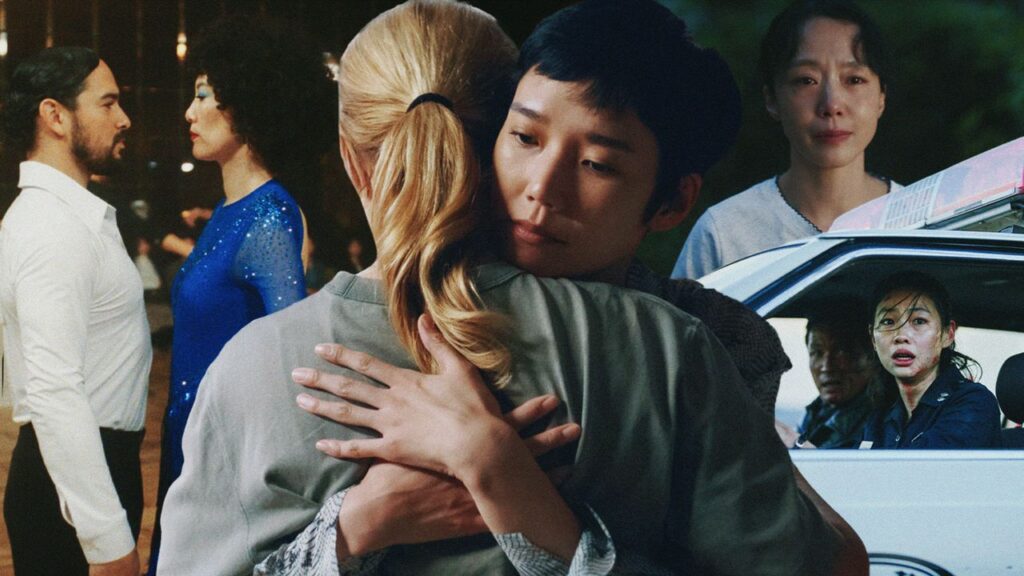
Four Asian Actresses Shine in Diverse Fall Films
A grieving widow rediscovers her zest for life on a Tokyo dance floor, a working‑class wife becomes the focus of a wealthy filmmaker’s documentary, a terminally ill theater director forges an unexpected friendship in France, and a rookie police officer confronts a mysterious menace in a remote Korean village. The four movies—Ha‑chan, Shake Your Booty!, Possible Love, All of a Sudden, and Hope—could not be more different, yet each has garnered attention on the 2024 festival circuit, earning prizes at Cannes, Venice and Sundance. Equally noteworthy are the standout performances by four Asian actresses at various points in their careers: veteran stars Rinko Kikuchi and Jeon Do‑yeon, model‑turned‑actress Tao Okamoto, and newcomer Hoyeon. Working across genres from intimate dramas to grand spectacles, they bring richly layered, unpredictable characters to the screen, underscoring a banner year for Asian female talent in cinema.
Two decades after her Oscar‑nominated turn in Alejandro González Iñárritu’s Babel, Rinko Kikuchi showcases her comic talents in Ha‑chan, Shake Your Booty!, which arrived in the United States last month. She portrays Haru, a widow who falls for her charismatic ballroom‑dance instructor while still haunted by her late husband, whose lingering presence appears as a giant crow. The film blends grief, desire, fantasy and dance, featuring elaborate musical numbers and a playful homage to Dirty Dancing. Kikuchi makes Haru’s sometimes awkward pursuit of romance both humorous and moving, embracing the character’s impulsive, occasionally absurd behavior without lessening the depth of her loss. Inspired by director Josef Kubota Wladyka’s mother, the picture offers a candid look at middle‑aged female desire. For an actress whose résumé includes the Hollywood blockbuster Pacific Rim and the offbeat indie Kumiko, the Treasure Hunter, the role stretches her range further than before; she shimmies, daydreams, embarrasses herself and ultimately argues for the possibility of joy after heartbreak.
Jeon Do‑yeon brings her renowned emotional precision to Possible Love, a film that reunites her with director Lee Chang‑dong after nearly twenty years. Lee, who last directed Burning in 2018, earned a Cannes Best Actress award for Jeon’s performance in Secret Sunshine. Possible Love opens in U.S. theaters this Friday and will stream on Netflix on November 6. The layered drama examines class, marriage and the uneasy link between artistic ambition and exploitation. Jeon plays Mi‑ok, whose husband has been unemployed since losing his factory job. When a wealthy documentary filmmaker approaches the couple to chronicle the struggles of laid‑off workers, Mi‑ok and the filmmaker develop an unlikely friendship, pulling their spouses into a tense dynamic that exposes the economic divide between the two families. Jeon excels in the role, allowing hints of envy, resentment and longing to surface beneath Mi‑ok’s cheerful, accommodating exterior without sacrificing her warmth or loyalty. Her subtle facial shifts reveal a woman far more complex than the long‑suffering wife she might first appear to be, a talent she has displayed throughout her career, including as a domestic worker entangled in a destructive affair in the 2010 film The Housemaid.
Tao Okamoto delivers a gentle intensity as Mari in Ryusuke Hamaguchi’s All of a Sudden, which opens in theaters on November 25. Mari is an avant‑garde theater director diagnosed with terminal cancer who forms a close bond with Marie‑Lou, played by Virginie Efira, the head of an elder‑care facility outside Paris. The three‑hour film unfolds mainly through conversations between the two women, who shift between Japanese and French while exploring mortality, caregiving and human connection. Okamoto’s previous international credits include The Wolverine and Batman v Superman: Dawn of Justice, but Mari represents a significant departure. The character is intellectually formidable, independent‑minded and quietly funny, refusing to let her illness define her even as she confronts the reality of dying. In a memorable scene, Mari uses a whiteboard to explain the corrosive effects of capitalism, turning what could be a didactic lecture into an intimate exchange. Okamoto shared the Cannes best‑actress award with Efira, marking a career milestone and highlighting a relationship between two women built on intellectual curiosity, mutual respect and deepening affection rather than rivalry or romance.
Hoyeon, the South Korean actress and former model who rose to global fame in Squid Game, makes her feature‑film debut in Na Hong‑jin’s visceral science‑fiction epic Hope, which arrived in U.S. theaters in September and stands as South Korea’s most expensive film ever produced. She portrays Sung‑ae, a rookie police officer confronting a mysterious creature that terrorizes her rural village. The film is a wild, frequently grotesque spectacle that swings between horror, action, slapstick and black comedy. Amid the chaos, Hoyeon injects a defiant energy into a character forced to find her footing in circumstances no amount of police training could have prepared her for. Her performance adds a grounding human element to the high‑octane narrative, showcasing her ability to handle physically demanding roles and signaling a promising start to her cinematic career.