Italy and Spain End Border Controls After Ceuta Migrant Crisis
Italy and Spain have agreed to restore border freedom for each other’s citizens, ending a three‑month dispute that began when a large wave of migrants and asylum seekers entered the Spanish enclave of Ceuta. Interior Minister Matteo Piantedosi and his Spanish counterpart Fernando Grande‑Marlaska spoke by phone on Thursday and decided not to prolong the suspension of the EU’s Schengen open‑border rules, an Italian statement said.
“The decision, reached after a careful assessment of the situation, will be accompanied by enhanced information‑sharing measures to ensure the full security of the common Schengen area,” the ministry added.
The move followed a meeting between Prime Minister Giorgia Meloni and Prime Minister Pedro Sanchez on the sidelines of a European Council gathering. Italy’s right‑wing government had first halted its open‑border arrangement with Spain on July 31, saying it needed to prevent migrants who entered the North African enclave of Ceuta from traveling onward to Italian territory. Madrid responded with a matching measure against Rome, calling the Italian steps “unjust, contrary to European Union interests, and discriminatory to the population of Spain”.
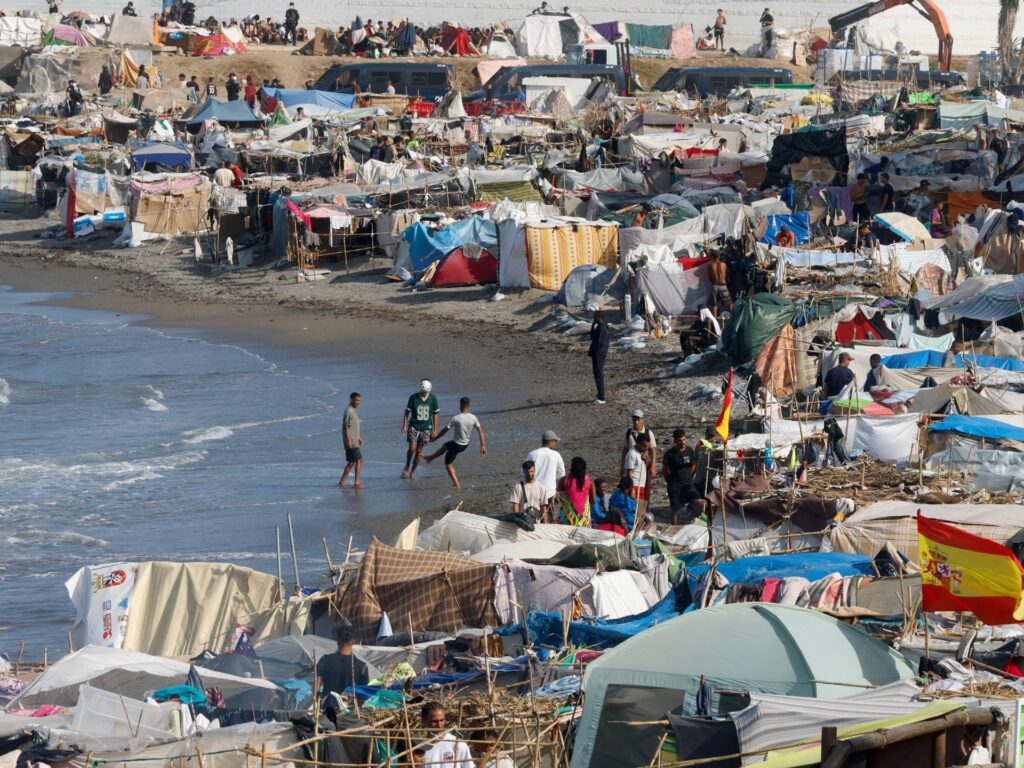
The reciprocal closures came after more than 70,000 people swam around barriers and crossed from Morocco into Ceuta on July 30 and 31, 2026. Most returned to Morocco within hours, but thousands, including unaccompanied children, remained for weeks in difficult conditions. “We thought our government was going to do something in the short or medium term, but we’ve been here for two months, and these people haven’t been sent back,” said Ceuta resident Ruben Gonzalez.
The handling of the mass arrival has added pressure to Socialist Prime Minister Pedro Sanchez’s re‑election campaign slated for November. Sanchez already faces criticism for his government’s plan to grant legal status to hundreds of thousands of undocumented foreign residents. After the Ceuta episode, the far‑right Vox party and the centre‑right People’s Party have accused him of being soft on immigration and have placed the issue at the centre of their electoral messages.