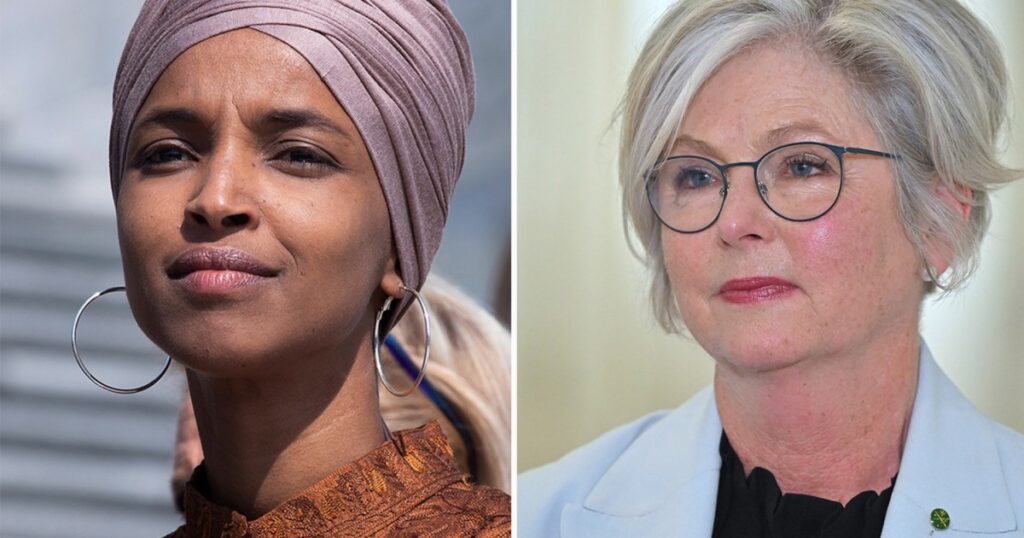
Violence Against Officials Rises: Ilhan Omar Home Search and Helen Haines Car Attack Highlight Threats
U.S. Representative Ilhan Omar has been forced to leave her Washington, D.C., apartment after federal agents executed a search of the residence last week. A Justice Department spokesperson said the operation was carried out under a judicially authorized search warrant and is part of an ongoing federal criminal investigation. NBC News, citing a source familiar with the case, reported that investigators may charge Omar with conspiracy and false statements on immigration documents.
Omar, who was born in Somalia and became a U.S. citizen in 2000, has long been the target of right‑wing conspiracy theories that allege she falsified her immigration status and even claim she married her brother. She has repeatedly called those claims “disgusting lies.” President Donald Trump has singled her out repeatedly, describing her in harsh terms and suggesting she should be deported.
In an interview with MS NOW, Omar explained that the raid made it impossible for her family to remain in the apartment. “Because our address has been public and with the death threats that I deal with, it’s no longer going to be feasible to be in that house and have my kids visiting off and on, having people track them,” she said.
The incident comes as attacks on elected officials appear to be increasing. Omar herself was assaulted in January when an unknown assailant sprayed an unidentified substance on her during a town‑hall meeting in Minneapolis where she was calling for the abolition of ICE.
Across the Pacific, Australian independent MP Helen Haines was struck by a vehicle outside her electorate office on Monday, an attack that resulted in the loss of both of her legs. Police described the incident as a targeted attack and warned of a rise in online extremism and intimidation directed at lawmakers. The driver, identified as 43‑year‑old Brendan Nugent, allegedly drove past Haines, reversed, and then rammed her vehicle twice, according to Home Affairs Minister Tony Burke.
Sofia Collignon, a comparative politics scholar and director of the Mile End Institute at Queen Mary University, told Al Jazeera that physical assaults on politicians remain relatively rare, but the growing number of threats is “very upsetting.” She noted that women, especially women of colour, face high levels of online abuse, which can alter how they campaign, the issues they champion, or even lead them to withdraw from social media altogether.
Research from the Centre for Economic Policy Research, which examined twelve years of attacks on Italian politicians, found that marginally elected women are about three times more likely to be targeted than marginally elected men. In the United States, the Princeton School of Public and International Affairs’ Bridging Divides Initiative reported a dangerous escalation in political‑violence risk during 2025, citing a spike in threats, harassment, and demand for de‑escalation support.
Trump’s rhetoric has contributed to the hostile environment. He has repeatedly called Omar a “sick person,” an “extremist,” and “garbage.” In February, he posted on Truth Social that Omar and Representative Rashida Tlaib should be sent “back from where they came from.” Trump himself has been a victim of political violence; in 2024 a spectator shot him in the ear at a rally, and in 2025 his ally Charlie Kirk was killed by a man who said he was tired of Kirk’s “hatred.”
Analysts link the surge in threats and attacks to fierce political polarization, noting that online harassment often precedes real‑world violence. The pattern recalls earlier incidents such as the 2016 murder of British MP Jo Cox, underscoring a troubling trend of intimidation and aggression aimed at public officials worldwide.