Outposts, violence, impunity: The anatomy of Israeli settler land grabs
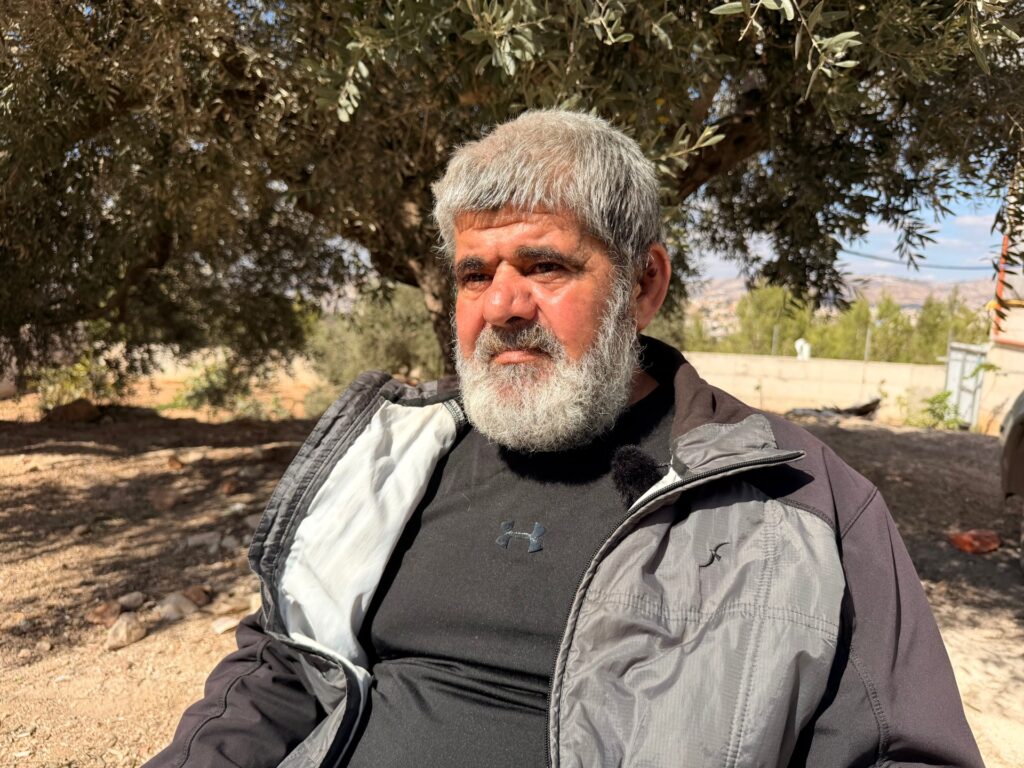
Musa Bani Shamsa, 57, was left bruised and bleeding after an attack by Israeli settlers during the olive harvest, Al Jazeera reported. The incident took place in Beita, an occupied West Bank village southeast of Nablus, where families traditionally gather in October to pick olives and cook over open fires.
On the morning of October 14, Shamsa and his 17‑year‑old son arrived at their grove to find it empty. According to Shamsa, a group of masked Israeli men surrounded them, carrying pistols, knives, pipes, sticks and a hammer. Only their eyes were visible. “At one point, I would take the beating for my son, and at another, my son would take the beating for me,” he told Al Jazeera. “I was afraid they would kill him, kill him dead, because this has happened a lot.”
Shamsa lifted his shirt to show fresh bruises and stab wounds that were still healing. The assault lasted at least twenty minutes, after which he and his son were left on the ground, bleeding and unconscious. “They thought we were dead, so they left us,” he said. He identified the attackers as coming from an Israeli outpost on the hill next to his land. Three days later his son was still unable to speak because of the shock.
Violence by settlers across the occupied West Bank has risen sharply. The United Nations Office for the Coordination of Humanitarian Affairs recorded more than two hundred attacks on Palestinian farmers since September 1, a figure that exceeds the total number of similar assaults for the entire previous season. With beatings, arson attacks and livestock theft becoming more common, Shamsa said, “people are afraid, in every sense of the word.”
Despite the danger, Shamsa refuses to abandon his land. Farmers have changed their routines: harvesting now begins at five in the morning, roads are blocked with stones to slow approaching settlers, and families take turns picking olives while keeping watch from rooftops with binoculars. When settlers arrive, families flee and sometimes return at night to work by phone light. These measures, however, offer little protection. In nearby villages, Shamsa said, settlers wait until farmers have finished picking before stealing olives, equipment and even the mats placed under the trees. “Every time we give up a little, they take a little more. They do not want to give us safety,” he added.
Outposts lie at the heart of the settlement expansion. They often start as a flag, a tent or a livestock pen on Palestinian land, then grow to control surrounding fields and grazing areas. Khalil Tafakji, a cartographer and expert on borders and settlements, described outposts as “the offspring of the mother settlements.” He explained that they are placed between existing Israeli settlements to link them and extend Israeli control over the largest possible area with the smallest number of residents.
Under international law all Israeli settlements in the occupied West Bank are illegal, and outposts are illegal under Israeli law until they receive government approval. Nevertheless, many outposts receive state support before formal recognition. In 2024, settlers established sixty‑two new outposts, backed by seventy‑five million shekels (about twenty million dollars) in government funding. According to the Israeli NGO Peace Now, the government has allocated at least one hundred million shekels (about thirty million dollars) to outposts and farms for security equipment and infrastructure, including roads, vehicles, drones, cameras and electric gates. The state also retroactively legalises outposts.
In March, Israel’s security cabinet approved thirty‑four new settlements, including ten existing outposts. Israeli media reported that the decision provides water and electricity infrastructure before final planning approval.
A similar pattern is unfolding in Beita. The Evyatar outpost, first established in 2013, was authorised as a settlement in 2024, after which three smaller outposts appeared around it. Rabee al‑Sharafa, a Beita resident living on the village’s edge, said settlers initially draw power from lines near the village before infrastructure is formally extended to them. “If there is a power line close to the village, they may simply steal from it, no problem,” he said. “If it is cut off from them, they have no problem. The electricity company comes and extends it to them.”
As the number of outposts grows, so do the threats of violence and forced removal of Palestinian families. “The policy they follow is a policy of slow surrender,” al‑Sharafa said of the settlers. In March, ten masked men armed with sticks, machetes and axes attacked a family and threatened to kill its members if they did not leave, prompting the family to flee. Another home was emptied in June, and since early October settlers have targeted a third, cutting off its electricity and water. “We compare it to a string of prayer beads that comes apart,” al‑Sharafa said. Israeli flags now fly from Palestinian land as the expansion continues.