Russia’s First Diesel Tanker to the U.S. May Not Ease Prices Before Midterms
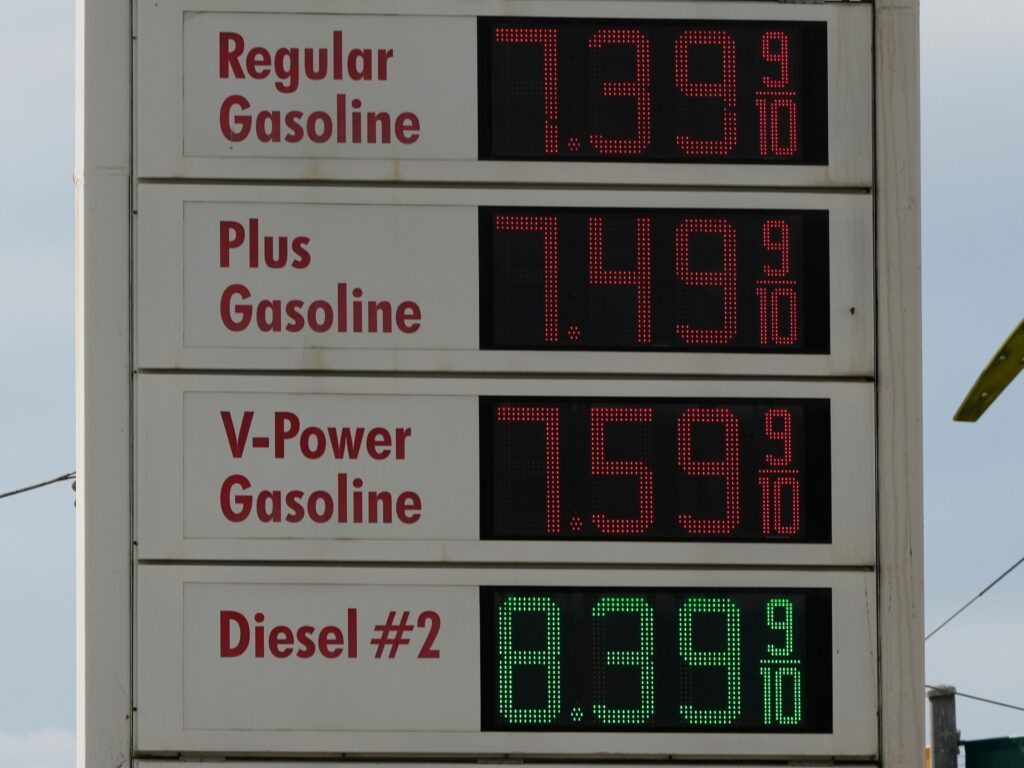
Russia announced on Wednesday that a tanker loaded with diesel will leave for an undisclosed U.S. port on Thursday, marking the first such shipment under a new agreement with Washington. The move is intended to ease the fuel shortages that have pushed U.S. diesel prices above $6 a gallon ($1.59 per litre) in September and remain high as the midterm elections approach.
The shipment is part of a broader plan to increase Russian fuel exports to the United States, not a one‑off delivery. Former President Donald Trump previously said Russia would send 300,000 tonnes of diesel, followed by another 500,000 tonnes in November and a further million tonnes “immediately thereafter.” Russian officials confirmed the initial tanker will be the first of several, but they did not specify the timing or volume of future deliveries.
Domestic constraints could limit Russia’s ability to meet the schedule. Ukrainian drone attacks on Russian refineries have cut refining capacity and forced Moscow to impose export restrictions. Restoring production while satisfying domestic demand will be crucial for any further shipments.
The deal comes after Trump halted a planned round of sanctions that would have imposed a 100 percent tariff on goods from major buyers of Russian crude, including China and India. The White House hopes the arrangement will help contain rising energy costs, a concern that is resonating with voters ahead of the November midterms. A recent Washington Post‑ABC News‑Ipsos poll found 37 percent of voters trust Democrats more on economic issues, while only 28 percent trust Republicans, and approval of Trump’s handling of the economy has slipped to 28 percent.
Analysts are skeptical that the first tanker will have a noticeable impact on U.S. diesel prices before the election. The American Automobile Association reported a national average of $6.31 a gallon ($1.67 per litre) on Wednesday, down from $6.51 a month earlier but still far above the $3.62 a gallon ($0.96 per litre) seen at this time last year. Rachel Ziemba, an adjunct senior fellow at the Center for a New American Security, told Al Jazeera that the volumes Russia can provide are small compared with the global shortage and U.S. domestic production, and the cargo is unlikely to move supply or prices in any meaningful way. “The reported shipment is equivalent to roughly two hours of U.S. distillate consumption,” said Aarathi Krishnan, CEO of Raksha Intelligence. “Even if it arrives as planned, it will make very little difference to national supply.”
Ziemba added that the tanker’s departure on Thursday marks the start of its voyage, not the moment the fuel reaches consumers, and it may not arrive before voters head to the polls. Any sustained price relief, she said, would require a broader improvement in global supply rather than a single delivery.
A longer‑term ceasefire in the Russia‑Ukraine war could ease pressure on energy markets by allowing damaged Russian refineries to be rebuilt and production to rise. Ziemba described the current agreement as “more about political posturing to get the U.S. to further increase pressure on Ukraine and align with Russia.” She also noted that meaningful relief for the global oil market will depend heavily on developments in the Middle East, especially the Strait of Hormuz, a key shipping lane for about one‑fifth of the world’s oil and liquefied natural gas. Recent attacks on vessels in the region have heightened market tension; Kpler data shows at least 18 attacks in the past two weeks. Iranian Foreign Minister Abbas Araghchi told the Financial Times that Iran is prepared to defend itself.
In sum, while the Russian diesel shipment signals a new chapter in U.S.–Russia energy cooperation, experts warn that it is unlikely to solve the underlying supply crunch or lower prices in time for the midterm elections. The agreement may help individual consumers, but broader market dynamics will determine whether diesel costs come down in the months ahead.