Why social media has become a key issue in Brazil’s presidential race
In Brazil’s contest for the next president, the two remaining candidates are courting voters not only on the campaign trail but also through digital platforms. On Sunday, incumbent President Luiz Inacio Lula da Silva will meet right‑wing Senator Flavio Bolsonaro in the runoff election.
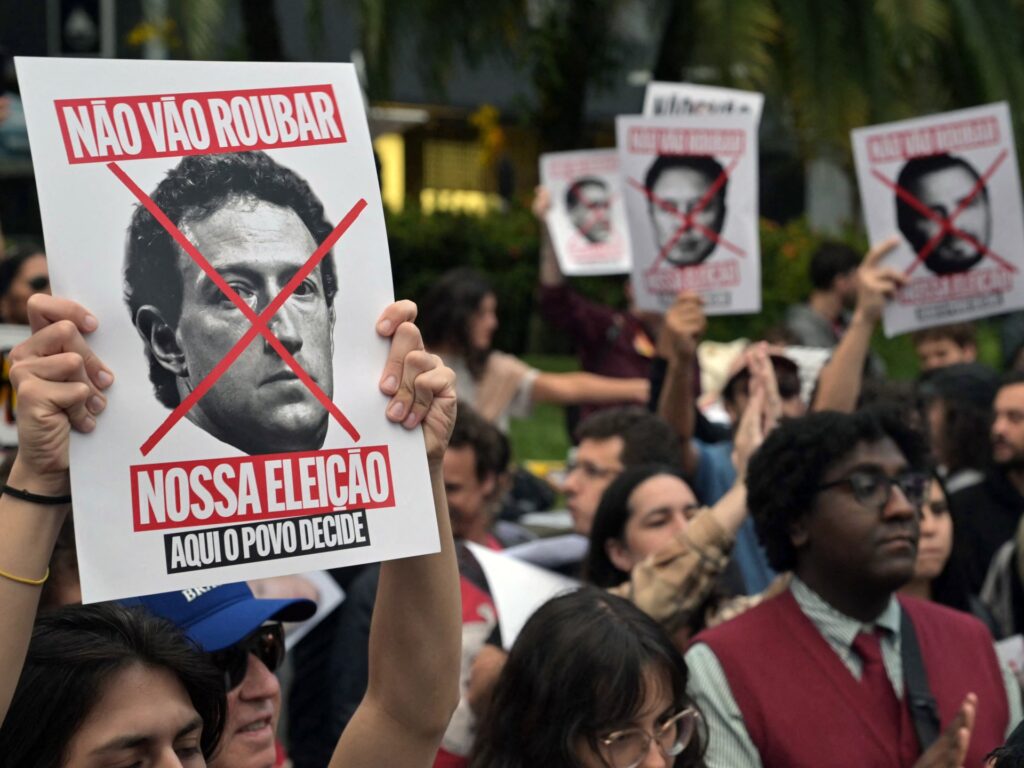
The contest is expected to be close, yet concerns have risen about whether the online arena offers a fair competition for both sides. Brazil’s top electoral authority, the Superior Electoral Court (TSE), has heard accusations that Meta – the owner of Facebook, WhatsApp and Instagram – suppressed content favorable to Lula while promoting material that benefits Bolsonaro.
Meta’s services are among the most widely used social networks in Brazil, and political advertising on its platforms has surged dramatically. A study by the Brazilian news outlet G1 reported that Meta received at least 288 million Brazilian reais (about $57 million) in direct campaign spending in 2026, twice the amount it collected in the 2022 presidential race. This rise reflects a broader transformation in how elections are run in the country. According to Andre K. Rodarte, a researcher at the Digital Democracy Centre at the University of Southern Denmark, more than 76 percent of Brazilian voters now obtain their news online.
Rodarte said that as social media overtakes traditional advertising, an expanding group of politicians is turning to provocative, viral messaging to reach voters. He cited the success of online personalities such as right‑wing influencer Nikolas Ferreira and left‑wing activist Erika Hilton, both of whom were re‑elected to the Chamber of Deputies this year with record vote totals. “You are seeing people transitioning from information‑producer roles to politics, and they are just getting more and more power, more and more votes,” Rodarte told Al Jazeera. “If this is the media landscape they are dealing with, it’s unlikely they will adopt a different campaign style, or different style of politics.”
Critics warn that the shift toward digital campaigning places candidates at the mercy of large technology firms and their editorial biases. The reliance on online outreach first surged in 2018 with the election of President Jair Bolsonaro, according to Leticia Cesarino, an anthropologist at the Federal University of Santa Catarina who studies far‑right politics on the internet. Jair Bolsonaro, the father of this year’s frontrunner Flavio Bolsonaro, built his 2018 campaign on short, punchy social‑media posts that promised tough crime policies and a return to traditional Christian family values. Supporters cheered “Facebook!” and “WhatsApp!” during his 2019 inauguration to signal their enthusiasm for his digital strategy.
Cesarino said that left‑leaning and pro‑democracy groups have gradually recognized the importance of these platforms and learned to use them strategically, but they still lag behind the far right, especially because the attention‑economy model rewards alarmist, simplistic, affect‑driven discourse.
During his term, Jair Bolsonaro used his social‑media presence to question the integrity of Brazil’s electoral system. After losing the 2022 election, he continued to spread false claims that the vote had been rigged. His supporters stormed the Congress, the Supreme Court and the presidential palace in Brasília on 8 January 2023, shortly after Lula’s inauguration. In response, the TSE ruled that Bolsonaro had abused his office to undermine the election and barred him from holding public office for eight years. He is also serving a separate 27‑year sentence for plotting a coup and is prohibited from using social media.
The scandal prompted many policymakers to act, said Vicky Wyatt, campaign director at Eko, a coalition that pushes for greater tech‑company accountability. Although Brazil already had data‑privacy legislation, new rules were introduced after Bolsonaro’s presidency. Current law bans the use of artificial‑intelligence‑generated depictions of electoral candidates and requires any political ad that employs AI to carry a clear disclaimer. Content that incites violence, hate speech or gender‑based discrimination is also illegal. Only campaigns with official backing may run ads on platforms such as Instagram, Facebook and WhatsApp. Wyatt noted that Brazil now has some of the strictest regulations worldwide concerning AI use on tech platforms.
Those regulations have met resistance. In a statement to Al Jazeera, a Meta spokesperson warned that Brazil’s stringent digital‑content rules could lead to over‑enforcement and threaten free expression. Meta maintains that it must work with regulators to demonstrate compliance with the country’s laws.