Iran Resolute on Retaining Uranium Amid Rising War Prospects and Diplomatic Surge
Tehran has been the center of a wave of diplomatic activity in recent days as regional powers seek a breakthrough that could end the conflict involving the United States and Israel. Pakistan’s army chief, General Asim Munir, arrived in the Iranian capital on Wednesday to discuss the war and the escalating tension in Yemen, a meeting that comes against growing fears of a wider regional clash.
Despite the flurry of talks, Iran has insisted that the war will not conclude and the Strait of Hormuz will remain closed until Washington meets its demands. The country’s nuclear program, a point of contention that helped trigger the war launched by the Trump administration on February 28, remains a core issue. “Not a single gram of enriched uranium will be removed from Iran,” said Mohsen Rezaei, secretary of the Supreme National Security Council, after meeting Munir. He did not rule out the possibility of down‑blending highly enriched uranium under international monitoring, an option Iran has floated previously.
Iran frames its decades‑old nuclear effort as a sovereign right and a national achievement achieved despite strikes, sabotage and assassinations. Rezaei called the program “national wealth” on Tuesday. The nation also uses low‑enriched uranium for civilian purposes, such as producing radiopharmaceuticals and generating power at the Bushehr plant in partnership with Russia. Iranian officials argue that surrendering the program under military pressure would amount to capitulation unless it guarantees protection from further attacks.
U.S. President Donald Trump has repeatedly said his goal is to dismantle Iran’s nuclear capability, while Vice President JD Vance suggested earlier this month that a “meaningful” reduction in enrichment capacity might satisfy American demands.
Before Israeli and U.S. strikes on Iran’s nuclear facilities in June 2025, the International Atomic Energy Agency estimated that Tehran held about 440 kilograms (970 pounds) of uranium enriched to 60 percent. A nuclear weapon would require enrichment above 90 percent. Subsequent attacks in 2026 further damaged Iran’s nuclear infrastructure, and the IAEA has been unable to inspect many key sites, leaving the current size and condition of the enriched uranium stockpile unverified. Tehran has denied the agency access since the war began, accusing it of serving Western interests through resolutions and referrals to the United Nations Security Council. While Iranian officials maintain they are not pursuing a bomb, senior figures such as Rezaei have questioned the value of remaining a party to the Non‑Proliferation Treaty while their facilities continue to be targeted.
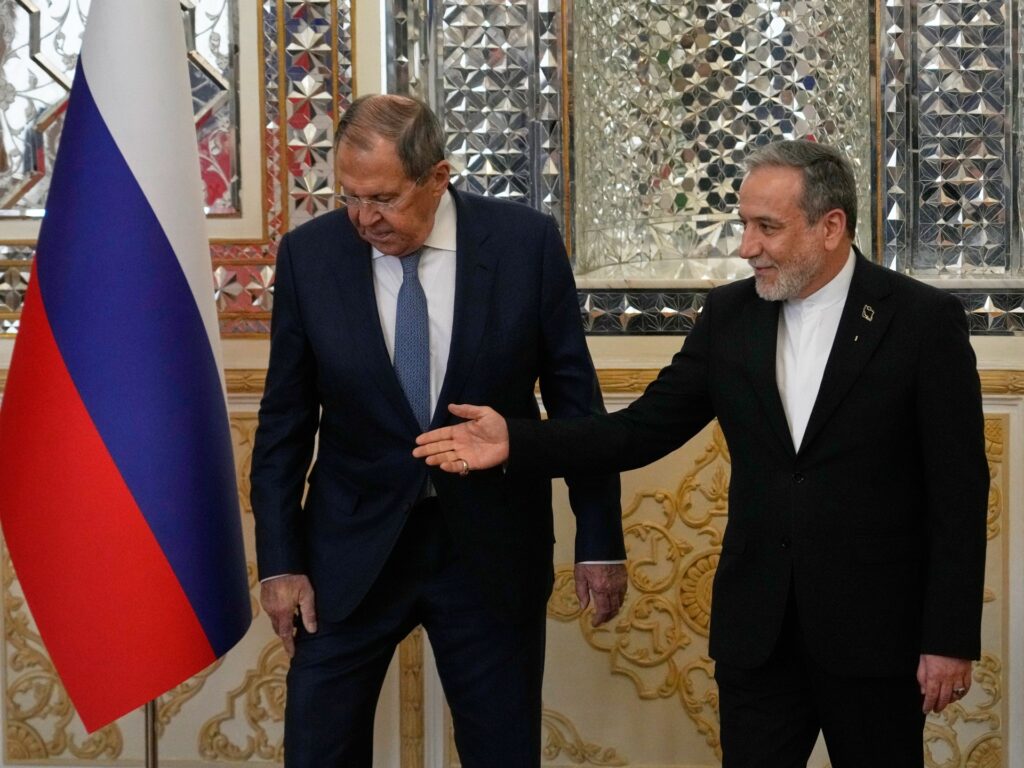
The week also saw a number of foreign diplomats in Tehran. Russian Foreign Minister Sergey Lavrov visited on Monday after meeting Gulf Cooperation Council members the day before, and there were reports of other Arab officials making trips to the city. U.S. Secretary of Defense Pete Hegseth is said to have met Israeli security officials earlier in the week, but these contacts have not eased the risk of renewed hostilities.
Speaking at a conference for Iranian exporters on Wednesday, Foreign Minister Abbas Araghchi warned that the country faces the prospect of further attacks and broader economic sanctions. “The reality is that the country is truly in war conditions and the war continues. We have not reached peace conditions and are away from it, so all decisions must be made within war conditions,” he said.
Parliament speaker and chief negotiator Mohammad Bagher Ghalibaf told General Munir that Iran has “nothing new” to offer Washington and expects the conditions outlined in New York last month to be implemented within seven days to reopen the Strait of Hormuz. Mediators did not disclose the details of their proposals, but indicated that the United States would need to build trust by accepting Tehran’s terms, which include returning to the June memorandum of understanding and recognizing an Iran‑Oman agreement on temporary transit through the strait.
The memorandum also calls for immediate talks on a broader nuclear agreement, the removal of the U.S. naval blockade on southern Iranian ports, waivers for oil sanctions, the unfreezing of Iranian assets, and a halt to military actions in Lebanon and other regional hotspots.
Ellie Geranmayeh, senior policy fellow and deputy head of the Middle East and North Africa programme at the European Council on Foreign Relations, said it is clear that Tehran will not relinquish its enriched uranium without guarantees of sanctions relief. “The Iranians have made it very clear, and I see no evidence that’s changing, that they are willing to negotiate over the fate of the hi”]}