Israel’s war on Lebanon deepens challenges for autistic and ADHD youth
By Alex Milan Durie and Daniel Khalili‑Tari
Beirut, Lebanon – After her husband died of COVID‑19 in 2020, Lena Kouyoumjian returned to her parents’ home in Mazraat Yachouh, a village about twenty minutes from Beirut. The move was hard for the energetic, outgoing mother, but she needed help caring for her twenty‑year‑old daughter Vana, who is autistic and does not speak.
Lena first saw signs of autism when Vana was two. Although Vana cannot express her feelings verbally, her mother works hard to interpret her daughter’s cues. Like many autistic and other neurodivergent individuals, Vana thrives on a stable, supportive environment and a predictable routine.
Since October 2023 Lebanon has been caught in a war that has brought bombings to many parts of the country and has worsened an already severe economic crisis. When Israel intensified attacks on southern Lebanon in March, Lena, who trains children with disabilities, feared the impact on her daughter. “Any sudden change in routine, loud noises, fear, or uncertainty can increase their anxiety and make them feel unsafe,” she told Al Jazeera. “I can see this in my daughter. Since the situation became more difficult, she has become more anxious and sensitive to the changes happening around her.”
Autism and attention‑deficit/hyperactivity disorder (ADHD) often overlap, creating a profile sometimes called AuDHD, where traits of both conditions appear together. Sensory sensitivities and emotional dysregulation are common features. In Lebanon, people with these neurodevelopmental conditions frequently face stigma and misunderstanding.
The war and the displacement it caused have added psychological pressure for many, but neurodivergent individuals are especially vulnerable because they depend on consistent support and routine. “Being a parent of an autistic child isn’t something every parent can handle. A challenge I often face is deciding the amount of time and energy I should allocate to my child,” Lena said.
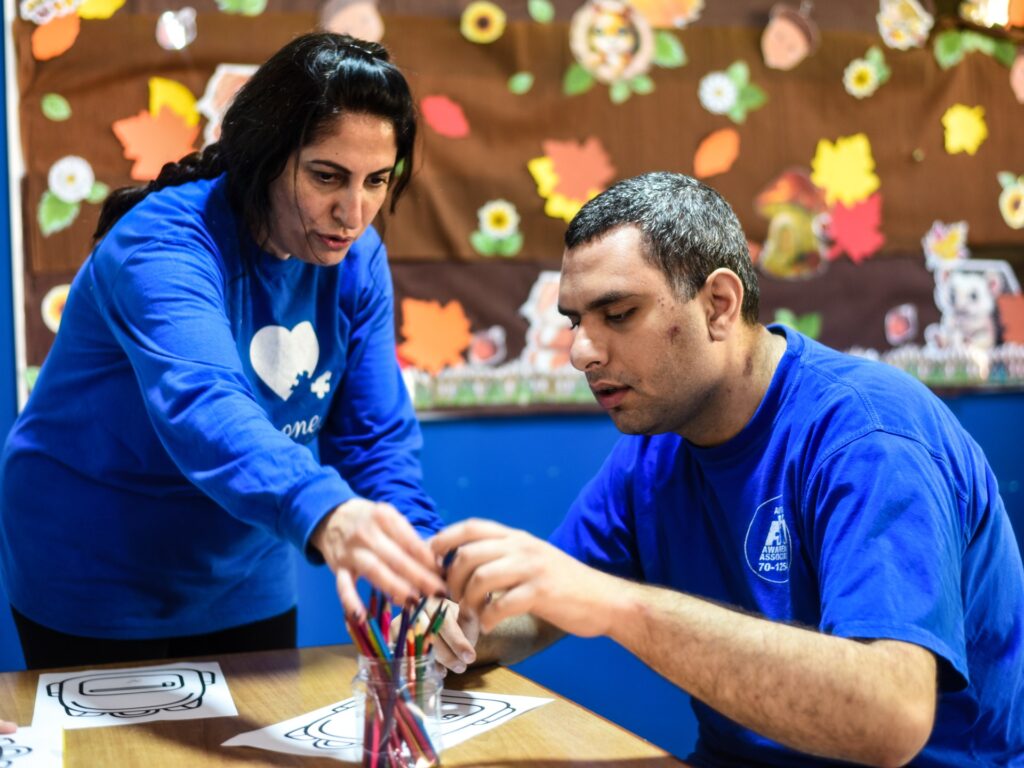
The Lebanon Autism Awareness Association (AAA), a nonprofit based in Antelias outside Beirut, has been a lifeline for both Lena and Vana. For six years Vana has attended classes at AAA, which operates as an alternative school for young autistic people. However, the rising cost of living during the war has made regular attendance difficult. “Even transportation to her centre became very difficult, especially with the increasing financial challenges. At times, it became impossible for her to go, so she had to stay home,” Lena explained.
Ghada Hayek Makhoul, who co‑founded AAA with other parents in 2015, said the organization works constantly to raise awareness about autism in Lebanon. “Many people don’t know what autism really is. They don’t know the spectrum; how it can vary from mild to moderate to severe,” she told Al Jazeera.
Ghada’s own son, Anthony, is a calm twenty‑seven‑year‑old autistic man who does not speak and relies heavily on caregivers. Although he cannot articulate his distress, his mother can tell when he is uncomfortable; he often covers his ears when he experiences sensory pain. The constant barrage of war noises – drones, bombs, the roar of aircraft – has been especially hard on him. “So, imagine the drones all the time, the bombs, and the vibration of the bombs … all of this that we were hearing, so of course it affected him a lot,” Ghada said.
Anthony now refuses to watch television news because the sounds are too triggering. He also avoids swimming, a activity he once loved, and Ghada is unsure whether the change is due to the outside environment, the noise, or something else. “It affects all the senses, everything. He doesn’t want to go into a pool any more,” she added.
The war’s economic fallout has hit AAA and similar groups that provide neurodivergent or mental‑health services. Lebanon’s broader financial crisis, with inflation projected to reach seventeen percent this year, has driven many professionals abroad, further limiting the pool of specialists who can support autistic and ADHD individuals. AAA remains a crucial source of assistance for families like Lena’s and Ghada’s, even as resources become scarcer.