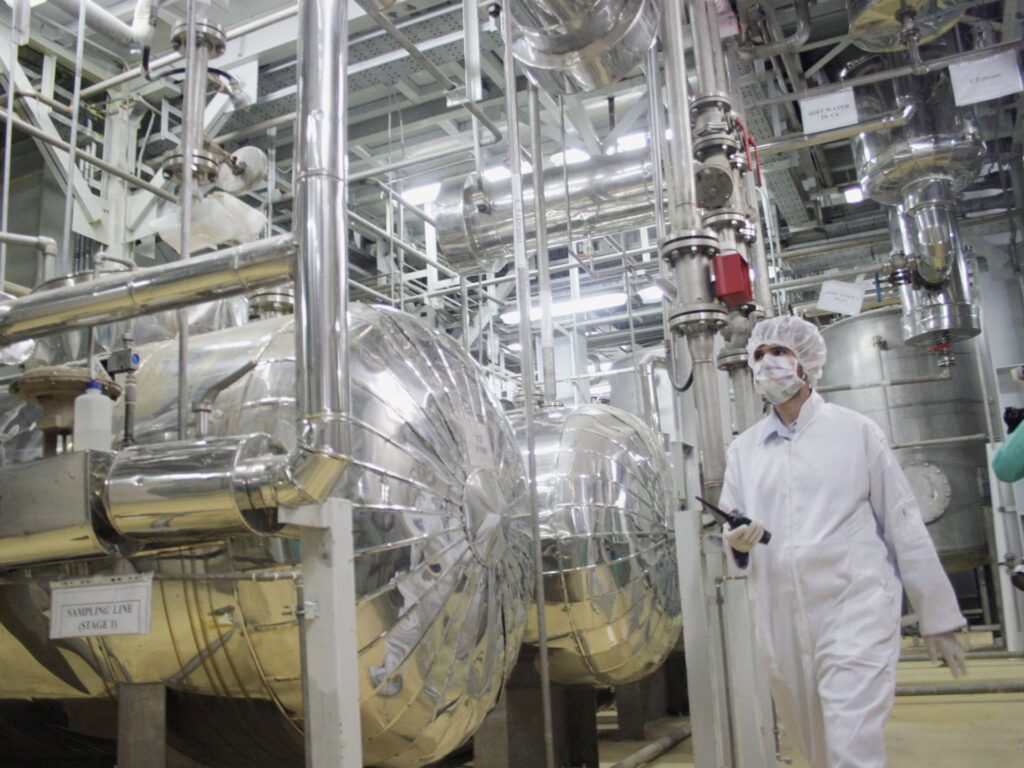
Iran’s enriched uranium re-emerges as point of contention in US talks
The diplomatic effort to end the United States‑Israel war on Iran is hitting new obstacles as Tehran’s nuclear program, which the two allies cited to justify the conflict in February, has resurfaced as a major hurdle to a cease‑fire. Nearly eight months after the war began and after it sparked a global energy crisis, a lasting truce remains out of reach, and the fighting has expanded into a regional clash, with Yemen now the latest front.
In June, the United States and Iran signed a Memorandum of Understanding that focused on reopening the Strait of Hormuz, a crucial oil chokepoint. The agreement also required Iran not to acquire or develop nuclear weapons, but it failed to produce a comprehensive settlement on the nuclear issue within the 60‑day window. Analysts say differing interpretations of the clauses caused the MoU to collapse.
The nuclear question has again become the central point of disagreement. Tehran argues that uranium enrichment is a right guaranteed by the Non‑Proliferation Treaty, while U.S. President Donald Trump has demanded “zero uranium enrichment.” Israeli Prime Minister Benjamin Netanyahu reiterated on Sunday his commitment to overthrow the Iranian government, which he says is essential to prevent a nuclear weapons program.
Earlier this week U.S. Vice President JD Vance appeared to offer some flexibility on the nuclear doctrine in an effort to reach a deal. Qatar and Pakistan are mediating, but the question remains how they will persuade both sides to settle the enrichment dispute.
Pakistan’s army chief Asim Munir, also a key negotiator, arrived in Tehran and met with Iran’s security chief Mohsen Rezaei on Tuesday. Rezaei told Iran’s semi‑official Fars news agency that “even a particle of enriched uranium will not exit Iran at all,” describing the material as a national asset reserved for domestic use. His remarks came amid reports that the United States wants Iran to transfer part of its enriched uranium out of the country, a demand Trump has previously voiced.
Rezaei added that negotiations will not start until Washington implements confidence‑building steps, including lifting the naval blockade of Iranian ports, waiving sanctions, and releasing frozen Iranian assets. In exchange, Iran has pledged to reopen the Strait of Hormuz.
Iranian lawmaker Alaeddin Boroujerdi, a member of the parliament’s National Security and Foreign Policy Committee, stressed that Iran is not seeking to produce nuclear weapons. “Iran’s enrichment activities are unrelated to the United States, and Washington should focus on meeting its own obligations regarding nuclear arms reduction,” he said.
At a Republican campaign rally, Trump claimed that U.S. bombing had destroyed Iran’s nuclear facilities and vowed to prevent any reconstruction. “They cannot have a nuclear weapon,” he told supporters at Northern Kentucky University. Vance, speaking at a CBS News town hall, said the United States has “decisively won” the war on Iran and now seeks a “long‑term, verifiable commitment” from Tehran not to rebuild its nuclear program. He questioned whether Iran could restore its enrichment capacity in the future.
Secretary of State Marco Rubio said the final decision to end the war rests with President Trump and that the United States will not back any agreement that creates a path for Iran to acquire a nuclear weapon. “As long as President Trump is in office, they will not have a nuclear weapon,” Rubio asserted.
Last month Vance told Reuters that Tehran must make a “meaningful” reduction in its enrichment capacity to satisfy U.S. demands and end the conflict. “If you don’t want a nuclear weapon, why do you need 60 percent enriched fuel? And if you want to show commitment to not building a nuclear weapon, don’t produce highly enriched fuel,” he explained.
The June MoU left the fate of Iran’s enriched uranium stockpile to future talks, identifying down‑blending under International Atomic Energy Agency supervision as the minimum solution.