
New Champions League format delivers goals galore, but does it raise quality?
The revamped Champions League, introduced at the start of the 2024‑25 season, has already produced more teams, more matches and, above all, more goals. In the two campaigns since the change, the competition has seen a noticeable surge in scoring, and this year’s edition is leading the trend. So far, 187 goals have been recorded, an average of 4.16 per game – the highest rate ever in Champions League history. By comparison, the Premier League averages 2.9 goals per game, La Liga 3.03 and the Bundesliga 3.69. Remarkably, not a single match has ended goalless.
“Look how many goals have been scored, it’s phenomenal,” former Manchester United and England winger Ashley Young told BBC Radio 5 Live. “The attackers are being clinical.” Former Liverpool defender Stephen Warnock called the volume “incredible”. How unusual is this scoring spree?
The numbers confirm its rarity. The current goals‑per‑game figure is not only a Champions League record but also the third‑highest in the entire history of the European Cup, behind only the 1959‑60 (4.19) and 1955‑56 (4.38) seasons. On Tuesday, nine matches produced 40 goals, and the previous Wednesday saw 46 goals, the third‑highest single‑day total ever, surpassed only by the final league‑phase matchdays of 2024‑25 and 2025‑26 when 18 games were played. Combined, the two days yielded 78 goals, making matchday two the highest‑scoring round in the competition’s history. That total exceeded matchday one’s 69 goals by nine, a figure that at the time had been the second‑highest since the new league phase began in 2024‑25. Whether the record will be broken again this week remains to be seen, but the trend is already pointing that way.
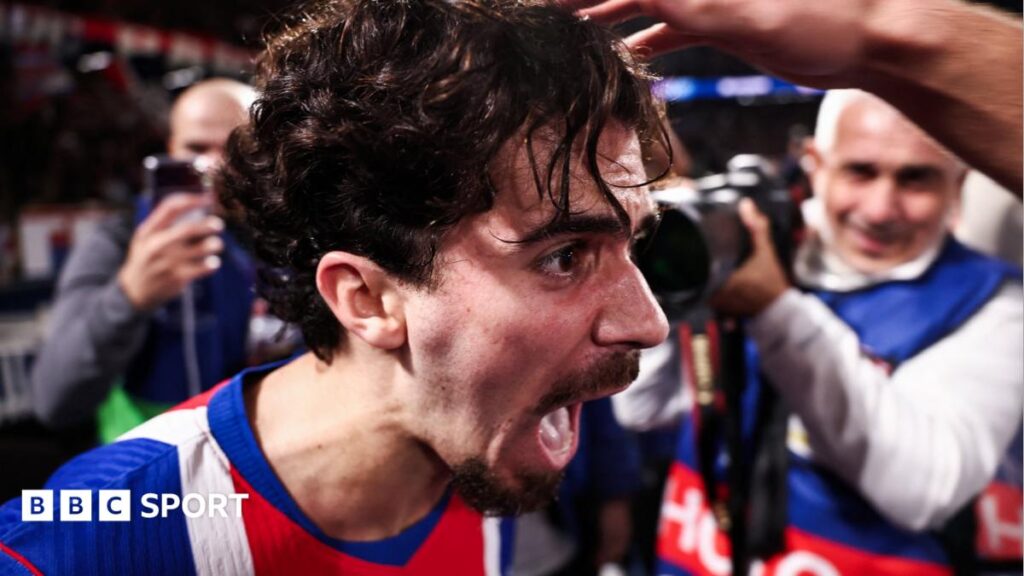
The excitement on the field has also produced memorable moments, such as Doué’s standout performance as Paris Saint‑Germain edged Barcelona in a thrilling encounter.
Since UEFA first announced plans to revamp the tournament in 2021, the impact of the changes has been a constant subject of debate, and scrutiny intensified when the new format was implemented for the 2024‑25 season. The competition began as a six‑team invitational in 1955‑56, expanded to a 32‑team knockout in 1967, and took on its modern shape in 1992 with a group stage followed by a knockout round. A brief experiment with two group stages was abandoned after the 2002‑03 campaign, returning to a single group stage for 2003‑04.
Under the previous system, 32 clubs were divided into eight groups of four, with the top two from each group advancing to the round of 16. The 2024‑25 overhaul replaced that structure with a 36‑team league phase, where each side plays eight single‑match fixtures instead of the traditional six games against three opponents. The eight highest‑placed teams qualify directly for the knockout stage, while those finishing ninth to 24th enter a two‑legged playoff. The bottom 12 are eliminated, leaving 24 clubs in contention after eight rounds. Critics argue that this reduces the sense of jeopardy, encouraging more open, attacking play.
But does a higher goal tally automatically mean better quality? “I think the entertainment has gone up, although I’m not sure the quality has gone up,” The Times football writer Tom Allnutt told BBC Radio 5 Live. “If I’m looking at the games it’s brilliant to watch and thrilling because the football itself is fantastic – but what do they mean? The lack of jeopardy, why would PSG and Barcelona settle for a draw, why not go for it? If you need five wins from eight games you know you’ve got some margin there. If you lose it’s OK. I think the format allows all the teams to loosen up. The entertainment value is there but I think you come away from these matches sometimes and still think ‘what does it all mean?’ The lack of jeopardy early on does deliver entertainment.”
The conversation continues as the season progresses, with fans and pundits alike watching to see whether the new format will sustain its goal‑rich spectacle without sacrificing the competitive edge that has defined Europe’s premier club tournament.