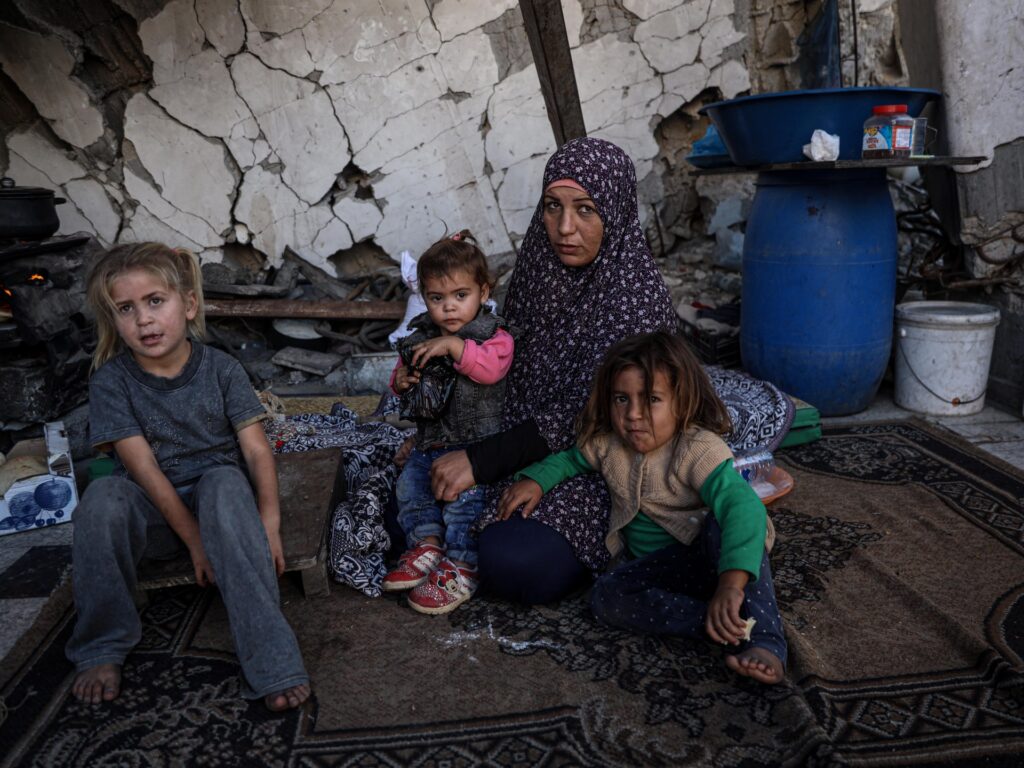
Gaza children face worsening food shortages as prices rise and aid is cut
The situation in Gaza has become increasingly dire for families trying to feed their children. Huda Abu Leila, a 30‑year‑old mother of five daughters aged from 18 months to 10 years, now serves only tea and bread for breakfast after Israel tightened restrictions on goods entering the enclave earlier this month.
For three years, the residents of Gaza have endured Israel’s war and a blockade that often leaves markets half empty and prices out of reach. Huda, who lives in a tent in western Gaza City, has become accustomed to the struggle to provide a balanced diet, but the latest shortages, soaring food costs and a reduction in humanitarian aid have pushed her family to the brink.
“We were affected immediately. We couldn’t find eggs or milk, and we don’t have the money to stock up on food,” she told reporters. Her husband, injured during the conflict, can no longer work, and Huda earns a modest income by baking bread for neighbors. Some days the family subsists on canned beans flavored with duqqa or za’atar; when supplies are scarce, they dip bread in tea. Huda worries that the deteriorating conditions will harm her children’s health, especially as she already struggles to secure enough nutrition.
Israel halted commercial shipments to Gaza on 14 October, disrupting the flow of food and other essentials. The pause was linked to a dispute over a demand that merchants pay 10,000 shekels (about $3,225) per truck to bring goods into the territory. On 19 October, Israeli authorities announced that shipments would resume gradually. The coordinating body COGAT said that Hamas had withdrawn the payment demand, describing it as a voluntary contribution to a war‑relief fund.
At the same time, the United Nations World Food Programme announced cuts to its Gaza operations because of funding shortfalls. The programme reduced the number of people it supports from 1.6 million in September to 1.1 million in October and halved the size of food parcels, giving families one parcel instead of two and a smaller bag of wheat flour. Daily hot meals fell from 250,000 to 150,000. WFP officials said roughly 1.4 million Gazans—about two‑thirds of the population—are now facing acute food insecurity at crisis levels or worse. A famine was declared in Gaza City in August 2025, and while the Integrated Food Security Phase Classification reported some improvement after the ceasefire began in December, the relief is fragile.
For Huda, the crisis means she can no longer afford many of the items needed for a nutritious diet. A tray of eggs now costs 60 shekels (about $19.40), and she says some shops appear to be hoarding stock. Fresh vegetables have become a luxury; onions sell for about 10 shekels per kilogram and tomatoes range from 10 to 15 shekels per kilogram. Unemployment is widespread as the war and restrictions have crippled Gaza’s economy and halted reconstruction.
The lack of food is already affecting Huda’s children. She reports that they have difficulty concentrating, often feel dizzy, and become easily exhausted. Her eldest daughter, Salma, is receiving follow‑up care at al‑Rantisi Hospital, where a doctor urged Huda to improve her daughter’s diet. “We have been through so much hardship over the past three years,” Huda said. “I worry that my daughters will get sick if I cannot provide them with enough nutritious food.”
Raeda Soboh, a 40‑year‑old displaced mother of a nine‑member household, faces a similar plight. Originally from Beit Lahiya in northern Gaza, she now lives in Gaza City and has relied on community kitchens, known locally as tekkiya, for months. “When a kitchen has food, we eat from it,” she explained. Her children usually have tea for breakfast and a meal from a tekkiya for lunch; dinner may consist of falafel, rice, lentils or pasta. However, they have gone for months without milk, meat, eggs or cheese, essential items for healthy growth.