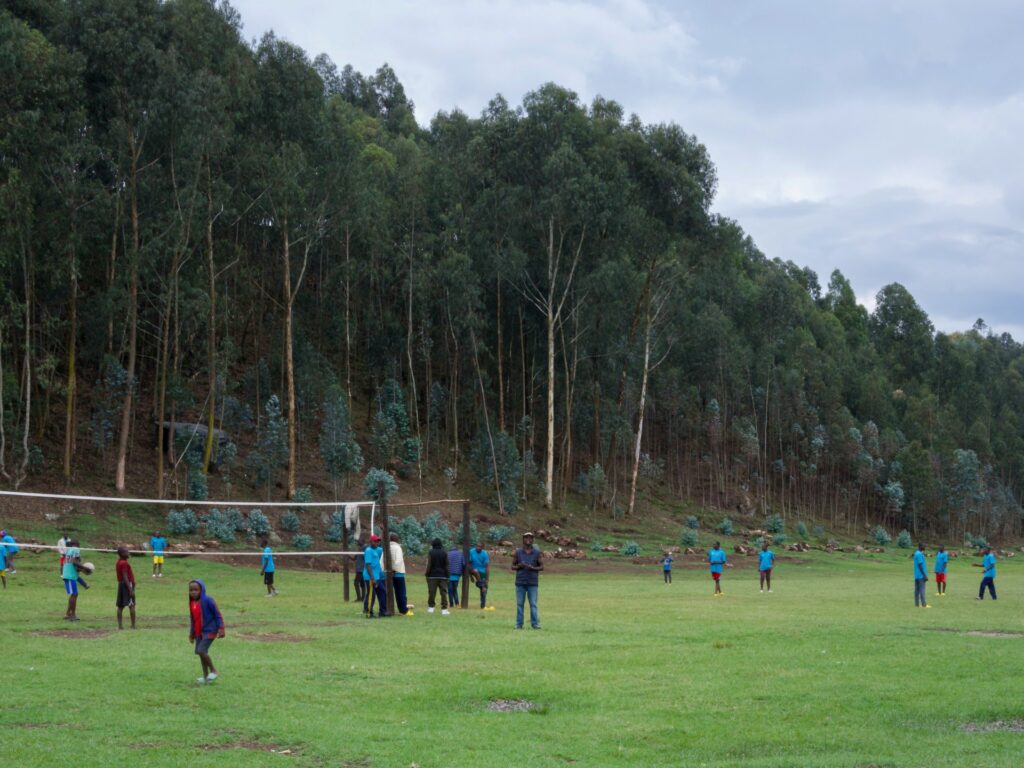
Former FDLR fighters choose to return to Rwanda, seeking reintegration
Jean Claude Hategekimana feared that going back to Rwanda could end his life, yet after years with the Democratic Forces for the Liberation of Rwanda (FDLR) he left the militia and entered the Mutobo Demobilisation and Reintegration Centre to start a civilian life. Born in 1996 in Rutsiro District, western Rwanda, Hategekimana moved with his parents to the Democratic Republic of the Congo and grew up in an area under FDLR control. He joined the group in 2018, received military training and eventually attained the rank of captain.
“I arrived at the Mutobo Centre after fighting to defend Goma. Following our defeat, I fled to Masisi. After realising that I was fighting for nothing, I decided to return to Rwanda. I came back on February 24,” he told Al Jazeera.
Hategekimana said the FDLR had taught its members that anyone who returned to Rwanda would be killed. “Upon arriving in Rwanda, I realised that the FDLR had been lying to us. For me, returning home felt like embarking on a suicide mission,” he added. His story highlights the difficulty of reintegrating former combatants whose beliefs and fears have been shaped by years of armed conflict.
Francis Musoni, secretary‑general of the Rwanda Demobilisation and Reintegration Commission, explained that the Mutobo centre in Musanze, Northern Province, was opened in 2001 to receive former FDLR fighters and members of other Rwandan armed groups returning from the DRC. The FDLR was formed after the 1994 genocide against the Tutsis, when members of the former Rwandan armed forces and militia fled to what was then Zaire, now the DRC. Kigali accuses the FDLR of carrying out attacks against Rwanda and of destabilising the border region.
At Mutobo, the rehabilitation programme provides medical care, psychosocial support, civic education and help reconnecting returnees with their families. A telephone service allows former fighters to contact relatives and friends, Musoni said. “We help them to build confidence among themselves, build trust, and empower them to go back into the community and contribute to the development of the country together with their families,” he said.
The centre also welcomes visitors and media, and permits rehabilitating individuals to travel to their home villages for short periods. “They can travel to their communities [during rehabilitation]. They are given written permission for a week or two, and we even facilitate transport,” Musoni added.
For the former commanders interviewed by Al Jazeera, the decision to leave the FDLR was driven by family ties, growing disillusionment and worries about personal safety. Major‑General Anastase Munyaneza served in the Rwandan armed forces during the 1994 genocide before fleeing to the DRC and eventually commanding the FDLR’s South Kivu sector. Although he had adopted the group’s ideology, he kept in touch with his family in Rwanda. “I was the only one who had fled to the DRC. I regularly received news about them. I knew they were still alive, attending school, working for the government and improving their lives. I began asking myself what I was doing in the forest,” he said. Seeing other members return safely encouraged him to consider going home. Munyaneza contacted the United Nations Organisation Stabilisation Mission in the Democratic Republic of the Congo (MONUSCO), which moved him from South Kivu to Bukavu and then to the Congolese‑Rwandan border, after which he proceeded to Mutobo.
Lieutenant‑Colonel Idrissa Bizimana, who oversaw ideology, propaganda and recruitment for the FDLR, said his return was prompted by a shift in belief. “I no longer believed in the ideology I had been promoting. After receiving verified information about what was happening in Rwanda, I decided to return home,” he explained. Bizimana said a MONUSCO general offered assistance; using a satellite phone with GPS he sent his location and the date, and a helicopter was dispatched to retrieve him.
Lieutenant‑Colonel Emilien Mpakaniye, who joined the FDLR in 1998 and handled its economic affairs, said he began to question the organisation after becoming disillusioned with what he described as its lies.
Colonel Augustin Nshimiyimana, a former FDLR intelligence commander who returned in 2022, said he decided to leave after another commander accused him of working with Rwanda following a dispute over a mission in Bujumbura. Nshimiyimana said the accusation made him fear for his life. “When