
Tech tools help solve decades‑old cold murder cases
Randy Gail Sperino was last seen alive on the evening of 9 November 1993 as she climbed into a pickup truck in Granite City, Illinois. The 34‑year‑old’s body was discovered hours later in a nearby field, the result of blunt‑force trauma. Investigators could not identify her killer; DNA collected at the scene yielded no matches in standard law‑enforcement databases. For thirty years the Madison County Sheriff’s Office pursued leads and interviewed hundreds of people, while the case remained one of more than 250,000 unsolved homicides in the United States.
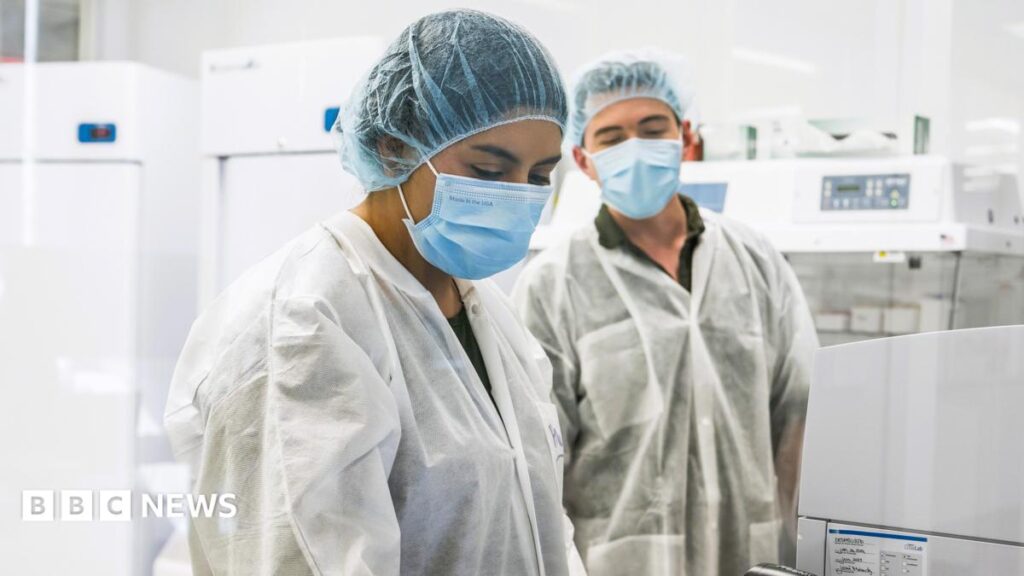
In 2025 detectives tried a new approach. They sent the genetic evidence to Othram, a Houston‑based firm that applies DNA technology to both cold and current investigations. The move was inspired by the investigative genetic genealogy that helped catch the Golden State Killer, Joseph James DeAngelo, in 2018. That method builds a family tree using DNA data that relatives have uploaded to commercial ancestry sites, allowing investigators to locate distant relatives of an unknown suspect.
Othram used this technique on Sperino’s case. Although the perpetrator’s own DNA profile was unavailable, the company identified a male family member through the DNA of extended relatives. Captain Tim Lawrence of the Madison County Sheriff’s Office said that lead opened the case. It pointed investigators to Albert “Buddy” Zigler, 70, who later confessed to the murder and was charged in May 2026. Wes Sperino, the victim’s son, told reporters, “I finally get closure and I finally know who did this.”
The approach that led to Zigler is being hailed as a revolution in forensic work. Othram claims its methods have solved thousands of cases, and chief executive David Mittelman compares investigative genetic genealogy to a GPS signal that tells you where you belong, while public records, obituaries and census data provide the map. He cautions, however, that DNA alone cannot close a case; a cascade of investigative steps is still required.
DNA analysis is not the only technology aiding detectives. The sheer volume of evidence collected since 1993 prompted investigators to turn to artificial intelligence. They used Centerline AI, a platform from Florida’s CentralSquare, to sift through more than 2,000 pages of records, extract DNA‑relevant evidence, reconstruct timelines and organize witness statements. Lawrence described the system as a chatbot that makes the work far easier than having a detective read every page. The AI also helped the team formulate questions during Zigler’s interview, allowing them to gauge his truthfulness.
Lawrence emphasized that technology is only as effective as the people using it, noting that at some point investigators must leave the tools behind and go out to find and talk to people.
Investigative genetic genealogy also has limits. Mittelman explained that without DNA, the technique cannot be applied, and even when DNA is present it is not a guarantee of a match. Ethical concerns persist, especially regarding privacy. Denise Syndercombe Court, a forensic genetics professor at King’s College London, warned that while a DNA donor may consent to law‑enforcement use, their genetic relatives might not have given permission.
Funding remains a challenge. Mittelman said many agencies want to use the technology but lack resources, leading some cases to rely on donations or crowdfunding. Othram maintains a website where the public can contribute to specific investigations.
The method has been adopted in Sweden, Denmark and Australia, but not yet in the United Kingdom. The Home Office is conducting a study to decide whether to introduce it, though it has not responded to requests for comment.