
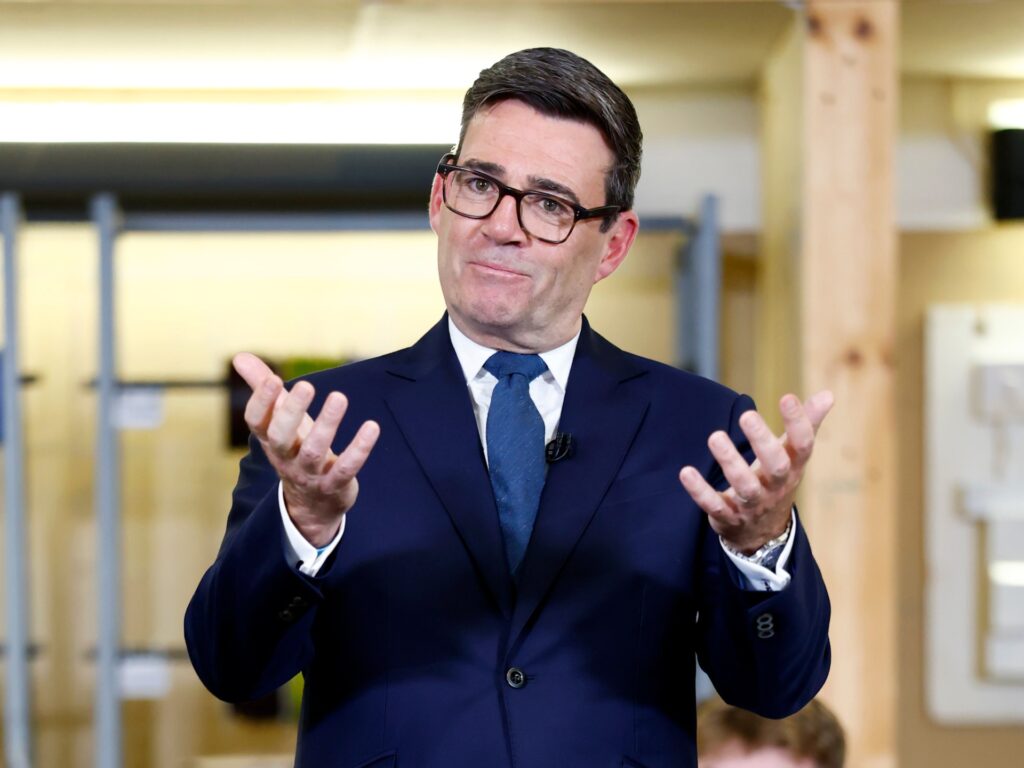
Three months in office: Can Prime Minister Andy Burnham keep the “hope vibe”?
Three months after taking office, Prime Minister Andy Burnham’s leadership has been marked by a blend of emotion, popular appeal and a rapid rollout of domestic initiatives.
During his concluding remarks at a Labour conference in Liverpool, Burnham paused for about twenty seconds, his voice catching as he prepared to speak about the death of his father just weeks earlier. The audience rose, clapped and shouted encouragement such as “Come on, lad!” and “Come on, Andy!” The moment, raw and unscripted, was seen by many as a genuine display of feeling, contrasting with the often‑perceived stiffness of his predecessor, Keir Starmer.
Burnham’s emotional style appears to be resonating with voters. A Politico “Poll of Polls” showed Labour reclaiming the lead shortly after he became prime minister, a lead it has maintained. An Ipsos survey in September identified Burnham as the only politician with a positive net favourability rating, and YouGov’s latest figures placed him as the most popular UK politician overall.
Analysts warn that popularity alone will not be enough. Political commentator Sam Freedman noted that despite Burnham’s dismissal of an early election, many in Westminster continue to press for one, questioning how the “hope vibe” can be sustained through 2029 without visible progress.
In Wales, the shift is already being felt. Myles Lewis, who runs social walks for the elderly in Port Talbot, told Al Jazeera that Labour’s previous stance on immigration had alienated voters, but Burnham’s focus on working‑class issues feels reminiscent of the party’s 1950s and 60s era. He expressed confidence that Burnham can restore that connection.
Burnham’s first weeks saw a flurry of cost‑of‑living measures: a cap on bus fares, a reduction in VAT on electricity bills, and lower business rates for pubs. He pledged to end street homelessness, revive manufacturing, bring more services back under public control and launch the largest post‑World War II social‑housing programme. A long‑time advocate of devolution, he announced that from April 2027 mayors could retain a share of business rates and from 2028 a share of income tax.
His September conference speech outlined longer‑term ambitions. He proposed a national social‑care service free at the point of use, to be funded by adjusting the UK pensions “triple lock” from 2030 onward. He called for a national commission to overhaul the voting system and labelled Brexit as having caused more harm than good, leaving open the possibility of a future referendum or a Labour pledge to rejoin the EU.
On the foreign‑policy front, Burnham’s actions have diverged from his predecessors. In August he travelled to Kyiv, offering British expertise to develop the long‑range SCALP missile, becoming the fourth UK prime minister to visit Ukraine since the Russian invasion. Regarding Gaza, he admitted the Labour government “didn’t get it right” and should have called for a ceasefire earlier. In September his administration announced sanctions targeting illegal settlements in the West Bank, though it has not declared the conflict a genocide, imposed a full arms embargo on Israel, or reversed the previous government’s restrictions on certain arms sales.