
Southeast Asia’s haze crisis will persist until polluters pay
By Ronny P Sasmita, senior international affairs analyst at the Indonesia Strategic and Economics Action Institution. Published 20 Oct 2026
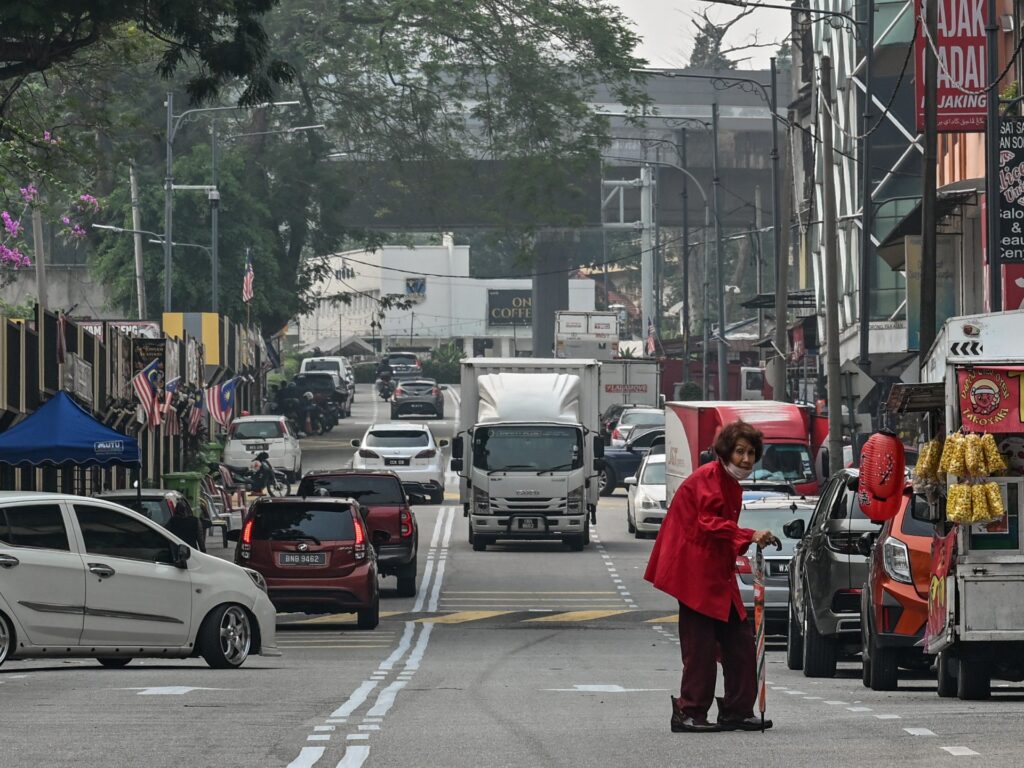
A woman wearing a face mask walks along a street in Kuala Lumpur on 19 October 2026, as Malaysia remains enveloped in haze caused by fires in Indonesia (Jam Star Rosa/AFP). Across the region, the haze has returned with a familiar cruelty. Malaysia has shut schools as air quality worsened, Singapore has recorded dangerous pollution levels, and even parts of the Philippines have felt the smoke, illustrating how far the haze can travel. In Indonesia, forest and peatland fires— the main source of the haze— continue to threaten communities and livelihoods, especially in Kalimantan. What starts as land burning in one nation can quickly become a public‑health emergency for the whole region.
The immediate response is predictable: put out the fires, hand out masks and seek regional cooperation. All of these steps are necessary, but they do not explain why the crisis keeps reappearing. Malaysian children miss school, Singaporean residents breathe polluted air, Filipino towns are exposed to drifting smoke, and Indonesian families living near burning land each bear different costs from the same regional failure.
Dry weather and El Niño can make fires worse, yet many are deliberately set to clear land for agriculture. The deeper question is why practices that generate huge public losses remain attractive to those who profit from them. When cheap land preparation yields private gains while the costs of smoke are spread across communities and borders, the market signal is distorted and political responsibility becomes easier to avoid.
The haze is therefore more than an environmental emergency or a test of diplomatic goodwill. It disrupts daily life, strains public services and shows how readily environmental costs can be shifted away from their creators. It is a failure of economic accountability. Unless Southeast Asia changes who pays for the damage, how land‑clearing decisions are monitored and what penalties follow proven violations, each dry season will bring another round of emergency measures and familiar blame‑shifting.
Fire can be a low‑cost way to clear vegetation, especially where land governance is weak, alternatives are expensive and enforcement is uncertain. The private calculation is simple: spend less on land preparation and capture the returns. The fires cause respiratory illness, lost work days, school closures and transport disruption, while also damaging ecosystems and releasing greenhouse gases. Those costs are rarely borne in full by those who set the fires.
The World Bank’s assessment of Indonesia’s 2015 fire crisis estimated losses of at least $16.1 billion, equal to 1.9 percent of that year’s GDP. Government figures put the area burned between June and October at 2.6 million hectares. The bank linked the fires to cheap land preparation, drought and weak enforcement. Its estimate covered agriculture, trade, tourism, transport, health care and emergency response, but omitted some long‑term health damage and lost ecosystem services.
That figure is not a price tag for the 2026 fires; it illustrates the scale of losses a recurring crisis can impose. Recent estimates put the area burned in Indonesia this year between 637,000 and 900,000 hectares, while Ministry of Health data recorded 283,270 cases of respiratory illness linked to the fires in seven provinces as of 13 October. In West Kalimantan, fires have also threatened communities and livelihoods, showing that Indonesians living beside the flames bear costs long before the smoke reaches neighboring countries.
The central economic distortion is that the cost of burning is not fully reflected in the decision to burn. When benefits accrue privately but health costs, lost income and ecological damage are borne by society, fire can remain economically attractive even when its total cost is enormous. Small farmers need affordable, practical alternatives to burning; companies must face credible liability when evidence links them to fires; and peatlands need sustained restoration and water management, not only emergency attention when smoke becomes politically embarrassing.
Smoke travels across borders, but responsibility and enforcement remain largely national. Tracing pollution to a particular fire, identifying those responsible and proving cross‑border harm can be difficult. A satellite hotspot is a warning signal, but not by itself proof of who started a fire or whether a company is liable.
The Association of Southeast Asian Nations (ASEAN) does have rules. Its Agreement on Transboundary Haze Pollution was signed in 2002 and entered into force in 2003; Indonesia ratified it in 2014. The region also has a Haze‑Free Roadmap and a strategy for sustainable peatland management for 2023‑30. Yet agreements cannot replace consistent implementation, transparent enforcement or incentives that make prevention economically rational.
The challenge is turning these commitments into effective action. Cooperation can improve monitoring and preparedness, but ASEAN’s consensus‑based diplomacy has limited leverage when national enforcement is uneven or commercial interests resist scrutiny. Its investment framework for haze‑free land management aims to mobilise $1.5 billion by 2030. Money alone will not suffice without transparent spending, measurable outcomes and accountability for repeated fires.
This does not mean every fire is caused by a large corporation or that all pollution originates from a single source, but it does highlight the urgent need to align economic incentives with environmental responsibility across Southeast Asia.