
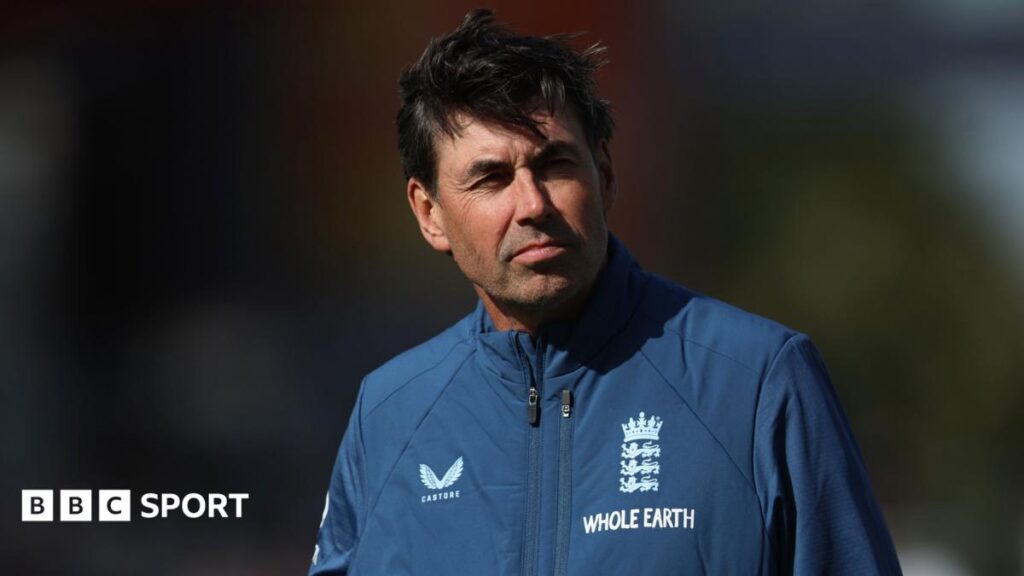
England coach should be English, says Fleming
New Zealander Stephen Fleming, who took over as England’s Test head coach in July, has said the national side ought to be led by an English‑born coach. He will begin his first series in December, when England travel to South Africa.
Fleming joins a short list of overseas coaches who have run the England men’s Test team. Since 1999 only two Englishmen – Peter Moores, who held the post twice, and Chris Silverwood – have been in charge. Ashley Giles later coached the white‑ball side. The role has also been filled by Zimbabwe’s Duncan Fletcher and Andy Flower, as well as Australians Trevor Bayliss and Matthew Mott. Fleming follows fellow Kiwi Brendon McCullum, who remains the white‑ball coach.
The coaching staff announced last week is dominated by home‑grown names. Former opener Marcus Trescothick, who acted as interim Test coach earlier this year, will work alongside ex‑England wicketkeeper James Foster and former spinner Richard Dawson. Jonathan Trott, an Ashes winner, is set to take charge of the England Lions, and both he and Dawson were considered for the Test job before Fleming’s appointment.
Speaking on BBC Radio 5 Live, the former New Zealand captain said developing English coaches will be a priority of his tenure. “I do believe that primarily the national team should be coached by a national representative,” he said. “I’m grateful for the opportunity, but there will be some development in terms of the coaching, and you can see that in our staff.”
Fleming also noted that England’s selector, Marcus North, is Australian, and that in September another Australian, Leah Poulton, was appointed managing director of the England women’s team. From 2020 to 2023 the women’s side was led by former Australian international Lisa Keightley.
In addition to nurturing his own backroom staff, Fleming plans to bring in county coaches and former England players from time to time. “There are some really key people who have come back into the system and I’m really pleased about that,” he explained. “I look forward to working with them, but it is a real focus and an ambition as well that you will also get county coaches who will be introduced at certain times and you will get past players that will be asked to come back as well. It’s inclusive and makes good use of what’s around, while also driving what should be driven within the county game and the English game.”
One criticism of McCullum’s four‑year spell was his limited involvement with county cricket. Fleming, who played for Nottinghamshire, Yorkshire and Middlesex, visited several counties in September and expressed his fondness for the domestic scene. He confirmed he will spend part of next summer watching county matches as preparation for the home Ashes series. “Yep, I’ll be around and I really enjoyed this year getting to catch up,” he said. “A lot of the guys I played with are now in coaching or head positions at counties. It was good to catch up with those guys and get a feel for where the county game is at. I really enjoyed it and it will be a key part to continuing developing players.”
Fleming was appointed in July but did not take charge of the Pakistan series in August and September. His first full series will be the three‑match Test tour of South Africa in December and January, with the squad expected in the first week of November. England omitted a specialist spinner for the Pakistan Tests, opting for four frontline seamers.
In the ongoing South African Test against Australia in Gqeberha, the hosts left out Nathan Lyon, despite his 573 Test wickets placing him sixth on the all‑time list. Last week, Derbyshire’s Shoaib Bashir was named the only specialist red‑ball spinner among England’s fully centrally contracted players, while Mason Crane and Liam Patterson‑White received development contracts.
Spin will feature prominently on the two‑Test tour of Bangladesh in February. When asked whether Bashir’s contract makes him England’s number‑one spinner, Fleming said the Derbyshire bowler provides “continuity”. He added that there is “a raft of spinners just below that, who at times are putting their hand up,” and that conditions in Bangladesh could give opportunities to two or three of them. “Bashir has got some experience and is still very young. There’s an aspect of still looking and developing, and trying to find that right combination in the spin department,” Fleming concluded.