
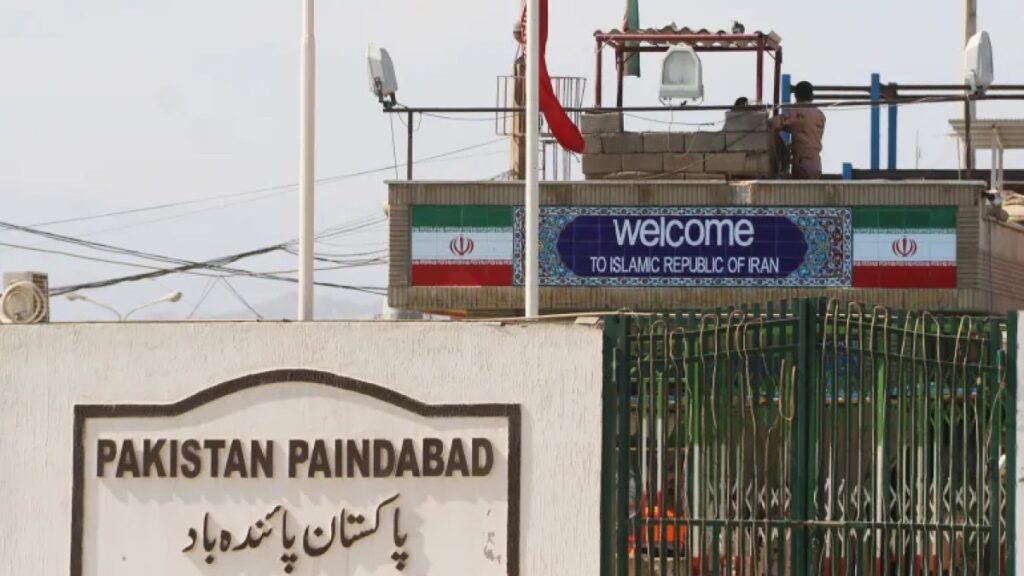
Pakistan Halts Trade at Iran Border Amid Rising Violence
Pakistan has stopped commercial traffic at the Taftan and Gabd‑Rimdan crossing points in Balochistan, leaving thousands of trucks stranded on both sides of the frontier. The suspension was announced on Saturday, and the Quetta Chamber of Commerce and Industry reported that roughly 2,000 trucks were caught in the gridlock.
Passenger services at Gabd‑Rimdan continue, according to Iran’s news agency WANA. The federal government in Islamabad has not issued a public statement, and Al Jazeera received no reply from Balochistan authorities. Both Islamabad and Tehran have offered differing explanations for the closure.
Bakhtiar Ismail, deputy commissioner of Chagai district where the Taftan crossing lies, said the move was a security precaution. “Pakistan‑Iran border closure is a temporary measure to improve border management to support counter‑terrorism efforts. The border will be opened as soon as effective measures are in place,” he posted on X on Saturday. Shahid Rind, an aide to Balochistan’s chief minister for political and media affairs, also wrote on X that the shutdown aimed to address security concerns, curb smuggling and make the border system more efficient.
Iran’s foreign ministry spokesman Esmaeil Baghaei gave a different rationale, telling the state news agency IRNA that “due to certain technical issues and the necessity of implementing precautionary measures, cross‑border movement and exchanges have been temporarily halted.”
Imtiaz Baloch, an independent security researcher based in Quetta, suggested that security might only be part of the story. “Although Pakistani officials have cited security concerns, the decision to close the border appears to be motivated by broader strategic considerations, with security as a possible factor amid economic sanctions on Iran,” he told Al Jazeera. Javad Heiran‑Nia, head of the Persian Gulf Studies Group at Iran’s Center for Scientific Research and Middle East Strategic Studies, said Tehran’s wording could cover a range of issues, from customs procedures and trade‑document verification to financial transactions and tighter security controls.
Pakistan has acted as a mediator between Washington and Tehran since the US‑Israeli war on Iran began on 28 February. Islamabad helped broker a cease‑fire on 8 April, which collapsed within days, after which the United States imposed a blockade on Iran’s southern ports. With Iranian ports blocked, a 25 April order from Pakistan’s commerce ministry allowed third‑country goods to be trucked to Iran along six routes ending at Gabd and Taftan.
In June, Pakistan and Qatar facilitated the Islamabad Memorandum of Understanding, signed electronically by US President Donald Trump and Iranian President Masoud Pezeshkian. The pact called for reopening the Strait of Hormuz, lifting the blockade and a 60‑day period of talks toward a lasting settlement. The agreement lasted about a month; in July Iran said it was no longer bound by parts of the deal after the United States resumed attacks and its naval blockade.
Washington has since expanded its sanctions. On 24 August, Treasury Secretary Scott Bessent announced “Operation Economic Outcast,” extending restrictions to shipping, gold, aviation and digital assets. Earlier this month, Pakistan’s foreign office spokesman Sajjad Haider Khan said Pakistan would continue to comply with all applicable sanctions regimes, without specifying which.
Official bilateral trade between the two neighbors is modest – about $2.8 billion in the 2023‑24 fiscal year, including $684 million in Pakistani exports, according to the Federation of Pakistan Chambers of Commerce and Industry. Analysts point to decades of US sanctions on Iran as a major factor limiting trade.
Balochistan, Pakistan’s largest province, accounts for 44 percent of the country’s land area and is home to nearly 15 million people according to the 2023 census. The province, the nation’s poorest, has a long history of unrest dating back to 1948. Recent uprisings led by Baloch nationalist rebels have persisted for two decades, with the insurgents accusing the state of exploiting local resources while leaving communities deprived.
Violence has surged this year. The Pakistan Institute for Conflict and Security Studies recorded 62 security‑personnel deaths in Balochistan in July, up from six in June. In September the institute logged 225 attacks by armed groups nationwide, the highest monthly total in twelve years. At least 20 police officers were abducted from a van in Mastung district on Friday, and two days later an army major was killed by an improvised explosive device in Gwadar district, according to the Inter‑Services Public Relations. In Chagai, the remote district bordering Iran, four travelers including a customs official were kidnapped from a coach earlier this month.
Security analyst Imtiaz Baloch noted that Pakistani officials have long blamed the violence on “poro” – a term that has been used to describe cross‑border smuggling and insurgent activity.