
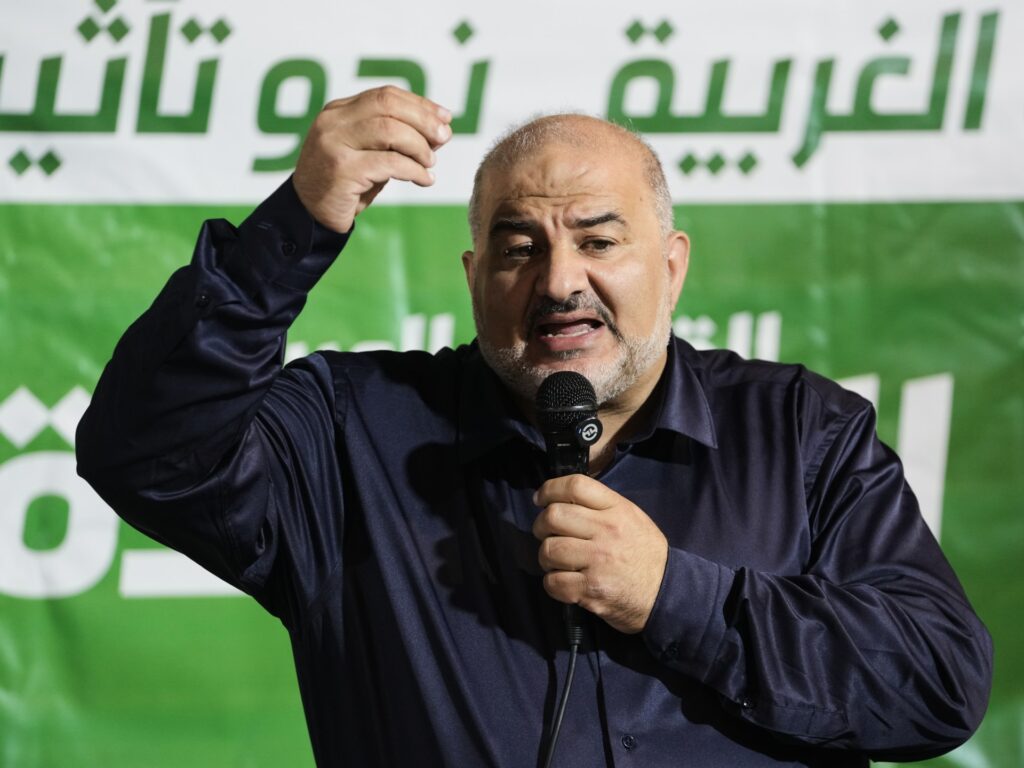
Arab parties could become kingmakers in Israel’s election
In the run‑up to Israel’s pivotal vote on October 27, the two Arab‑led lists – Ra’am and the Joint List – have been frequent targets of Prime Minister Benjamin Netanyahu’s attacks on his rivals. Together they represent the country’s Palestinian citizens, who account for roughly 20 percent of the population, and are expected to win about 13 seats in the 120‑member Knesset. If those projections hold, the Arab blocs could prove decisive for any post‑election coalition, no matter which side forms the government.
The scenario is not new. In 2021 Ra’am broke new ground by becoming the first Arab party to join an Israeli coalition, helping to unseat Netanyahu for a brief period. At that time Netanyahu signaled a willingness to negotiate with Ra’am leader Mansour Abbas, but Abbas ultimately aligned with the coalition led by Naftali Bennett and Yair Lapid to push forward measures he had campaigned on.
This election, however, both Netanyahu’s camp and most leaders of the self‑styled Zionist opposition have ruled out any partnership with the parties representing Palestinian citizens. Netanyahu and his allies have tried to paint their opponents as dependent on the Arab lists, while the opposition has attacked them for leaning on ultra‑Orthodox parties to sustain their power base.
Opinion polls consistently show Netanyahu’s Likud party and its far‑right allies locked in a tight race with the Zionist opposition bloc, with neither side on track to secure an outright majority. “Netanyahu would work with Ra’am in a heartbeat, if it meant staying in power,” said Yossi Mekelberg, a Middle East analyst at Chatham House. He added that the opposition appears blind to the consequences of repeatedly undermining what could become a necessary component of any future government. “If it came down to it, of course they’d accept the support of the party they’d previously vilified without thinking of how that will undermine their government, and undermine the votes of the large numbers of Arab Israelis who support them,” Mekelberg said.
In the weeks before the vote, Likud has run hard‑hitting ads warning that a defeat for Netanyahu would hand the balance of power to the Arab parties in a new administration possibly headed by former army chief Gadi Eisenkot, leader of the Yashar party. One campaign slogan read: “There is no Gadi without Ahmad Tibi,” referring to the leader of Ta’al, one of the three factions that make up the Joint List.
The Joint List – comprising Ta’al, Hadash and Balad – says it could act as a “safety net” for an anti‑Netanyahu coalition by abstaining from a confidence vote, even if it does not join the cabinet. In exchange it would demand conditions such as a clear path toward Palestinian statehood, a crackdown on organized crime, and measures to curb the surge of violent crime that has plagued Palestinian communities. It also wants the government to address discriminatory policies, especially in housing.
Ra’am, founded in 1996, has already moved away from its religiously conservative origins. In December 2025 Abbas announced that the party’s political decision‑making body would separate from its religious council, and eight months later the party chose its electoral slate independently for the first time, placing Jewish Zionist Yoav Segalovitz – a former senior police commander and deputy public security minister in the Bennett‑Lapid government – in the second slot. Mekelberg described Ra’am as “one of the most interesting parties” in this election, noting that “through Mansour Abbas, they are continually reinventing themselves without appearing opportunist.”
The upcoming election is the first since the Hamas‑led assault on southern Israel on October 7, 2023, which killed an estimated 1,200 people and sparked Israel’s war in Gaza. The conflict has accelerated a shift to the right, with Arab‑led parties increasingly targeted by right‑wing figures who accuse them of complicity in the October 7 attack.
In May, Bennett apologized for having entered a government with Ra’am, and in September Netanyahu’s Likud and the Otzma Yehudi party of National Security Minister Itamar Ben‑Gvir filed a petition to bar Ra’am and the Joint List from the ballot. On September 23 the Central Elections Committee, whose members are drawn from Knesset parties, voted to disqualify both lists and two individual candidates. Balad leader Sami Abu Shehadeh faced a ban over an article he wrote on October 8, 2023 describing the Hamas attack.