
China’s Growth Picks Up as AI‑Driven Export Surge Offsets Domestic Weakness
China’s economy showed a rebound in the three months to the end of September, climbing 4.5 percent in the third quarter after hitting a three‑year low. The rise followed a 5 percent expansion in the first quarter, according to official data from the National Bureau of Statistics. The figure sits at the lower end of Beijing’s 4.5‑5 percent annual growth target, giving policymakers some breathing room to tackle lingering challenges.
Exports helped compensate for soft domestic demand, but ongoing trade tensions and uncertainty about AI investment cloud the outlook. The statistics agency said the economy “sustained steady development against pressure” and displayed “momentum with new growth drivers and improving structure.” With exports rising, China’s trade surplus is on track to surpass the record $1.2 trillion recorded last year.
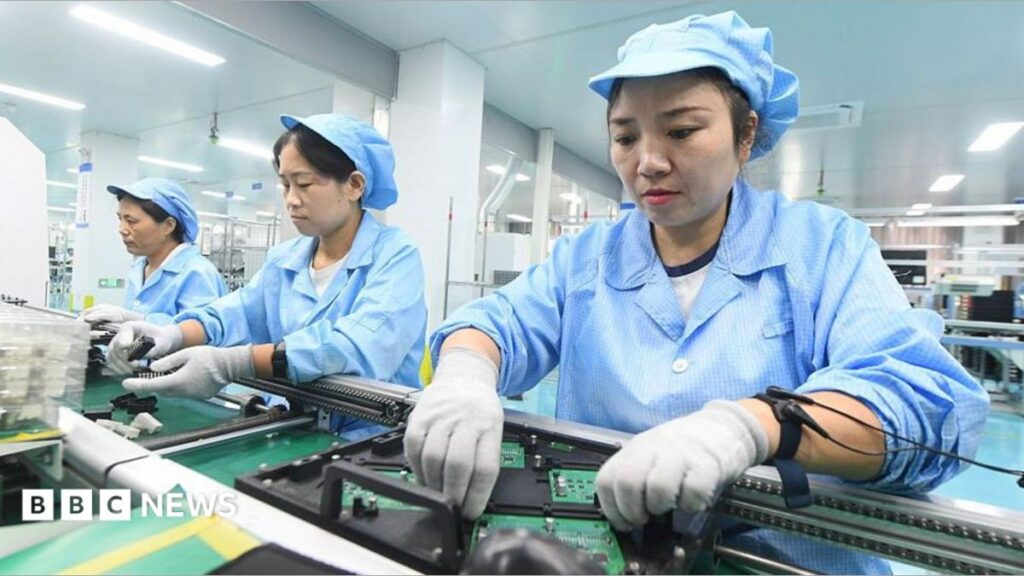
Sales of high‑tech goods grew 14.3 percent, while output of batteries and industrial robots each rose by more than 29 percent, the bureau reported. Oxford Economics researcher Sheana Yue said that manufacturing and high‑tech exports have been a key source of growth despite weak investment and tepid household spending. However, property investment fell by over 20 percent in the first nine months compared with the same period a year earlier, reflecting the deep‑seated slump in the sector after years of overbuilding and heavy borrowing by developers. Yue added that there are no signs the downturn will end soon, and that trade uncertainties and geopolitical issues have left Chinese consumers more pessimistic and reluctant to spend.
Moody’s Analytics economist Dave Chia noted that the impact of Beijing’s targeted support measures for businesses has yet to materialise. He warned that China remains heavily dependent on a single external engine—its export market—and that this reliance poses a risk.
The technology sector has been a major driver of recent growth. Global demand for computer chips and other components used in AI data centres has helped relieve pressure on the economy and soften the blow from sluggish domestic consumption. Chinese firms have leaned on overseas sales as a prolonged property slump, stagnant wages and high youth unemployment have weighed on home‑grown demand.
In September, the government announced a suite of stimulus steps, including lower interest rates for certain businesses and subsidies for home‑buyers, aimed at reviving activity. At the same time, Beijing faces pushback from the United States and the European Union, where manufacturers complain about competition from inexpensive Chinese goods. Concerns also linger over the billions spent on AI infrastructure and whether the companies involved can deliver the promised profits.