Mehfooz Dawa: Can a Phone Scan Finally End Pakistan’s Fake Medicine Problem?
Prime Minister Shehbaz Sharif launched the Mehfooz Dawa app on Thursday, 26 November 2026, giving Pakistanis a way to check a medicine before they swallow it. Scan the barcode on the pack and the phone answers in colour: green means the medicine is genuine, red means it may be fake. The same scan shows the registered price and the expiry date, and users can report a suspect medicine or a shortage straight to the drug regulator. It is a small act, a phone held over a box, aimed at a problem that has killed people in this country.
How the app works
Mehfooz Dawa was built by the Ministry of National Health Services with the Drug Regulatory Authority of Pakistan, known as DRAP. It checks the scanned batch number against a database of about 92,000 medicines from around 700 pharmaceutical companies. The app has three functions: medicine verification, complaints, and shortage reporting. Complaints about a counterfeit drug go directly to DRAP, and shortages can be flagged the same way. It is available on Android and Apple app stores. The track and trace system behind it became operational on 9 October, and DRAP says its regulatory processes are now digitalised end to end.
Why fake medicine is a life and death issue
Pakistan has lived with counterfeit and substandard drugs for years, and the prime minister reached back to the worst example at the launch: the deaths at the Punjab Institute of Cardiology, where cardiac patients were given malaria medicines instead of heart drugs. Samples sent to three laboratories in Europe confirmed the error. That tragedy is why the colour system matters. With nearly 200 million mobile phones in the country, the app is designed so that even people with limited literacy can use it: green is safe, red is a warning. Health Minister Mustafa Kamal called the aim simple, protecting innocent lives, and noted the deep lack of trust people feel when they buy medicine. A scan that turns green restores a little of that trust at the counter.
The price check may matter just as much
The app does more than catch fakes. It shows the registered price, which is a quiet answer to overcharging. The prime minister made the point plainly at the launch: to make medicines affordable for the common man, their prices should be in line with what ordinary people can afford, and obtaining medicine is a huge challenge for millions. A patient who can see the official price before paying is harder to overcharge, and a pharmacist who knows the customer can check is less likely to try. In a market where the same drug can sell at very different prices from one shop to the next, that transparency is worth as much as the fake check.
What will decide whether it works
Three things will decide if Mehfooz Dawa becomes a habit or another forgotten launch. First, coverage: the database must hold every medicine on the shelf, including imports and small manufacturers, or a red screen will mean “not listed” rather than “fake”, and people will stop trusting the answer. Second, enforcement: a complaint sent to DRAP must lead to action against the seller, or the report button is decoration. Third, awareness: the app only helps if people know it exists and use it before paying, not after falling ill. The government has asked the information ministry to spread the word nationwide. If those three pieces hold, a phone scan could do what raids and warnings never managed: make selling a fake medicine a bad business.
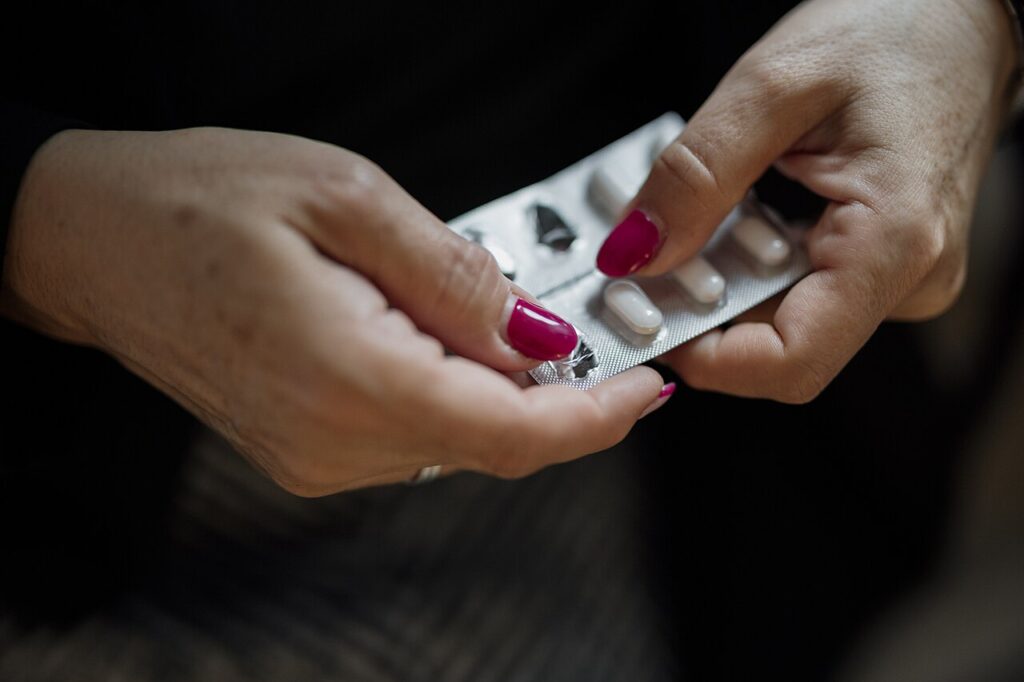
Photo: Hands holding a pack of pills. Credit: Shixart1985, via Wikimedia Commons (CC BY 2.0).
Sources: Dawn, The Express Tribune, Dunya News, Business Recorder, ProPakistani.