Pakistan Internet Slows After Fault in SMW5 Submarine Cable Near Coast
ISLAMABAD: Internet users across Pakistan woke up on Thursday to slower speeds and patchy connections after a fault developed in the SEA-ME-WE 5 (SMW5) submarine cable, one of the undersea systems that carries the country’s international internet traffic. The Pakistan Telecommunication Authority (PTA) said on Wednesday evening that the fault sits about 11 kilometres off Pakistan’s coast, and warned that some users may face intermittent connectivity and a decline in service quality until it is fixed.
No timeline for restoration has been announced yet. Transworld Associates, which operates the cable landing in Pakistan, is working with the SMW5 Consortium to find the cause of the fault and work out an estimated time for restoration. In the meantime, internet traffic is being rerouted through alternative international links, the regulator said, to keep services running as far as possible.
What happened
The PTA issued its statement on Wednesday evening, 18 November, after users in several cities began reporting slow browsing, buffering videos and dropped calls. The regulator said the fault was in the SMW5 system and put its location about 11 kilometres from Pakistan’s shore, in shallow water rather than the deep ocean stretches of the system. It has not said what caused the fault, whether the damaged section has been identified, or how much capacity has been lost. Internet monitor NetBlocks confirmed the disruption, reporting that internet traffic in Pakistan fell sharply after the fault, with HTTP bytes down by as much as 36 percent.
Why one cable matters so much
Almost all of Pakistan’s international internet traffic travels through a handful of submarine cables that land on the coast near Karachi. SMW5 is one of the main ones, linking South Asia with the Middle East and Europe. When one cable goes down, the traffic it carried has to squeeze through the remaining systems, and that congestion is what users feel as slow speeds, especially in the evening when demand peaks. The effect is uneven. Some users notice little change, while others, depending on their provider and city, see a sharp drop in speed. For freelancers, remote workers and businesses that depend on video calls and cloud services, even a partial slowdown can cost real work hours.
What users can do for now
There is little an individual user can do to fix a fault on the sea floor, but a few steps help. A wired connection is more stable than Wi-Fi during congestion, and heavy downloads are best left for off-peak hours. If a connection keeps dropping, restarting the router and checking whether the problem is on the provider’s side can save time. The PTA says traffic is being rerouted, so speeds should improve gradually even before the cable itself is repaired, as operators balance the load across the working systems.

This has happened before
Pakistan has been here before, and recently. On 1 July this year, a fault in the same SMW5 system caused widespread connectivity problems across the country, and it was resolved on 3 July. Repairs to a fault in shallow water close to shore are usually faster than deep-sea repairs, which need a specialist ship to reach the site and lift the cable. That is no promise, though, and the PTA has deliberately not given a date. Until Transworld Associates and the consortium locate the damage and assess it, any estimate would be guesswork.
What to watch next
The next update to look for is the estimated time for restoration, which will tell users whether this is a matter of hours or days. After that, the cause of the fault matters, because repeated faults in the same system raise questions about how much spare capacity Pakistan keeps in reserve. For now, the practical message is simple: expect slower internet for a while, plan heavy work around it, and wait for the PTA’s next statement.
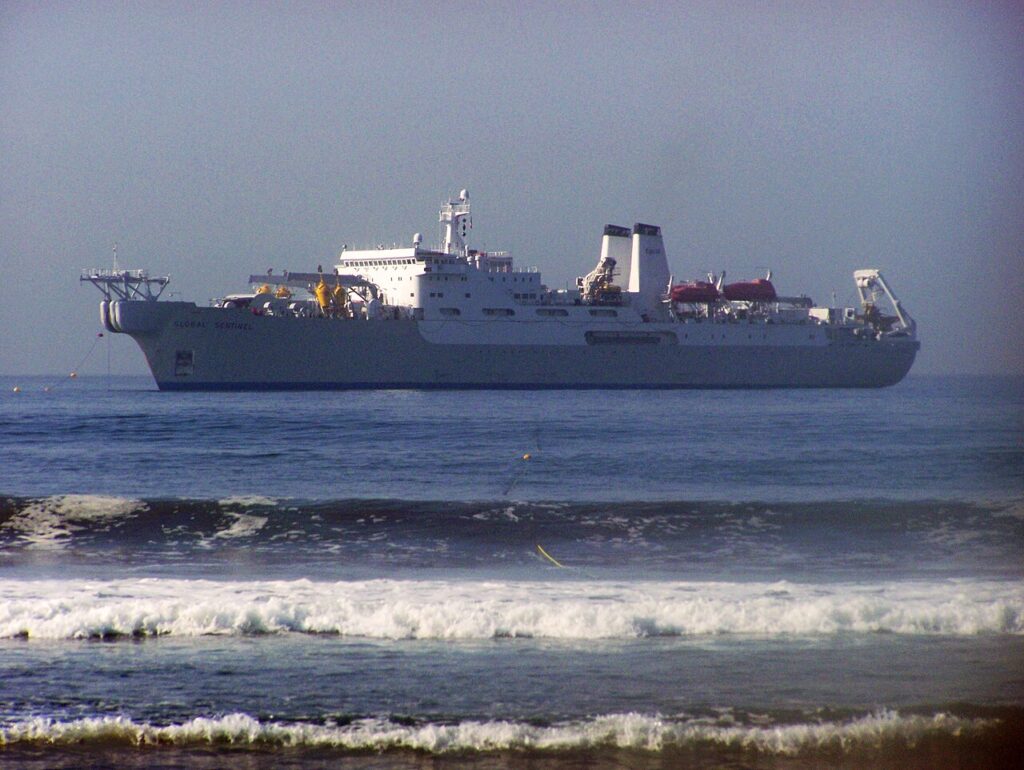
Featured image: the cable ship Global Sentinel laying a submarine cable system. Photo: Nc tech3, Wikimedia Commons.
Sources: Dawn, Geo News, Dunya News, The National, NetBlocks, PTA statement, 18 November 2026.