
Why Iran‑US talks keep stalling
By Mahjoob Zweiri, academic and senior political analyst specializing in Iran and Middle East politics
Published 18 Oct 2026
Since the first hostilities began, the United States and Iran have launched several diplomatic overtures. Only one, a memorandum of understanding signed in Islamabad on 18 June, survived long enough to be announced, but it fell apart within days. Most analyses blame the failure on the specific terms of the proposals, but this piece argues that a deeper psychological pattern has been steering the deadlock.
In international affairs, prolonged crises can embed lasting mental shortcuts in the way nations perceive each other, creating barriers to compromise. The Iran‑U.S. relationship carries two such mental blocks. The first stems from Washington’s reaction to the 1979 seizure of the American embassy in Tehran; the second originates from Tehran’s memory of long‑standing U.S. antagonism, especially the 2018 abandonment of the nuclear accord.
The fissure can be traced back to August 1953, when U.S. and British intelligence helped topple Prime Minister Mohammad Mosaddegh after he nationalised Iran’s oil. That episode forged a persistent Iranian belief that Washington will not tolerate an autonomous Tehran and will intervene whenever its interests are threatened. When the United States offered medical care to the deposed Shah Reza Pahlavi in October 1979, revolutionary leaders interpreted it as a prelude to another coup. Iranian students stormed the U.S. embassy on 4 November, holding 52 Americans for 444 days. Diplomatic ties were cut and have never been fully restored. In the American view, the siege cemented an image of Iran as a state that disregards international norms and cannot be trusted. This perception created an informal rule in U.S. policy: Iran must make the first concession, and that concession must be verified before any American benefit is granted.
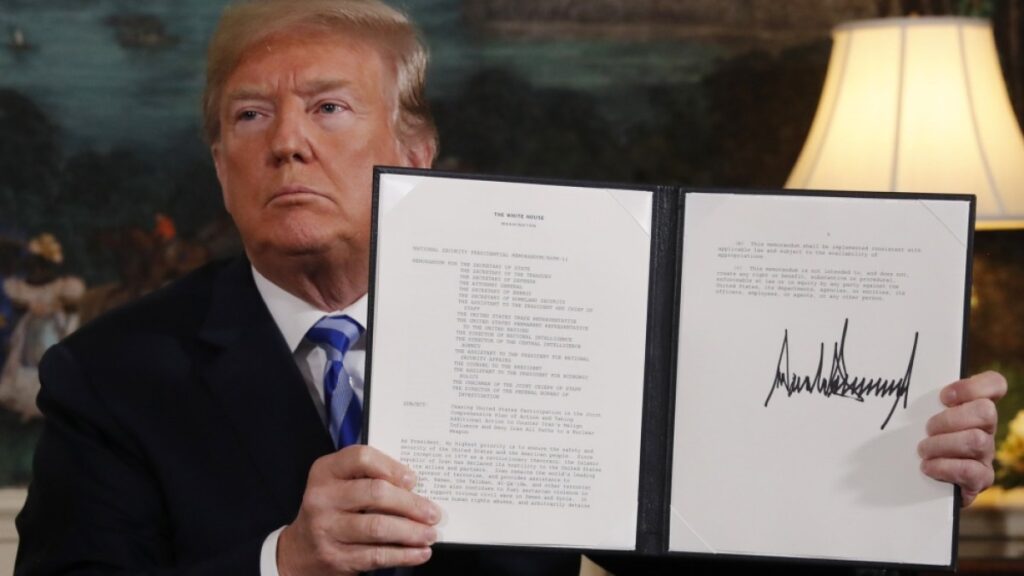
Iran’s own mental block grew alongside this history, reaching a climax in May 2018 when President Donald Trump announced the United States’ withdrawal from the Joint Comprehensive Plan of Action (JCPOA) despite the International Atomic Energy Agency’s confirmation that Tehran was meeting its obligations. Two weeks later Secretary of State Mike Pompeo issued twelve demands for a new deal, only four of which concerned the nuclear issue; the rest targeted Iran’s activities in Lebanon, Palestine, Iraq, Yemen, Syria, Afghanistan and the Gulf. By revoking the agreement and expanding the conditions for any future pact, Washington raised the stakes dramatically.
The tension intensified in June 2025 when the United States participated in the Twelve‑Day War and struck Iran’s nuclear sites at Fordow, Natanz and Isfahan, just as indirect talks were slated to begin in Muscat. The conflict escalated further as Washington joined Israel in the current war. These actions reinforced a Iranian conviction that an American signature offers no security, that any deal can be undone by a future administration, and that negotiations may simply mask preparations for war. Consequently, Tehran’s informal rule became: no step forward without binding guarantees, no concession while pressure remains.
Thus the two mental complexes sit at opposite ends of the bargaining table. The American side expects Iranian action before any quid‑pro quo, while the Iranian side demands a firm U.S. guarantee before taking any step.
Recent U.S. proposals bear the imprint of the embassy‑siege complex. A fifteen‑point plan presented in March called for the dismantling of the Natanz, Isfahan and Fordow facilities, an end to uranium enrichment, a suspension of the missile programme and the abandonment of regional allies, in exchange for a later lift of sanctions. A May draft prepared by White House envoys Steve Witkoff and Jared Kushner tied the release of frozen Iranian assets to an immediate halt of enrichment. The September response again insisted on freezing enrichment and allowing inspectors throughout the negotiation period. Across these initiatives, the pattern remains: Iranian action must precede any American concession, and verification must precede trust.
Iranian offers reflect the JCPOA‑withdrawal complex. A five‑point reply in late March demanded assurances that war would not recur. In April, Tehran presented ten points calling for a binding United Nations Security Council resolution to protect any agreement from future reversal. By May, a fourteen‑point list sought a non‑aggression pledge that explicitly included Israel. Most recently, Tehran’s seven‑day plan stipulated that sanctions and the U.S. naval blockade be lifted before the Strait of Hormuz could be opened on the sixth day.