
Marco Rubio’s Mumbai trip sparks controversy in India
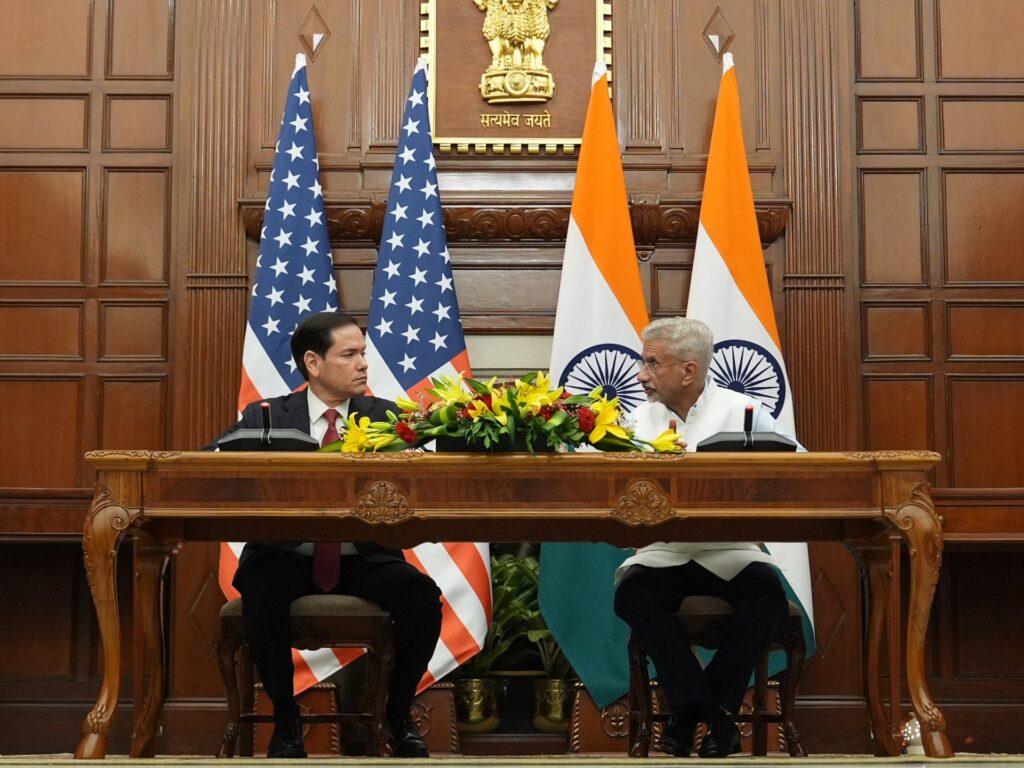
The United States secretary of state, Marco Rubio, is scheduled to travel to India next week, but he will bypass the capital, New Delhi. Instead, on Monday he will meet Indian external affairs minister Subrahmanyam Jaishankar in Mumbai, the country’s financial centre, before heading to an oil refinery in Jamnagar, Gujarat, according to a statement from the U.S. Department of State.
Rubio’s itinerary has ignited a political dispute after U.S. ambassador to India Sergio Gor said Washington expects Jaishankar to travel to Mumbai for the meeting. Opposition leaders have accused the government of allowing India’s top diplomat to be “summoned” on home soil.
The visit comes amid strained U.S.–India relations over trade, tariffs and India’s purchases of Russian oil. Here are the key points.
Rubio’s agenda in India
Rubio will discuss trade, energy and investment. He arrives on Sunday from Samarkand, Uzbekistan, where he attended the C5+1 summit with five Central Asian states. In India he will meet senior officials to review the U.S.–India strategic partnership, explore energy cooperation and hold talks with business leaders, the State Department said. A spokesperson for India’s Ministry of External Affairs, Randhir Jaiswal, confirmed that the Mumbai talks will cover energy, trade and investment, defence and critical and emerging technologies.
In Jamnagar, Rubio is slated to visit the world’s largest single‑site refinery, operated by Mukesh Ambani’s Reliance Industries, and attend a reception hosted by the Ambani family, according to The Hindu. A photo shows Rubio and his wife Jeanette with Ambassador Gor, who also serves as the U.S. special envoy for South and Central Asia, at the Taj Mahal in Agra on May 25, 2026.
Why the bypass of New Delhi?
No official explanation has been offered. Rubio was in New Delhi in May for a Quad foreign‑ministers meeting involving the United States, India, Japan and Australia. The State Department has framed the current trip around energy and investment, and Jamnagar is a major global energy hub. The timing also coincides with rising fuel prices in the United States ahead of the mid‑term elections.
Reliance sits at the centre of Washington’s broader oil diplomacy. Business Standard notes that Reliance is the largest buyer of Venezuelan crude after the United States, at a moment when Washington is urging India to increase purchases. After U.S. forces seized control of Venezuela’s oil sector in January, the U.S. government has been marketing Venezuelan oil abroad. Reliance is also investing in a new refinery in Texas, the first new U.S. refinery in 50 years, a project former President Trump described as a $300 billion deal.
Ambassador’s remarks and the backlash
Speaking at the Bloomberg New Economy Forum in New Delhi on Thursday, Ambassador Gor said Rubio would meet Indian officials in Mumbai and that Washington “expected” Jaishankar and other officials from New Delhi to travel there. Earlier in the week, Jaiswal had not confirmed the trip or explained Rubio’s decision to skip the capital, telling reporters the Indian government would announce details “at the appropriate time,” The Hindu reported.
Opposition figures reacted sharply. Jairam Ramesh, a general secretary of the Indian National Congress, called the ambassador’s statement “quite extraordinary” on X. Rahul Gandhi, the opposition leader in the lower house of parliament, wrote that Rubio had “summoned his employee to Mumbai.” Congress MP Pawan Khera added, “A foreign government summoning India’s external affairs minister on Indian soil is a new low, even by the Modi Government’s standards,” referring to Prime Minister Narendra Modi.
Underlying tensions in U.S.–India relations
The relationship has been strained by tariffs and India’s purchase of Russian oil. In August of last year, after trade talks stalled, the United States imposed a 50 percent tariff on most Indian goods. A framework agreed in February reduced that rate to 18 percent, but negotiations have since stalled. This month, Finance Minister Nirmala Sitharaman said the talks had “plateaued,” according to The Hindu. Trade Minister Piyush Goyal said the “first tranche” of a deal is in its final stages but India will not sign until its exporters have an advantage over competitors such as Bangladesh, Vietnam and Indonesia, Reuters reported.