Manchester United: Has the club become unmanageable?
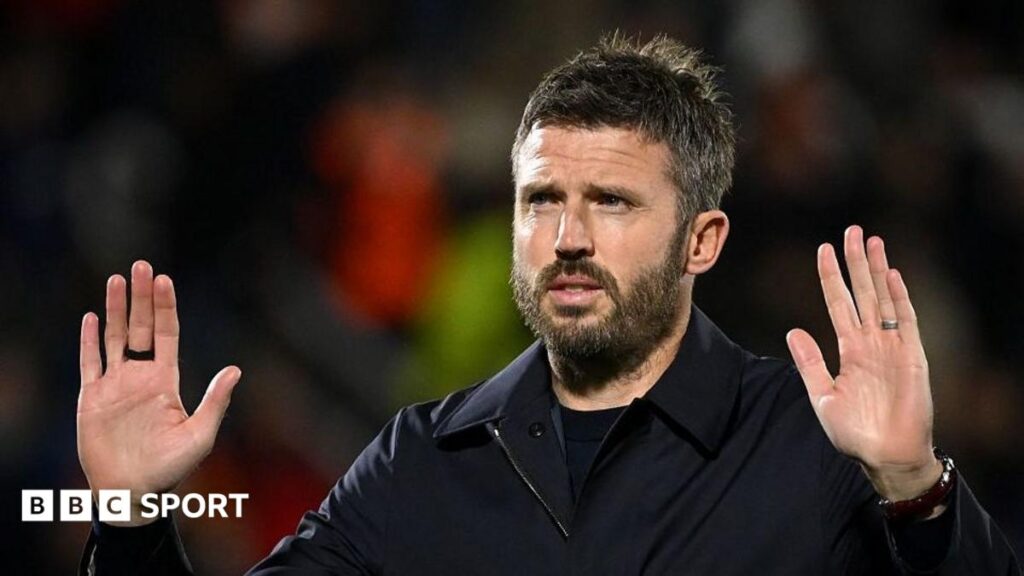
Manchester United have now endured seven games without a win across all competitions, a slump that has once again placed a manager in the spotlight. Michael Carrick, the latest to take charge, mirrored a scene that Ole Gunnar Solskjaer performed after a 4‑1 defeat at Watford in November 2021 – he lifted his hands in apology to a frustrated fan base following another 4‑1 loss, this time to Como in the Champions League.
Carrick is the seventh full‑time manager appointed since Sir Alex Ferguson retired in 2013, after a 26‑year tenure that yielded 38 trophies. Since Ferguson’s departure the club has seen periods of promise under Louis van Gaal, José Mourinho and Erik ten Hag, yet each spell has ultimately ended in dismissal.
The current situation is dire. Results have been poor and tension is rising inside the dressing room. Defender Lisandro Martínez openly criticized director of football Jason Wilcox after United’s Champions League exit at Atlético Madrid, while captain Bruno Fernandes questioned the tactics used against Como. These incidents suggest deeper problems within the organization.
The pattern of managers being blamed raises a broader question: should the focus be on the coaches, or on those who appointed them and set the club’s direction? Over the years, United’s leadership – from former executive vice‑chairman Ed Woodward to the Glazer family and now part‑owner Sir Jim Ratcliffe – has tried numerous strategies to recapture the Ferguson era, but success has been elusive.
The seven full‑time appointments have been David Moyes, Louis van Gaal, José Mourinho, Ole Gunnar Solskjaer, Erik ten Hag, Rúben Amorim and Michael Carrick. Interims such as Ryan Giggs, Ralf Rangnick, Ruud van Nistelrooy and Darren Fletcher have also taken the helm temporarily.
Moyes, hand‑picked by Ferguson, struggled after leaving Everton. Van Gaal and Mourinho arrived with impressive records from Europe’s elite clubs. Solskjaer, lacking a managerial résumé, was chosen after a popular interim spell. Ten Hag earned the job by guiding a youthful Ajax side to a Champions League semi‑final, while Amorim was hailed as Europe’s hottest young coach when he moved from Sporting Lisbon. All were eventually dismissed, each finding United’s environment difficult to control.
In terms of silverware, the haul has been modest. Van Gaal captured the FA Cup in 2016, Mourinho added a League Cup and the Europa League in 2017, and Ten Hag secured the FA Cup in 2024 with a memorable victory over Manchester City. These achievements pale in comparison with the club’s historic glory.
United’s decline did not happen overnight. The succession plan after Ferguson was poorly executed, leaving the club vulnerable. In December 2019, the world’s top managers – Carlo Ancelotti, Pep Guardiola and Jürgen Klopp – all managed clubs within 35 miles of Old Trafford but none were at United. The club had appointed Solskjaer, a sentimental choice after his interim success, and his tenure lasted less than three years.
Carrick now appears to be a second version of Solskjaer. A former fan favourite who performed well as caretaker, Carrick’s only previous managerial experience was a brief, unsuccessful spell at Championship side Middlesbrough. Solskjaer shares a similar blemish, having been sacked by Cardiff City after just nine months in 2014.
The pressing question is whether United’s situation is now worse than any point since Ferguson’s exit. Recent weeks have seen dwindling hope and low morale among players and supporters alike. While the club can still attract a manager, its current circumstances make it far less appealing than in the past. Securing a top‑class coach would likely require a substantial financial commitment, something the current squad does not guarantee will solve the problems.
At present, Carrick is the public face of United’s struggles and may bear the brunt of the club’s failures. His appointment mirrors the Solskjaer gamble: a familiar, comforting figure for fans after a Champions League qualification, now stripped of that goodwill by poor results.
Responsibility also lies elsewhere, particularly with part‑owner Jim Ratcliffe. United supporters have repeatedly protested the Glazer family’s ownership since their leveraged takeover in 2005, which saddled the club with significant debt. Despite ongoing fan anger, the Glazers remain the majority owners, and Ratcliffe’s influence adds another layer to the club’s challenges.