Indian workers film their tasks to teach robots
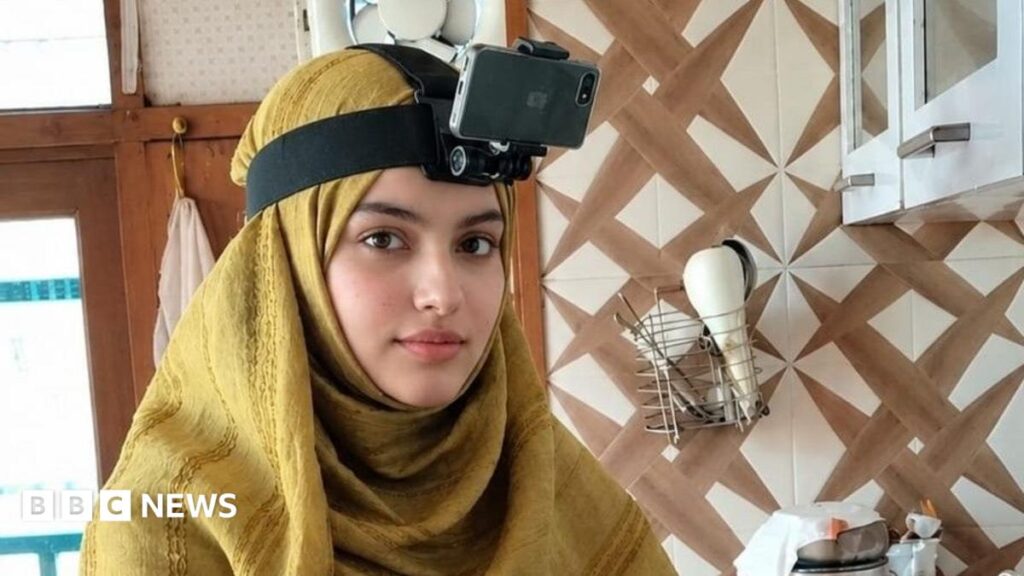
Mohammed Ashim has been cutting hair and trimming beards in Bengaluru for four years, but the 22‑year‑old now wears a head‑mounted camera that captures only his hands while he works, blurring clients’ faces. “The routine is simple, but you have to be disciplined about how you move. The operations team taught me that my hands always have to stay cleanly inside the frame, the lighting has to be sharp, and I can’t tilt my head too abruptly while working,” he explains. He spends five to six hours a day with the device on. “It’s good money, but honestly, the feeling of doing something this futuristic is what keeps me excited. I never imagined my razor techniques would be useful to a global tech company,” Ashim says.
He is among hundreds of thousands of people worldwide who are paid to record their work. A local firm gathers Ashim’s footage along with that of many other contributors and sells the videos to technology companies and research labs that need data to train “physical AI,” a class of artificial intelligence that can control robots in real environments. Rashdan Technologies handles the collection and processing of this human‑generated data. “Every robotics company, every frontier AI lab, has a specific kind of data they want: industrial tasks, agriculture, household chores, small‑business work like pottery, garment‑making, embroidery, candle‑making. We go wherever the task is,” says co‑founder and CEO Shahil Baig.
Rashdan pays workers between $5 and $10 (£3.74; £7.47) for eight to ten hours of recorded activity, an amount Baig acknowledges can be “meaningful” for many. He stresses that consent and comfort are essential. “We record hands, not faces, and where multi‑camera rigs do capture more of the body or environment, we blur faces out. No names, no contact details, nothing that identifies them personally goes into what we hand off.” However, client demands are rising. “Now clients are asking for four to six cameras rigged around a person’s head to cover the entire scene, not just the hands. Getting someone to agree to one small camera is one conversation. Getting them to agree to wearing what’s effectively a five‑camera headset is a completely different, and harder, one. We pay more for that tier of data collection because of what we’re asking of people.”
The sector is becoming more competitive, and industry observer Manish Agarwal expects dozens of new firms to launch in India this year. Agarwal, founder of Humyn Labs, explains why the data matters. “If you want robots to navigate the real world, they can’t just be trained inside computer simulations,” he says. His company collects video and sometimes hand‑worn sensors that capture precise limb movements, finger positions, wrist and elbow angles, and the forces applied during tasks such as gripping a plastic bottle without crushing it versus holding a steel glass. “There is no existing internet archive of embodied human activity – no dataset of a kitchen being cleaned, or a car being assembled by hands that know exactly how much force to apply. That data has to be captured from scratch, in the real world, across diverse environments,” Agarwal adds. Humyn Labs currently works with 96,000 data collectors spread across Latin America and Southeast Asia, filters thousands of hours of footage, labels the useful segments, and packages them for clients. “You need to source across a variety of factories, a variety of tasks, in different geographies because if you want to build deployment for US factories or US houses, you’d want environments that are a proxy for that. Residential houses in India may not be the right context for building a robotics use case for the US,” he notes.
Whether the workers are helping to create machines that could eventually replace them is still uncertain. Bino Paul, senior professor at the School of Management and Labour Studies at the Tata Institute of Social Sciences in Mumbai, cautions that AI may become a useful tool for some, but could automate other jobs entirely. “The problem is that, if machines do start to take over, there will be little workers can do about it. By the time workers realise what they have participated in, things may have gone too far,” he says, urging governments to regulate AI. “AI cannot be viewed merely as a technical system. We need to develop a socio‑technical system in which ethics is upheld through human agency, ensuring that AI delivers beneficence rather than maleficence,” Paul adds.
Despite ethical concerns, investment in AI continues, and some of that money reaches Indian workers willing to wear a camera for a few dollars a day. Mohammed Arman, who has spent a decade in Bangalore’s textile sector, says, “Garments stitching and cutting. I know this work so well I could probably do it with my eyes closed. Cloth…”