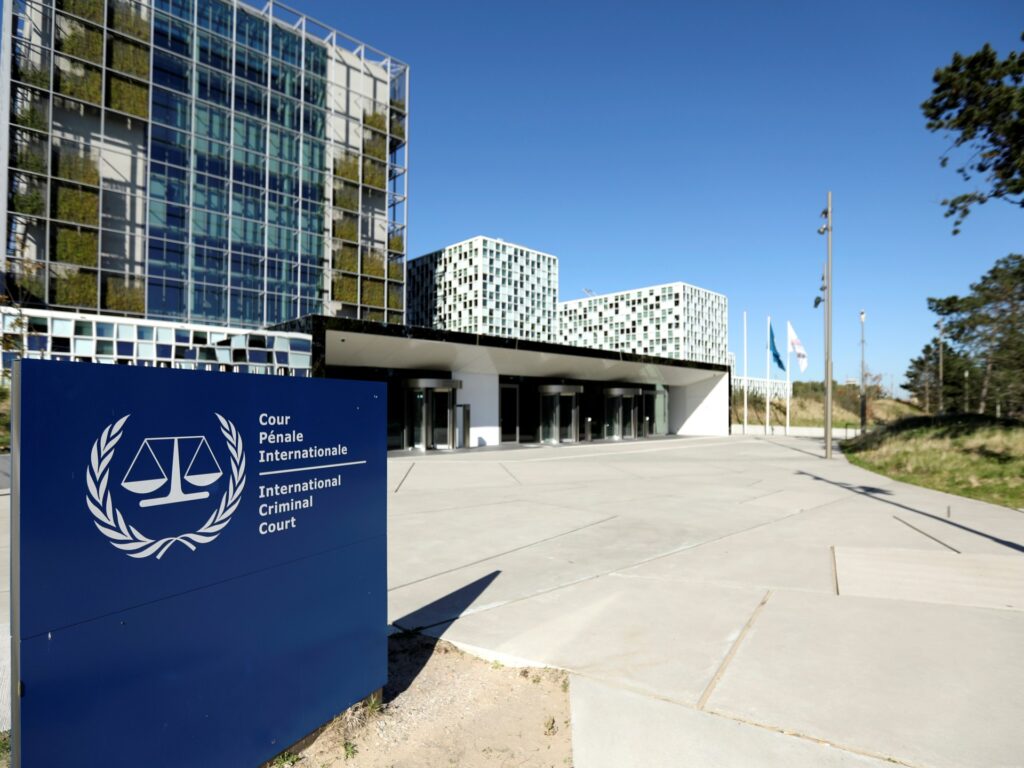
EU awards ICC its top human rights honor, the Sakharov Prize, amid US sanctions
The European Union has bestowed the International Criminal Court (ICC) with its highest human‑rights accolade, the Sakharov Prize, just two weeks after President Donald Trump pledged to dismantle the tribunal through a new round of sanctions. The award, presented on Thursday, follows the recent Nobel Peace Prize given to former ICC judge Navi Pillay for her work promoting peace and international law.
European Parliament President Roberta Metsola said the prize reflects the EU’s commitment to multilateralism and to supporting institutions that uphold international law and justice. “The European Union is built on respect for multilateralism and international institutions, and this prize recognises the important work of the court in upholding international law and justice,” she said.
The ICC expressed gratitude to the European Parliament, noting that the honor arrives at a moment when the court and its staff are confronting “unprecedented challenges.” “Against this backdrop, the Sakharov Prize carries particular significance, reaffirming the importance of independent judicial institutions and of those who work to uphold international law,” ICC President Tomoko Akane added.
The Hague‑based court has long been a target of the Trump administration, a stance that intensified after the ICC issued arrest warrants in 2024 for Israeli Prime Minister Benjamin Netanyahu and former defence minister Yoav Gallant. The U.S. has vowed to dismantle the court “brick by brick,” recently unveiling sanctions designed to cripple its daily operations. In a video posted on social media, U.S. Secretary of State Marco Rubio declared, “We will ban transactions with this rogue court, cutting off their resources and crippling their ability to operate against us because our message is clear: the United States and the American people are not subject to the jurisdiction of this fake ICC.”
Washington’s measures also extend to ICC judges and prosecutors, a United Nations special rapporteur on the occupied Palestinian territories, and Palestinian rights groups that have supplied evidence to the court.
The EU has already signalled its support for the ICC, saying it stands ready to take any steps needed to keep the court functioning as the U.S. sanctions take effect in six months. “The International Criminal Court must be free to pursue its mission, independently, and without pressure or intimidation,” EU Commission President Ursula von der Leyen wrote after the prize announcement. Brussels hopes to use the period before the sanctions become active to negotiate with Washington, while also considering a “blocking statute” that would protect the ICC from U.S. measures.